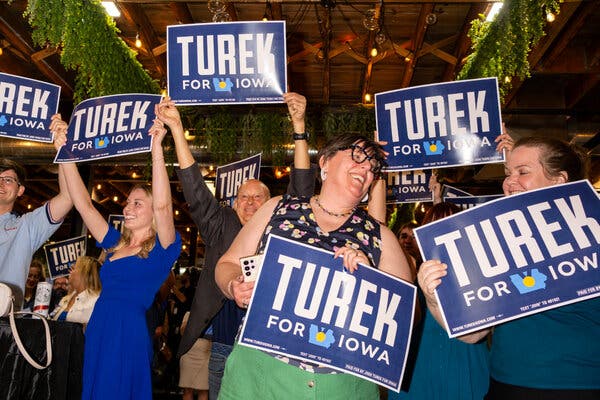
For years, Iowa leaned Republican, swayed by policies impacting local industries. The shift began after twice voting for Barack Obama, then favoring Trump. The current economic struggles and political dissatisfaction drive renewed Democratic optimism.
Economic Impact
Iowa’s economy took a hit with Trump policies. Tariffs on tractors and fertilizers affected the agricultural sector, disrupting the soybean trade with China. Struggles extended to steel and aluminum tariffs, damaging the manufacturing industry. These challenges spurred voter interest in change.
“The cost of farming has spiked, affecting crop yield and farmers’ livelihoods. The ripple effects are felt across Iowa,” reports a local economist.
Democratic Nomination Battles
On election night, Democrats rallied behind Josh Turek, a moderate candidate for U.S. Senate, known for his Paralympic achievements. Rob Sand, the lone Democrat in a statewide role, announced his candidacy for governor.
Republicans faced internal strife. Despite Trump’s endorsement of Randy Feenstra for governor, the party chose Zach Lahn, a farmer and businessman, signaling GOP divisions.
Hope for Change
While Iowa hasn’t supported a Democratic governor since 2006 or a Senator since 2014, the faltering economy and conservative policies leave room for transformation. With voter dissatisfaction growing, Democrats aim to reclaim battleground status.
Iowa’s current political situation, shaped by economic strain and voter discontent, opens discussions on leadership and future directions. As primaries unfold, possibilities for Iowa’s return to a mixed political playing field emerge.
 California’s Primary Election: Highlights and Insights
  President Trump’s Attendance at NBA Finals Game Sparks Reactions
  Investigations Launched Amid California Election Fraud Claims
  Khanna Urges Apology from Maine Senate Candidate Over Misconduct Allegations
  Judge Overturns Trump-Era Immigration Policies
  Trump Aims to Reduce National Intelligence Office Size