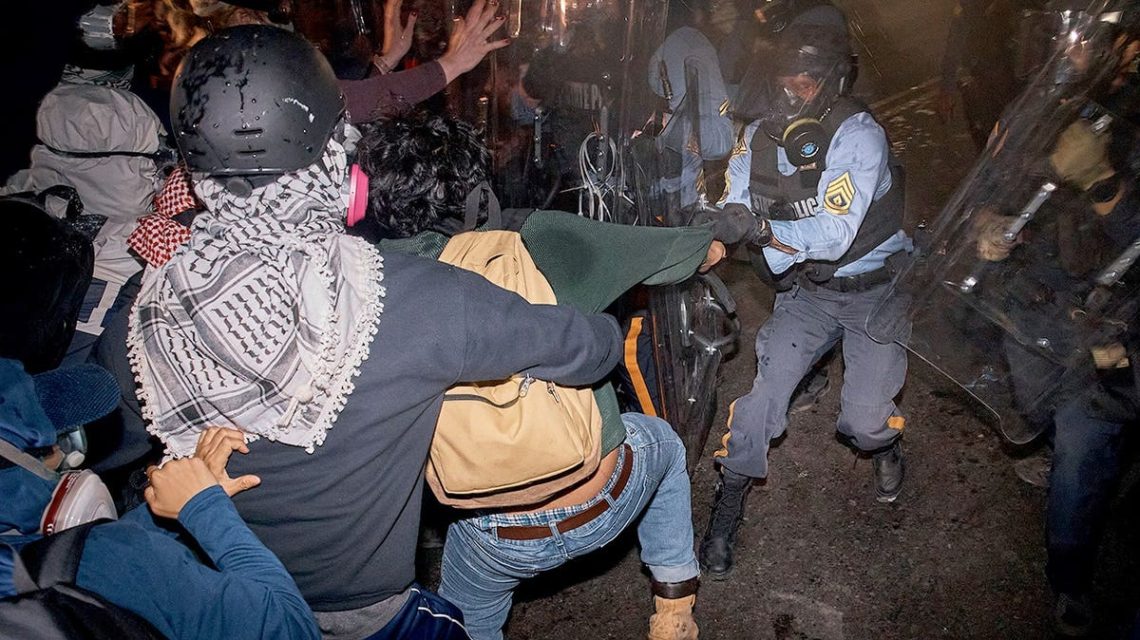
At 11:30 a.m. on June 3, a social media post signaled a call to action. Protesters were urged to gather at Delaney Hall in Newark, N.J. It’s an ICE detention facility marked by heated controversy. The post, “CURFEW IS OVER. BACK TO DELANEY,” originated from groups opposing federal policies.
These organizations range from the “Palestine Solidarity Working Group” to “Indivisible.” They prompted action against law enforcement in Newark. This message spread through encrypted channels, assembling hundreds of activists. They coordinated logistics such as transportation and protest supplies, including goggles and protective gear.
A Fox News Digital investigation uncovered that these protests are not spontaneous. They arise from years of planning by organized and well-funded groups. An analysis identified over 100 organizations involved, including high-profile names like ACLU and Democratic Socialists of America. Collectively, they report annual revenues nearing $850 million—comparable to Newark’s municipal budget.
Many of these groups benefit from nonprofit designations, allowing them to receive tax-deductible donations. Recent investigations by government agencies target potential misuse of these status for activism that may incite conflict or political violence.
A strategic communications document guides these groups in shaping their message. The document instructs them to label the detention center as a “concentration camp” and refer to detainees in provocative terms. This aligns with tactics seen in similar protests in cities like Minneapolis earlier this year.
Former Senate Chief of Staff Chuck Flint highlights the deliberate nature of these protests. “These are calculated endeavors by nonprofits meant to push subversive activity,” Flint noted, comparing the financial heft of these organizations to many cities they target.
The roots of the current activism can be traced back to 2025. GEO Group Inc. announced its plans to reopen Delaney Hall under a new federal contract with ICE. This faced legal challenges from Newark’s local government, which sought to block operations.
Protesting efforts soon grew, evolving from small vigils to a structured movement. Groups like “Eyes on ICE NJ,” “ICE Out of NJ,” and New Jersey Alliance for Immigrant Justice developed distinct roles within the larger protest landscape. Their activities range from local observation to statewide political pressure.
Funding for these organizations comes from notable sources, including Open Society Foundations and NEO Philanthropies. These financial connections sustain their operations and political influence.
Public figures have rallied around the cause, adding visibility. However, tensions remain high as protesters often confront these officials. The protest environment has escalated with groups preparing for clashes and utilizing logistic operations akin to military planning.
As evening sets, protests grow more intense. Strategy dictates communication with law enforcement, often with direct confrontations. Protesters employ incendiary rhetoric, challenging authorities and calling for change.
The coordinated elements of these protests underscore the complexity of current activism. Lawmakers and public officials continue to grapple with the implications for policy and community relations.
 NASCAR Community Mourns the Loss of Kyle Busch
  Persistence in Investigations: Encouragement and Challenges
  Support Pours in for Airport Worker After Viral Video
  Challenges of Reentry After Years in Prison
  YouTuber Sparks Debate Over Abortion Rights and Down Syndrome
  Significant Events in Chicago on June 5