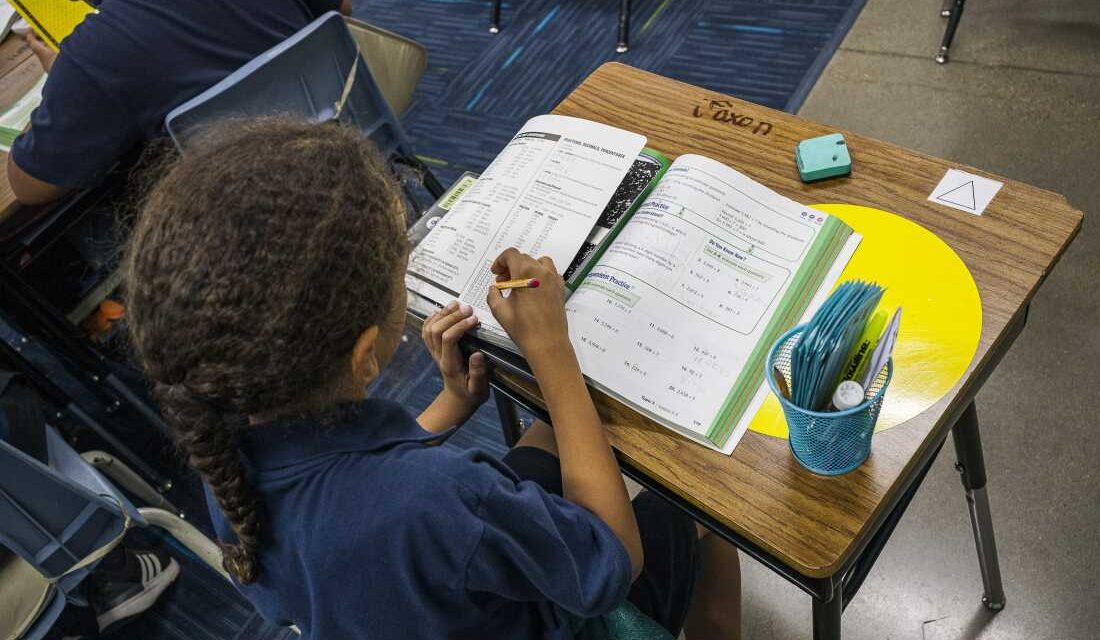
Recent results from the National Assessment of Educational Progress (NAEP) indicate that reading and math scores for 9-year-old students have risen from 2022 to 2025. According to Matthew Soldner, acting commissioner of the National Center for Education Statistics, these findings are promising for younger students. Released on Wednesday, the long-term trend (LTT) report gives insight into the academic progress of both 9- and 13-year-olds.
More than 30,000 students participated in these tests between October 2024 and March 2025. This examination has consistently assessed similar questions since its inception in the 1970s, providing a comprehensive look at national student learning.
Five Key Takeaways
1. Nine-Year-Olds Show Progress
Younger students have demonstrated improvements in both subjects. Encouragingly, even lower-performing students have shown upward trends. One explanation for this progress is that these students started school after the return to full-time, in-person classes, avoiding key disruptions in early education caused by the pandemic.
2. Thirteen-Year-Olds Face Challenges
In contrast, 13-year-olds have not made significant gains in reading or math since the last assessment. Scores remain below pre-pandemic levels, reflecting no improvement since the initial tests in 1971. This stagnation raises concerns, particularly as the pandemic negatively impacted critical developmental years in early education.
3. Decline in Reading for Pleasure
Fewer students are reading for pleasure. In 1984, 35% of 13-year-olds read daily for fun; this plummeted to 14% by 2025. Among 9-year-olds, 37% reported daily recreational reading, showing a significant drop from previous decades.
4. Math Progress Setbacks for Older Students
After decades of advancement, math scores for 13-year-olds have regressed to the levels recorded in 1978. This decline highlights the need for focused educational strategies during middle school years.
5. A Pause in Long-Term Reports
The 2025 report is the last planned release for some time. Due to U.S. Education Department budget cuts, many assessments have been canceled through 2032. Students will not encounter these particular questions again until 2033.
Edited by Nirvi Shah. Visual design and development by LA Johnson.
 Teen Files Lawsuit After Joke Leads to Felony Arrest
  Students Use Glucose Monitors to Understand Their Health
  University of California Undertakes Review of Standardized Testing Policies
  Teachers Balancing Jobs to Meet Financial Challenges
  How to Prepare Your Child for Kindergarten
  Concerns Over Declining Math Scores and Economic Impact