Encryption systems depend heavily on random numbers, however, conventional computers struggle to generate perfect randomness. Recent research reveals that quantum physics can address this gap.
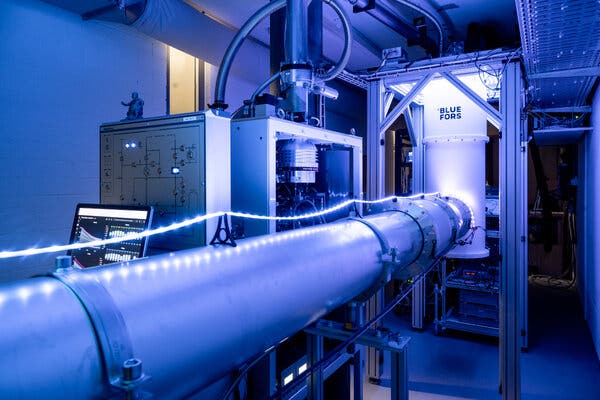
At ETH Zurich, researchers spent a decade and $12 million on a project that harnessed the potential of quantum physics to generate genuine randomness. This project used interconnected cryostats to cool qubits, which follow the rules of quantum mechanics.
Private keys, crucial for digital information security, consist of hundreds of bits, each being a zero or one that encodes extremely large numbers. Computers nearly achieve true randomness but are limited by its inherent process. According to Morgan W. Mitchell, a quantum physicist at the Institute of Photonic Sciences in Barcelona, if you understood the computer’s calculations, you could predict its output precisely. Hackers exploit this predictability to find weaknesses in encrypted systems.
The Swiss research team attempted to solve this issue through randomness amplification. This process enhances lower-grade random numbers using quantum physics to produce numbers that are nearly perfect in randomness. Dr. Mitchell, who was not involved in the study, confirmed these findings.
Other efforts have achieved notable advancements in random number generation, relying more heavily on computer processes. In contrast, the Swiss experiment validated its results through the inherent properties of quantum physics, independent of computational power. “We are, in a sense, trusting physics,” explained Dr. Mitchell.
Roger Colbeck, a quantum information theory professor at King’s College London, described the research as the most compelling demonstration that high-quality randomness could arise from quantum processes.
 AI-Driven Docudrama ‘Dreams of Violets’ Debuts at Tribeca Festival
 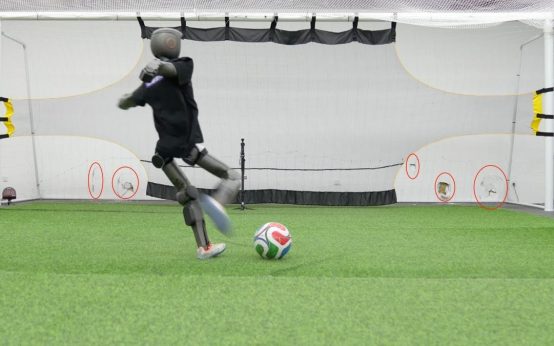 Robot Soccer: Testing the Limits of Humanoid Machines
  Gad Saad Shares His Surreal Meeting with Elon Musk
  U.S. Government Restricts AI Lab Anthropic Amid Security Concerns
  U.S. Government Orders Suspension of Anthropic’s A.I. Models
 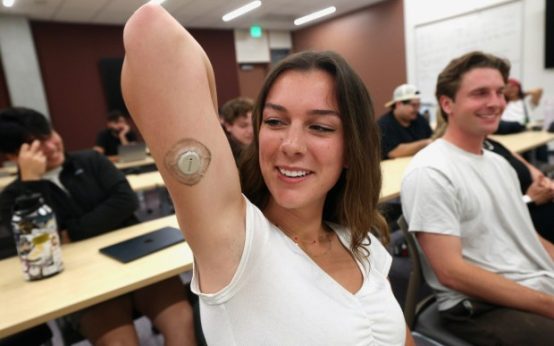 Students Use Glucose Monitors to Understand Their Health