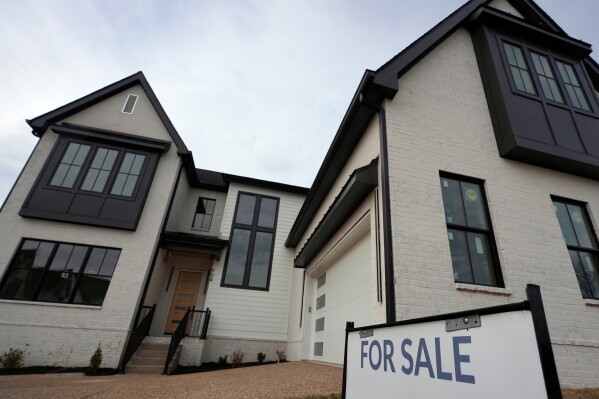
U.S. home sales surged last month, marking their quickest pace since December. This comes after a slow start to the spring homebuying season. According to the National Association of Realtors (NAR), existing home sales in May grew by 3.2% from April. The annual rate adjusted for seasonality reached 4.17 million units. This also represents a 3.2% increase compared to May of the previous year.
Regional variations were observed, with home sales increasing in the Midwest, South, and West, but declining in the Northeast. The sales figures exceeded economists’ expectations, who had predicted a pace of about 4.07 million units, based on FactSet data. Home sales have mostly fluctuated near 4 million annually since 2023, falling short of the historic average of approximately 5.2 million.
Sales rose despite higher mortgage rates, which remain lower than a year ago. National home prices continued to climb, with the median sales price hitting $429,300 in May, a record for the month since data collection began in 1999. This marks 35 consecutive months of annual home price increases.
Home price growth has started to lag behind income growth in many regions. This trend, coupled with mortgage rates below last year’s levels, is aiding affordability and contributing to the housing market’s recovery, according to Lawrence Yun, NAR’s chief economist. He cautioned that oil prices and future mortgage rate movements add to the uncertainty. Yun anticipates a market rebound if the average rate on a 30-year mortgage approaches 6%.
The housing market’s downturn began in 2022 due to rising mortgage rates after the pandemic-induced lows. The previous year saw flat home sales at a 30-year low, and they have remained sluggish in 2023, except for May’s rise. Earlier in the year, sales were static or declined.
The past decade saw house prices soar, driven by low mortgage rates, leaving many potential buyers unable to purchase. Limited home availability, linked to years of below-average new home construction, has sustained high prices during the market slump.
Transactions in May likely originated from contracts signed in March and April when 30-year mortgage rates ranged from 6% to 6.46%, according to Freddie Mac. Last week’s average was 6.48%, down from 6.85% a year prior. The general increase in rates corresponds to the war with Iran, which disrupted oil supply lines and increased oil prices. Rising oil costs have influenced bond yields, subsequently affecting mortgage rates. Analyst Ted Rossman from Bankrate remarked that without the war’s impact on inflation, 30-year mortgage rates might be in the mid-to-upper 5% range.
Amid uncertainty, first-time buyers comprised 35% of May’s purchases, the highest since June 2020. Historically, this figure stands at 40%. Current market trends favor buyers, with May’s median list prices falling 2.4% from the previous year. This is the most significant decrease since 2017, according to Realtor.com. Although the number of homes for sale has increased, inventory remains below historical levels, with 1.55 million unsold homes by the end of May. This marks a 3.3% rise from April and a 0.6% increase compared to May last year, as reported by NAR. The available inventory equates to a 4.5-month supply at the current sales rate, which is below the 5- to 6-month supply that indicates a balanced market.
 Understanding the Benefits of Home Equity Loans in the Current Market
  Is a Home Warranty Worth It for You?
  Understanding Home Warranty Coverage for Central Air Conditioning Systems
  Consequences of Property Sales Privacy in Nondisclosure States
  California’s New Housing Law Targets Urban Density Near Transit
  Advantages of Homebuying in June