
On Wednesday, U.S. stocks experienced a decline, driven by speculation that the Federal Reserve might increase interest rates this year to manage inflation. While higher rates can help control rising prices, they can also slow economic growth and negatively impact investment values.
The S&P 500 fell by 1.2%, erasing earlier gains after the release of projections indicating that nine out of 18 Fed policymakers expect at least one rate hike this year. Meanwhile, the Dow Jones Industrial Average shifted from a morning gain of 280 points to a loss of 507 points, a 1% decrease. The Nasdaq composite experienced a decline of 1.3%.
Kevin Warsh, who recently took over as the Federal Reserve Chairman, held his first press conference where he didn’t make a prediction regarding the federal funds rate for 2026. Warsh discussed revising the way the Fed communicates with financial markets and the public. One of his initial actions involved discontinuing the practice of including future interest rate hints in Fed statements, formerly known as “forward guidance.”
Warsh emphasized that Wall Street should respond to updates on inflation, employment, and economic data based on their implications for stock and bond prices rather than the expected Fed reaction. There might be changes to the usual quarterly release of Fed projections on interest rates, economic performance, and inflation. Although Wall Street responded with uncertainty to the new projections, Warsh noted a lack of strong consensus among policymakers.
Following the release, stocks fluctuated, and the Fed announced its decision to maintain the federal funds rate steady, consistent throughout the year. In the bond market, Treasury yields increased. The yield on the 10-year Treasury, influencing rates for mortgages and loans, rose from 4.43% to 4.49%. The two-year Treasury yield, closely monitoring Fed expectations, jumped from 4.05% to 4.21%.
Globally, high bond yields fueled by inflation concerns have jeopardized economic growth and depreciated various investments. In the stock market, SpaceX ended the day with a 4.9% drop, marking its first decline since its notable market debut last week. Microsoft fell by 3.8%, Amazon by 3.5%, and Nvidia by 1.3%, significantly impacting the S&P 500.
Conversely, La-Z-Boy’s stock rose by 14.8% after reporting stronger-than-expected profit and revenue for the recent quarter, primarily due to sales from newly opened stores. Despite the positive outcome, Chief Financial Officer Taylor Luebke adopted a cautious perspective on the overall sales landscape.
The S&P 500 concluded with a 91.25-point drop to 7,420.10. The Dow Jones declined by 507.12 points to 51,492.55, while the Nasdaq composite fell by 354.69 points to 26,021.66.
A report released Wednesday indicated that retailer revenue growth in May surpassed economist expectations, suggesting that consumer spending might sustain economic support. However, high inflation has left U.S. consumers feeling less optimistic about their financial situations.
Oil prices remained stable on Wednesday after previous drops, supported by optimism over a preliminary U.S.-Iran agreement aimed at restoring the global oil supply. Iran plans to reopen the Strait of Hormuz following the accord, allowing oil tankers to transport crude from the Persian Gulf, potentially alleviating inflation pressures. Brent crude oil prices rose 0.7% to $79.55 per barrel, higher than its pre-war level but well below the over $100 mark seen weeks prior.
International stock markets showed mixed results, with South Korea’s Kospi increasing by 1.6% and Hong Kong’s Hang Seng decreasing by 0.7%, highlighting significant variations globally.
Business Writers Chan Ho-him, Matt Ott, and Elaine Kurtenbach contributed to this report.
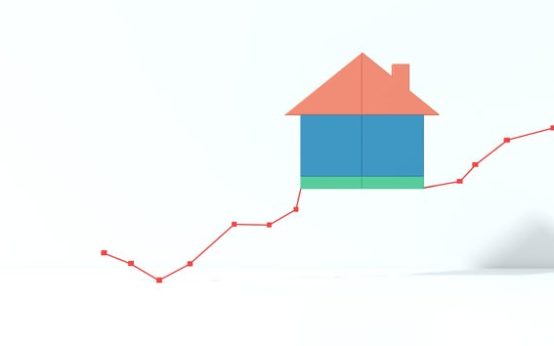 Understanding the Impact of the Fed Rate Pause on Mortgage Rates
 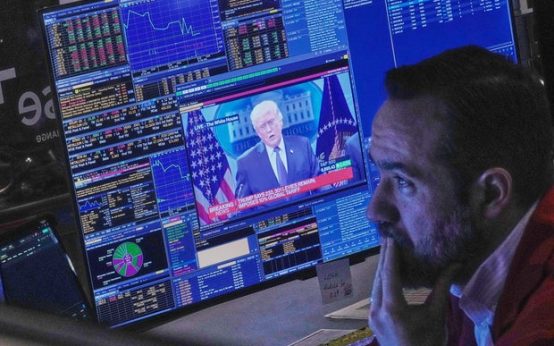 President Trump’s Extensive Stock Trades Raise Ethical Concerns
  SpaceX’s Historic Stock Market Debut
  U.S. Stocks Surge as Trump Calls Off Iran Strike
  AI Stocks Lead to Wall Street’s Downturn
  SpaceX IPO and Its Implications for Retail Investors