The Trump administration has informed a federal judge that the Kennedy Center is yet to finalize its decision on future programming, following a court directive to remain open. This court order emerged after U.S. District Judge Christopher Cooper blocked the center’s temporary closure until 2028, responding to a lawsuit filed by Democratic Rep. Joyce Beatty of Ohio. Judge Cooper also reversed the attempt to rename the Kennedy Center by adding President Trump’s name.
Judge Cooper required the administration to provide plans for construction, board actions regarding renovations, and developments by a given date. The administration was also asked to outline plans for public access, programming, activities, and operations beyond July 5, the center’s initial closure date.
Matt Floca, Kennedy Center Executive Director, stated in a Friday filing that the board will consider three options: a complete closure for repairs, a partial closure with some public access and limited programming, or phased closures with additional programming. Justice Department attorneys have requested more time to respond, proposing a joint status report after the next board meeting, as the center is still deciding on its course of action.
While the Kennedy Center plans to proceed with capital repairs, Judge Cooper’s order does not compel the board to reschedule canceled events or seek new ones. Beatty’s attorneys accused the government of neglecting to revive programming, pointing to the discontinuation of “Shear Madness” as an example.
Beatty’s lawyers asked for weekly updates on efforts to restore programming and suggested discussing a discovery schedule in the ongoing lawsuit. They stress the need for meaningful operations by July 5 to comply with the court’s preliminary injunction in good faith.
The renaming of the Kennedy Center has also undergone scrutiny. It recently removed President Trump’s name from its facade following Cooper’s order. This decision followed federal court rulings against retaining the president’s name on the building during legal proceedings. The center updated its website, removed name references, and retracted relevant trademark applications.
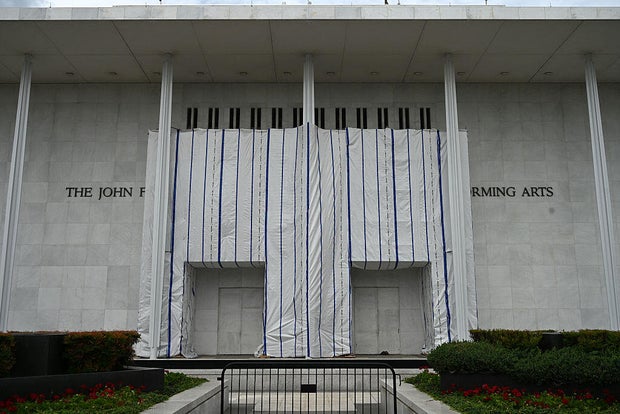
Despite these changes, photos showed a tarp still covered parts of the facade. Beatty’s legal team criticized the Kennedy Center for keeping the tarp, describing it as breaching fiduciary duties.
These alterations follow a ruling by Judge Cooper, who prevented the center’s temporary closing and ordered the removal of Trump’s name. Cooper found the center’s Board of Trustees, primarily Trump administration members, acted beyond their authority in renaming the institution. He noted that decisions regarding the center’s closure should involve careful consideration of its multifaceted responsibilities.
The attempted renaming began after President Trump’s second term began, with several board replacements among White House advisors, family members of administration personnel, donors, and supporters. The board elected Trump as chair and voted to rename the center. Legal experts argue that renaming requires congressional approval, a perspective Cooper shared in his decision.
Initially, Trump expressed compliance with Cooper’s verdict, discussing plans to consult Congress. As the deadline approached for the name removal, the Justice Department sought an appeal, but the request was denied, mandating the removal of Trump’s name.
 Trump’s Dual Endorsement in South Carolina Governor’s Race
  Uncertain Support in Texas Senate Race: Crockett’s Stance
  Trump’s Dual Endorsement in South Carolina Runoff
  Marco Rubio’s Deportation Memo Targets Colombian Activist
  Vice President JD Vance Addresses Criticism of Iran Deal
  President Trump Unveils New Air Force One