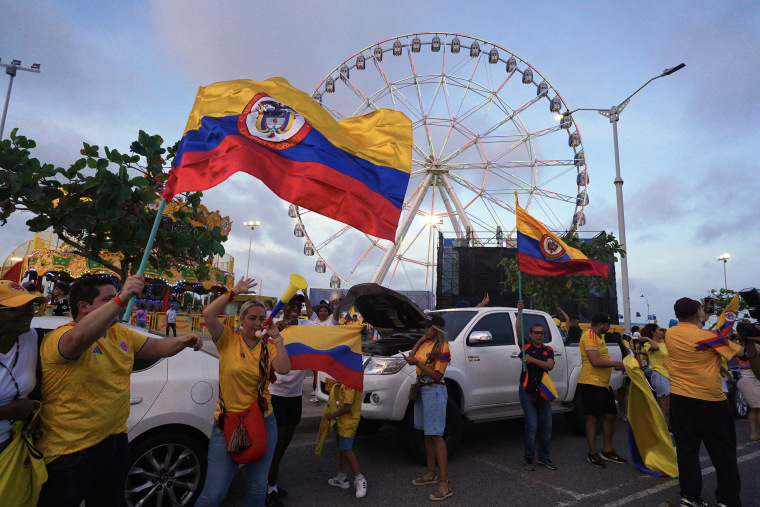
Abelardo de la Espriella, a political outsider, held a lead in Colombia’s presidential election with nearly all votes counted. This runoff vote, marked by fears of renewed internal conflict, showcased voter dissatisfaction with outgoing President Gustavo Petro’s policies.
De la Espriella, a business owner and lawyer, received support from U.S. President Donald Trump although he had never run for office before. He secured 49.7% of the votes, while progressive lawmaker Iván Cepeda, backed by Petro, gained 48.7%. Election authorities have yet to officially declare a winner.
“I appear before you tonight to announce the most important news of my life: The Colombian people have entrusted me with the supreme honor of serving them as their next president of the Republic of Colombia,” de la Espriella announced to supporters in Barranquilla.
Iván Cepeda stated that the results were unofficial and his campaign intends to challenge votes from over 30,000 stations. Both Cepeda and Petro plan to dispute the election outcome. Meanwhile, public outcry in Bogotá resonated with chants against Petro.
Tough-on-Crime Policy
De la Espriella, 47, advocates a stringent approach to crime, focusing on drug trafficking. He plans to terminate Petro’s peace negotiations with armed groups and develop megaprisons, echoing Salvadoran President Nayib Bukele’s tactics. These have reduced homicide rates but drawn human rights criticisms.
Known as “The Tiger,” de la Espriella holds dual citizenship in Colombia and the U.S. His promise of change resonated with voters weary of prolonged conflict and drug trafficking issues.
Voter Sentiment and Reactions
U.S. Secretary of State Marco Rubio and several international leaders congratulated de la Espriella. Rubio expressed eagerness to collaborate on regional security and economic ties. Trump also celebrated De la Espriella’s lead on social media.
Iván Cepeda’s first-round performance gave him 41% of the vote, while de la Espriella received 44%. Petro previously cast doubts on these results, even as Cepeda, a polling favorite before the May vote, came second.
A Bogotá voter, Yolanda Hernández, voiced dissatisfaction with Petro’s unfulfilled promises. Despite voting for Petro in 2022, she supported de la Espriella, hoping for change amid persistent violence and economic challenges.
Will Freeman from the Council on Foreign Relations noted that Colombia remains divided both regionally and ideologically. He observed that de la Espriella’s tough message resonated more centrally rather than in violence-affected peripheral areas.
Violence and Conflict Background
The election arrives a decade after Colombia’s peace agreement with the Revolutionary Armed Forces of Colombia (FARC) guerrillas. Although the agreement initially sparked hope, violence has surged as former rebels shifted focus to profiting from drug trafficking.
In 2025, Colombia documented 14,780 homicides, the highest in recent years, largely due to clashes among armed groups. This resurgence included the murder of conservative presidential hopeful Miguel Uribe. Extortions also doubled since 2015, exacerbating Colombia’s security crisis.
De la Espriella, labeled “The Tiger,” pledged to fight crime aggressively, proposing the construction of ten megaprisons to reduce criminal activity. This promises a significant shift in Colombia’s approach to tackling violence and security.
 Disparaging Remarks by Treasury Secretary Highlighted in New Book
  Reflecting on Brexit: A Decade Later
 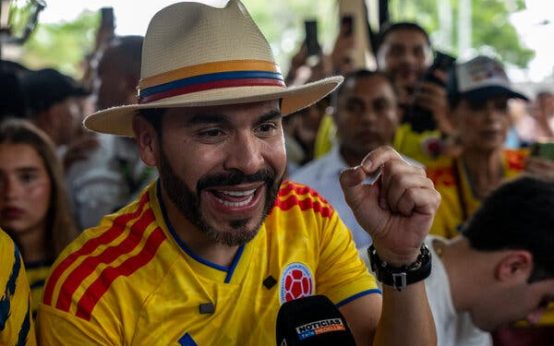 Trump-Endorsed Candidate Nears Victory in Colombia Election
  President Trump’s Announcement on UK Prime Minister’s Resignation
  Sen. Cory Booker Criticizes Trump’s Iran Memorandum
  Municipal Battle Over Renaming Street Near Trump Tower