As the Republican Party nationally considers its identity post-Trump, Utah’s 3rd Congressional District GOP primary offers insights. Known for its Republican leanings, Utah last backed a Democrat for president in 1964 with Lyndon B. Johnson. Despite its conservative stance, Utah has had a complicated relationship with Trump. In 2016, Trump won by the slimmest margin for any Republican state, with under 50% of the vote. While gaining more support in 2020 and 2024, he never surpassed 60%.
Current Republican candidates in Utah are conservatives but avoid Trump’s name in campaigns. Chris Karpowitz, a political science professor at Brigham Young University, notes this may be intentional. He suggests that campaigning on Trump may not resonate with Utah voters as it does in other red states. Karpowitz states, “Many Republican voters in Utah have accepted Trump enough to vote for him. But they don’t necessarily support his style or policies.” He adds, “They are loyal to the party, not the president.”
Utahns exhibit fiscal and social conservatism but often reject Trump’s approach on issues like immigration. His comments on Islam and other faiths have alienated voters in a state associated with the Church of Jesus Christ of Latter-day Saints. After two years into Trump’s final term, Utahns’ approval of him hit a low of 44% in April, according to a Deseret News/Hinckley Institute of Politics poll, with Republican support dropping by 10 points.
A Republican Seat With No Mention of Trump
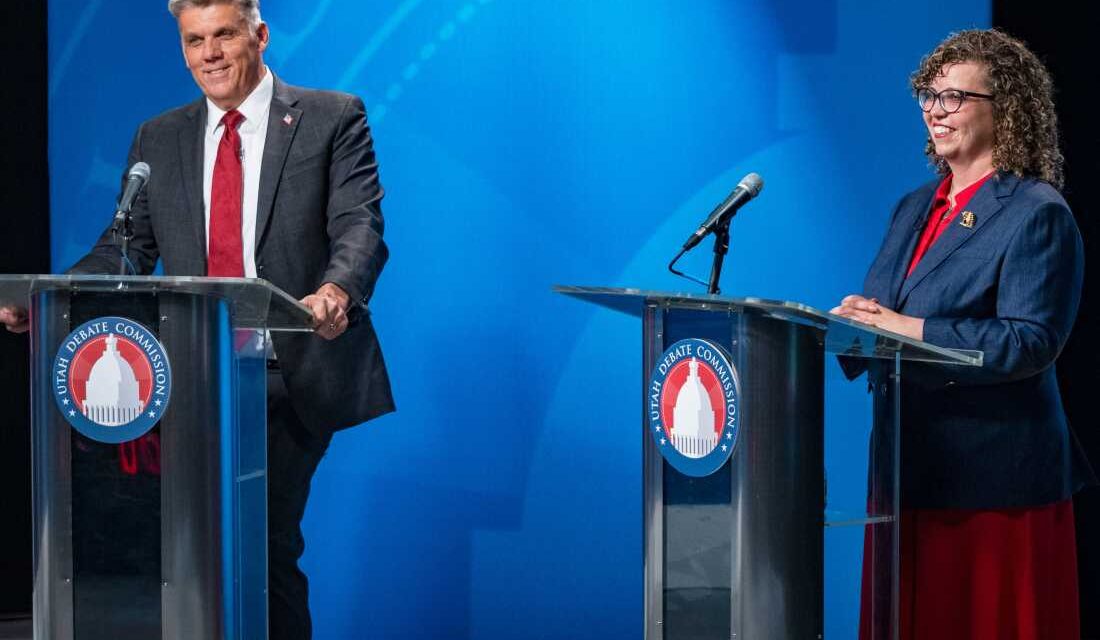
In Utah’s 3rd Congressional District’s GOP primary, candidates Celeste Maloy and Phil Lyman support Trump but avoid mentioning him much. They focus on district issues. Maloy and Lyman represent different parts of the party: Maloy is policy-driven, Lyman aligns with the Freedom Caucus and America First.
This primary will indicate the Republican brand voters in the new third congressional district prefer. The district resulted from redistricting changes after a judge deemed congressional maps violated a voter-approved initiative. Covering large areas from the north to the Arizona border, it includes vast rural spaces, five national parks, ski destinations like Park City, and Provo’s Brigham Young University.
The district is one of the reddest in the U.S., based on the Cook Political Report. Maloy, lacking feedback from NPR’s interview requests, faced challenges from Republican voters despite winning a 2023 special election. She lost at the 2024 nominating convention, narrowly winning the primary with Trump’s endorsement by only 200 votes.
Lyman’s Approach to Gain Support
Phil Lyman aims to capitalize on the ambivalence to Maloy. Known to Utah voters, he initially ran for governor in 2024. Pardoned by Trump for an illegal protest on federal land, Lyman aligns with Trump and the MAGA movement. His campaign focuses on reducing federal power and increasing rural viability.
“What’s at stake is if we go down a collectivist, centralized power model or retain American independent autonomy,” Lyman stated.
Lyman supports the Freedom Caucus, known for its ultra-conservative stance. “The Freedom Caucus seems loyal to the Constitution and their constituents,” he added. Yet, loyalty to the president doesn’t dominate Lyman’s campaign.
In Utah County, one of the district’s most populated areas, Lyman volunteers emphasize his focus on transparency and government improvement. “We support Phil Lyman because we feel he’s best for the area,” said volunteer Natalie Clawson.
Maloy’s Defense and Future
In the primary debate, Maloy highlighted her work in Washington without referencing “Trump tax cuts.” Her participation in committees on appropriations and natural resources showcases her commitment to district voters.
“People want someone to represent their issues nationally and solve problems,” Maloy mentioned. Her problem-solving abilities and policy interest drove her into politics.
Despite a narrow win at the Republican convention, Maloy’s credibility increased over time. With Trump’s endorsement before the primary, Maloy’s campaign focuses on solutions rather than presidential loyalty.
Damon Cann, Utah State University political science professor, observed the balancing act among Utah’s Republican delegation. “They aren’t running as Trump Republicans but acknowledging past Trump support,” he noted.
With the Utah primary election imminent, Trump endorsed Maloy again, though his support isn’t as influential as in states like Texas or Kentucky. Karpowitz added, “Utah’s Republicans are ambivalent enough about Trump so it doesn’t carry the same weight as elsewhere.”
 Alaska Candidate Disqualification Sparks Legal Challenge
  Supreme Court’s Tariff Ruling: A Call for Fair Refunds
 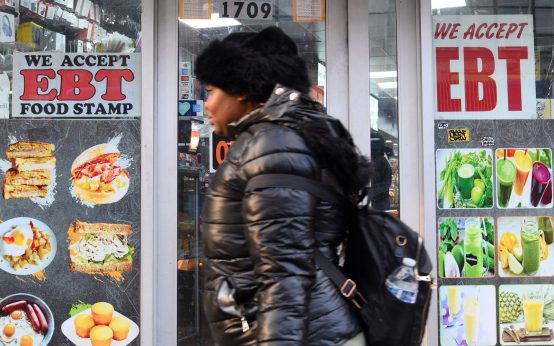 Federal Judge Blocks Restrictions on SNAP Purchases of Sugary Products
  Democratic Primaries and Global Affairs: Key Updates
  New York’s Democratic Primaries: Key Contests and Dynamics
  Maryland House Race Heats Up with Wealthy Candidates