
Michael Shermer, publisher of Skeptic magazine and author of the recently released book Truth: What It Is, How to Find It, and Why It Still Matters, examines the evolving discussion surrounding unidentified anomalous phenomena (UAPs). On January 13, Vermont legislator Troy Headrick took the initiative to propose the formation of a state task force aimed at investigating UAPs that have allegedly hovered over U.S. military bases. In a similar vein, Helen McCaw, previously a senior analyst at the Bank of England, cautioned the bank’s governor to prepare for potential financial instability should the U.S. government reveal proof of extraterrestrial life.
Shermer has been exploring and writing about UFO phenomena and the belief that these represent alien encounters since the 1990s. For years, the topic had been largely dismissed by both the general public and media as fringe or unworthy of serious attention. This began to shift in 2017, following a New York Times front-page story that unveiled the Pentagon’s Advanced Aerospace Threat Identification Program, which was tasked with investigating the numerous sightings, especially those over military areas.
Since then, the subject has gained credibility, with Congressional hearings presenting testimonies not from conspiracy theorists, but from distinguished individuals such as former Navy pilots David Fravor and Ryan Graves, as well as government intelligence employees Luis Elizondo and David Grusch. These individuals have alleged that the U.S. government is concealing evidence of alien visitors. The shift to the UAP designation, which began to be used by the Pentagon around 2020, marks the topic’s entry into official discourse.
The interest in UAPs was further amplified by the release of The Age of Disclosure, a documentary directed by filmmaker Dan Farah. Aside from being featured in mainstream media, it has also sparked discussions among both UFO enthusiasts and high-level government figures, including Secretary of State Marco Rubio.
Before delving into the current state of UAP discussions, let’s assess the validity of these claims.
Firstly, even some UFO advocates acknowledge that a significant portion of sightings are due to mundane factors. Leslie Kean, in her 2010 work UFOs: Generals, Pilots, and Government Officials Go on the Record, noted that about 90 to 95 percent of UFO sightings can be explained by natural occurrences like weather balloons, celestial bodies like Venus, or airplanes flying in formation. Thus, only a small fraction remain unidentified.
Regarding unexplained reports from pilots and astronauts, Scott Kelly, an astronaut with over 15,000 flying hours, emphasizes that the aviation environment is prone to optical illusions. During a NASA UAP press conference, he recounted an incident where his co-pilot misidentified a balloon as an unidentifiable object. His brother, Mark Kelly, also shared an anecdote where a perceived floating tool turned out to be the International Space Station, mistakenly seen from a distance of 80 miles.
Shermer categorizes UFO and UAP sightings into three main types: 1) ordinary terrestrial (such as balloons and optical illusions), 2) extraordinary terrestrial (potential espionage drones or aircraft from nations like Russia or China), and 3) extraordinary extraterrestrial (actual alien presence). He personally believes all UAP reports likely fit into the first category. Other commentators propose they could be instances of foreign, unprecedented technology.
The idea that another nation is far ahead in technological development is seen as improbable. It’s unlikely that any country, corporation, or individual could leap so far ahead without the West being aware of the incremental technological progress necessary for such advancements. It would be analogous to the historical disparity between early biplanes and today’s sophisticated fighter jets.
The notion of UAPs as extraterrestrial beings is not deemed impossible, yet it is highly unlikely. The vast distances between stars make it improbable for intelligent life to reach Earth, and current evidence from believers is often limited to ambiguous photographs and videos.
According to Shermer, the fascination with alien life is akin to a religious longing. People may be seeking a godlike intelligence who is aware of humanity, concerned with human affairs, and willing to intervene if necessary. Research suggests an inverse relationship between traditional religiosity and belief in extraterrestrial intelligence, with individuals less religious yet seeking meaning more likely to believe in aliens. This trend is especially notable among atheists and agnostics, who might see aliens as substitutes for traditional deities.
Shermer concludes that belief in extraterrestrial beings fulfills a similar existential purpose as religion, particularly in Western nations like the United States and the United Kingdom, where UAP sightings are most prevalent and religiosity is waning.
 Flesh-Eating Fly Returns to the United States Causing Concern
  Australia’s Largest Seizure of Exotic Invertebrates: Over 100,000 Cockroaches Confiscated
  Gene Editing in Human Embryos at Columbia University
 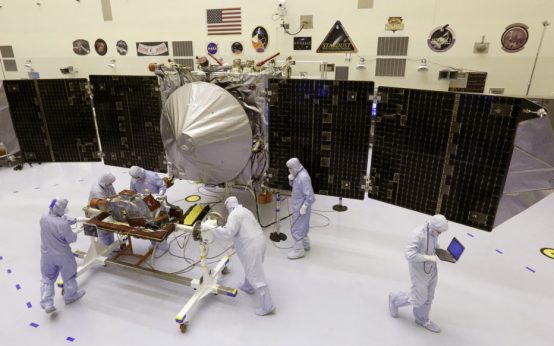 NASA Declares MAVEN Spacecraft Dead After a Decade of Mars Observations
  WHO Reports Reduction in Suspected Ebola Cases in Central Africa
  Ancient Tunnel Discovery Near Jerusalem’s Ramat Rachel