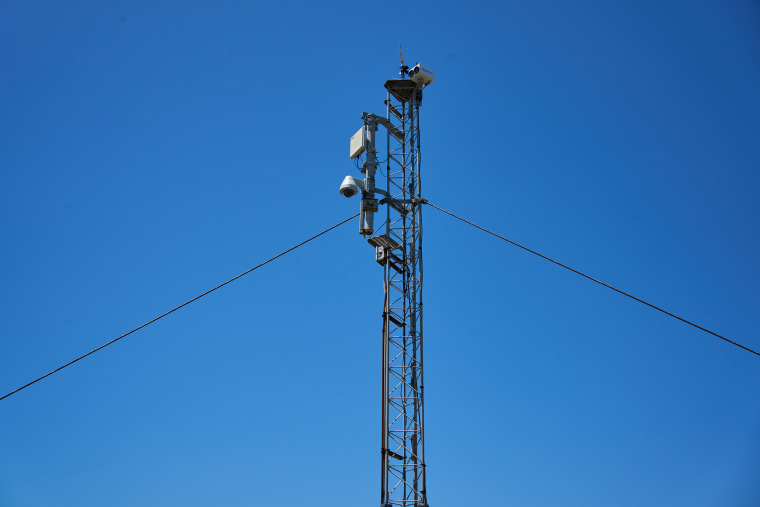
In San Francisco Bay, ferries, cargo ships, and tankers cut through the choppy waters. Recently, a whale surfaced nearby, its presence barely noticeable among the waves. Traditionally, mariners might miss such sightings. A new AI-driven system, WhaleSpotter, now tracks whales in the bay, providing day and night detection.
WhaleSpotter operates by scanning for whale blows and heat signatures up to 2 nautical miles away. It alerts ships to slow down or change routes to avoid collisions with whales. Thomas Hall, director of operations for San Francisco Bay Ferry, explains, “They can make course adjustments before they are too close.” This technology also collects data over time, allowing route changes during whale season to minimize contact with whales.
The system addresses the concerning increase in gray whale deaths. Last year, 21 gray whales died in the Bay Area, the highest number in 25 years. Ship strikes accounted for 40% of these deaths. At least 10 more fatalities are recorded in the current year. These statistics likely underestimate the actual numbers since many whale bodies sink or drift away unnoticed.
Gray whales travel a 12,000-mile migration between breeding grounds in Mexico and feeding locations in the Arctic. They now frequently enter San Francisco Bay, lingering for extended periods, likely due to climate change. Rising temperatures and altered sea ice in the Arctic disrupt their summer feeding, resulting in many malnourished whales during migration.
WhaleSpotter’s technology offers real-time alerts to ship operators. AI detects potential whale sightings, verified by trained observers, and sends alerts via radio. Whale detections are also publicly available on the Whale Safe website.
Similar systems are operational in the U.S., Canada, and Australia. The San Francisco Bay network, however, integrates land-based and vessel-mounted sensors for near-real-time communication with ships. Test results show numerous detections, illustrating the extent of whale activity. Douglas McCauley of the Benioff lab emphasizes the need to use this data smartly.
WhaleSpotter operates continuously. Unlike human watchers, thermal cameras work at night and in fog, common in the bay. One camera sits on Angel Island, and another will be on a ferry route from San Francisco to Vallejo, creating a dynamic data collection platform. Future additions may include cameras on the Golden Gate Bridge and Alcatraz for broader coverage.
Climate change also endangers humpback whales. A marine heatwave off the California coast diminishes cold, nutrient-rich waters where krill and fish thrive. This forces humpbacks to follow their prey closer to shore, overlapping with California’s Dungeness crab fishery. The fishery consists of vertical lines that pose entanglement risks for migrating whales.
Due to these risks, regulators have closed parts of the fishery during whale migration. Humpbacks are particularly vulnerable. Entangled whales face starvation and other life-threatening issues.
In 2024, the West Coast reported 36 known whale entanglements, the highest since 2018. Many cases remain undocumented. Ropeless pop-up crab fishing gear offers a solution. The system, approved commercially in California, reduces risks by keeping ropes and buoys underwater until needed.
The overlap of whales, ships, and fishing gear will persist as climate change affects ocean conditions. Adaptive management based on science is crucial to protect wildlife while supporting fisheries. Caitlynn Birch of Oceana highlights California’s leadership in developing whale-safe technologies, hoping it will guide other fisheries.
 Limited Interest in Arctic National Wildlife Refuge Oil Auction
  Confronting the Truth Behind Sustainability Buzzwords in the Food Industry
  The Aftermath of Santa Rosa Island’s Fire
  Largest Seizure of Illegal Cockroaches in Australia
  Flesh-Eating Fly Returns to the United States Causing Concern
 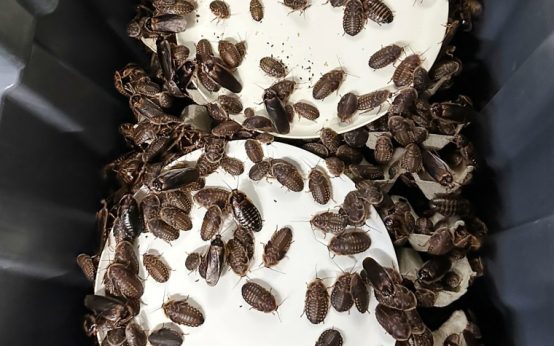 Australia’s Largest Seizure of Exotic Invertebrates: Over 100,000 Cockroaches Confiscated