The recent Ebola outbreak in Congo has been attributed to a rare strain caused by the Bundibugyo virus. Ebola spreads through bodily fluids and is highly contagious. It is often fatal, with a death rate between 30% and 50%. Symptoms include fever, rash, and vomiting, according to the World Health Organization (WHO).
Unlike more common Ebola strains, Bundibugyo lacks an approved vaccine or treatment. Health officials are particularly concerned because this outbreak was detected late. Most cases are in the eastern Ituri province, but the virus has spread to the capital, Kinshasa, and neighboring Uganda, making its full reach unclear.
Congo has closed its land border with Rwanda, as announced by the State Department. The WHO warns of uncertainties regarding the number of infected individuals and the virus’s geographic spread. Fighting the outbreak is complicated by recent conflicts between the Congolese government and the rebel group M23, with the city of Goma confirming at least one case.
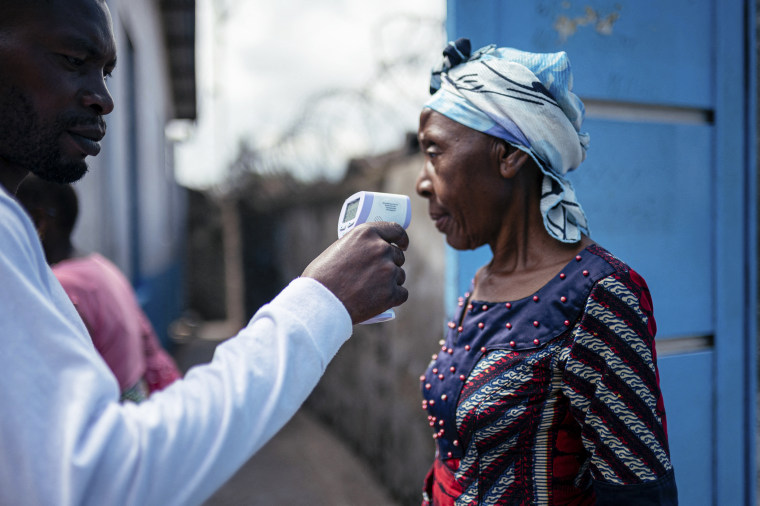
A healthcare worker was seen checking temperatures at a hospital in Goma, as reported by Jospin Mwisha / AFP via Getty Images.
Jean Kaseya, director-general of the Africa CDC, expressed grave concern on British broadcaster Sky News, citing a shortage of medicines and vaccines amidst rising deaths. The WHO has declared an emergency to support governmental efforts in combating the spread.
Its regional office for Africa reported on X that 35 experts and 7 tons of emergency supplies have arrived in Bunia, the Ituri province’s capital.
The U.S. government is aiding efforts through surveillance, laboratory diagnostics, and infection control, according to the CDC. However, Satish Pillai, the CDC’s Ebola response manager, remained tight-lipped about affected Americans.
A motorcycle taxi driver was observed waiting outside a hospital in Goma, again captured by Jospin Mwisha / AFP via Getty Images.
Doctors Without Borders, also known as Medicines Sans Frontiers, is preparing to scale up medical responses quickly, as stated by Trish Newport, MSF emergency program manager. The rapid increase in cases and deaths, along with cross-border spread, is causing significant concern.
Jeremy Konyndyk, president of Refugees International, highlighted challenges due to weakened international aid infrastructure. During the 2014-16 Ebola outbreak, USAID and the CDC, supported by the US military, led the response. He indicated cuts led by the Department of Government Efficiency have reduced available resources.
While the State Department has not commented on these concerns, it confirmed the U.S. is coordinating with Congo and Uganda to contain the virus rapidly. Efforts are underway to mobilize support for key partners, a spokesperson said.
 Protests Erupt in Albania Over Resort Development
  Clarity Sought on U.S. Troop Levels in Europe Amid Policy Changes
  Mount Sinai Health System Faces Subpoena on Gender-related Care
  U.S. Military Awaits Pentagon’s Clarification on Troop Levels in Europe
  Potential Ebola Outbreak in Central Africa Raises Concerns of Rapid Spread
  U.S. and Allies Condemn Efforts to Overthrow Bolivian Government