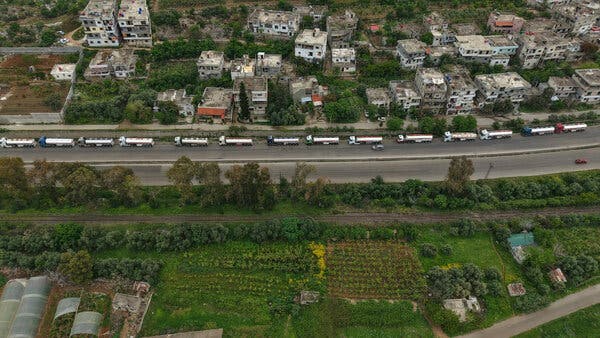
Recent conflicts in the Middle East have redirected economic opportunities towards Syria due to its strategic location. Syria, bordered by Turkey, Iraq, Jordan, and Lebanon, presents an alternative to the closed Strait of Hormuz. This crucial waterway previously served as a major route for international oil transport.
Countries like Iraq and those in the Gulf, such as the United Arab Emirates, have begun overland transportation of oil and goods to use Syrian ports. Mazen Alloush, a Syrian official, noted that neighboring countries sought access to Syrian ports soon after the Hormuz closure. They are preparing contingency plans in anticipation of prolonged disruptions.
However, Syria faces challenges in capitalizing on these prospects. Its infrastructure suffered considerable damage during a nearly 14-year civil war, which concluded in 2024 with the removal of Bashar al-Assad. Essential services like power and water remain inconsistent. Despite these hurdles, Syria is positioned to gain from regional instability by offering new trade routes.
Image of destruction in Damascus last year highlights ongoing recovery needs.
 Protests Erupt in Albania Over Resort Development
  Clarity Sought on U.S. Troop Levels in Europe Amid Policy Changes
  U.S. Military Awaits Pentagon’s Clarification on Troop Levels in Europe
  Potential Ebola Outbreak in Central Africa Raises Concerns of Rapid Spread
  U.S. and Allies Condemn Efforts to Overthrow Bolivian Government
  Pamela Hicks: Cousin, Bridesmaid, and Witness to History