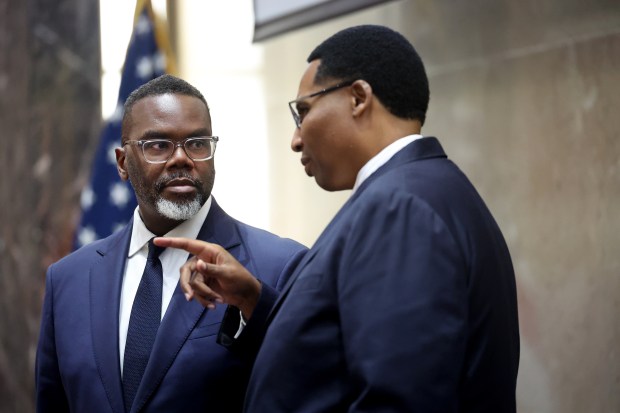
The Chicago City Council has voted to freeze the ‘One Fair Wage’ ordinance, halting the mandatory pay increases for tipped workers, including waiters. This decision will delay the wage increases for at least two years. Only one alderman opposed the decision, indicating broad support among council members. The move marks a significant obstacle for Mayor Brandon Johnson, who supported the raises as part of his working-class agenda. Despite the setback, Johnson described the vote as a compromise and chose not to veto the council’s decision, expressing dissatisfaction but recognizing the dialogue and compromise involved.
Initially, the council had stopped the ‘One Fair Wage’ ordinance indefinitely, but Johnson vetoed that decision, arguing the subminimum wage had historical ties to slavery. The new agreement postpones annual pay increases for tipped workers for two years in large restaurants and four years in smaller ones. Both the One Fair Wage campaign, which supported the original ordinance, and the Illinois Restaurant Association, which opposed it, have reluctantly accepted this compromise.
Alderman Walter ‘Red’ Burnett, who led the effort to freeze the ordinance, cited the need to preserve jobs in restaurants struggling with high food prices and taxes. He emphasized the importance of protecting workers and the businesses that employ them. Alderman Gilbert Villegas added that the pause was necessary to evaluate the economic impact of the original ordinance.
Alderman Jessie Fuentes, a supporter of the ordinance, voted for the freeze despite personal disappointment, urging her colleagues to avoid hindering future wage increases after the delay. Meanwhile, Alderman Jason Ervin criticized the freeze, calling it an ‘economic betrayal’ detrimental to Black Chicagoans.
The initial ordinance had increased the subminimum wage from $9.48 to $12.62 per hour, with future increases planned. The new agreement freezes these wages in larger restaurants until 2028 and in smaller establishments until 2030. Despite the current compromise, it remains possible that stakeholders may attempt to prevent future raises. Sam Toia of the Illinois Restaurant Association has not ruled out future efforts to maintain the subminimum wage structure.
During negotiations, it was suggested that while keeping the subminimum wage, restaurants could pay tipped workers 124% of the city’s minimum wage, including both wages and tips. Currently, employers must cover any shortfall if tips do not meet or exceed the minimum wage. Supporters of eliminating the subminimum wage argue this obligation is often ignored, highlighting inadequacies in enforcement.
The City Council meeting also featured an apology from Darren Bailey, Republican gubernatorial candidate, concerning previous negative remarks about Chicago. He clarified that his criticism was aimed at the political class, not the city itself. During this session, the council also passed an ordinance protecting voting rights and approved several significant appointments, including William Cheaks as the Transportation Commissioner and Anjanette Young to the Community Commission for Public Safety and Accountability.
Another decision involved a $2.25 million settlement with Access Living, aimed at improving accessibility for individuals with disabilities through the construction of nearly 3,000 housing units. Additionally, the council endorsed a $55 million tax incentive for the ‘1901 Project’ around the United Center, though a proposal supporting a referendum on creating a city charter was rejected.
 Latin American Deportees in Congo: Return to Home Countries Amid Challenges
  Federal Judge Invalidates Trump-Era Immigration Policy
  Debate Over White House Ballroom Construction
  Scrutiny Surrounds Graham Platner Amid Maine Senate Primary
  Trump’s Attendance at NBA Finals Sparks Mixed Reactions
  Graham Platner’s Controversial Senate Campaign in Maine