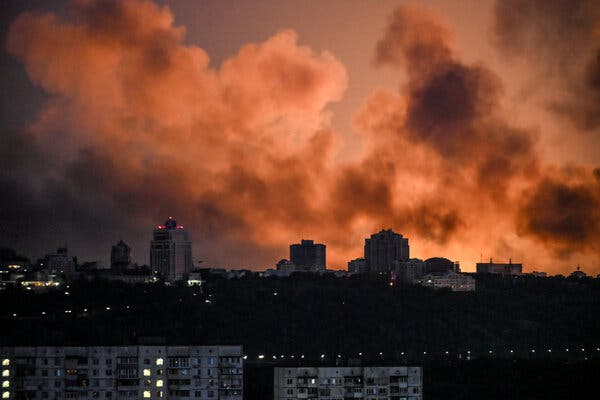
Early Sunday morning, Russia initiated a large-scale missile and drone assault on Kyiv, leading to several hours of explosions that shook the city’s buildings and ignited numerous fires. This assault damaged two subway system entryways in Kyiv, often used by residents as shelters during air attacks, including near Independence Square, a symbol of resistance against Russia.
President Volodymyr Zelensky had previously cautioned that Russia might deploy its Oreshnik missile, an intermediate-range ballistic missile designed to carry nuclear warheads. Russia had used the Oreshnik twice before on Ukrainian territory—first in 2024 and again in January—without deploying live explosives. These past attacks seemed more about psychological intimidation rather than causing major destruction. The Oreshnik missile serves more as a political instrument than an efficient weapon due to its nuclear posture.
As of early Sunday, it was uncertain if Russia had launched an Oreshnik. This missile releases multiple warheads during flight, descending rapidly on angles that American Patriot air defense systems struggle to counter. Reports from Bila Tserkva, located about 50 miles south of Kyiv, hinted that warheads had landed there, exhibiting the typical quick and dispersed trajectory.

 Protests Erupt in Albania Over Resort Development
  Clarity Sought on U.S. Troop Levels in Europe Amid Policy Changes
  U.S. Military Awaits Pentagon’s Clarification on Troop Levels in Europe
  Potential Ebola Outbreak in Central Africa Raises Concerns of Rapid Spread
  U.S. and Allies Condemn Efforts to Overthrow Bolivian Government
  Pamela Hicks: Cousin, Bridesmaid, and Witness to History