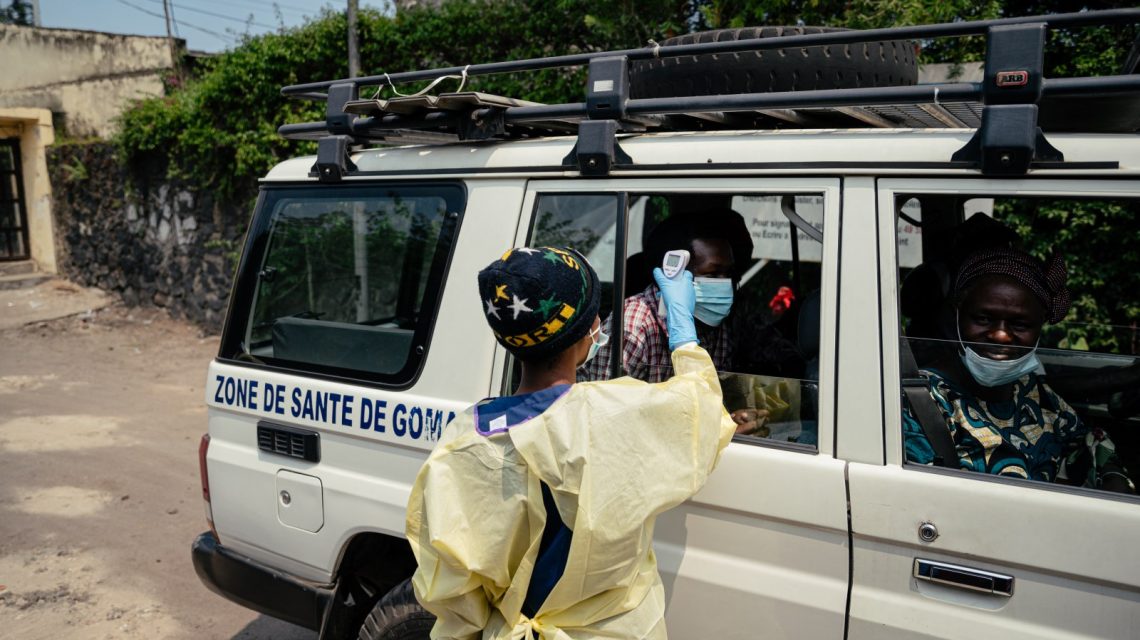
The Ebola virus often seems remote to many in the United States, perceived as a crisis affecting faraway places. However, historical lessons suggest otherwise. The 2014 Ebola outbreak in West Africa claimed over 11,000 lives, overwhelmed health systems in Guinea, Liberia, and Sierra Leone, and led to global concern as cases spread to countries including Italy, Mali, Nigeria, Senegal, Spain, the United Kingdom, and the United States. The outbreak’s arrival in Texas and New York reminded us that distant epidemics can reach our front doors. The World Bank reported that this outbreak cost West Africa billions in economic losses.
What contained this epidemic wasn’t mere luck. A global outbreak-response framework, created through international collaboration, disease tracking, lab networks, emergency teams, and foreign aid programs, played a crucial role. The United States and European governments financed this infrastructure significantly. During the Ebola outbreak, the U.S. alone committed more than $5.4 billion for Ebola preparedness and response, both domestically and internationally.
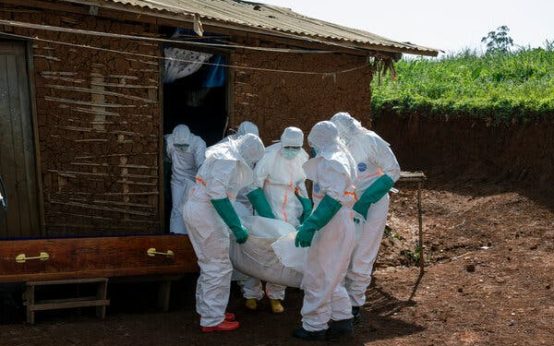
A decade later, another Ebola outbreak challenges the world. The current one, spreading across the Democratic Republic of Congo (DRC) and Uganda, involves the rare Bundibugyo strain. This strain proved initially elusive to many labs. By the time health officials identified it, the virus had already spread through funerals, crossed into Uganda, and reached regions destabilized by conflict and displacement.
The World Health Organization (WHO) has declared the outbreak a Public Health Emergency of International Concern, with over 860 suspected cases and 200 deaths reported. Unlike the Zaire strain, there is no approved vaccine or specific treatment for Bundibugyo Ebola currently. Many deaths could have been prevented, and support for vulnerable communities is essential.
The Bundibugyo strain is a challenge because it behaves differently from previous outbreaks, complicating existing diagnostics and preparedness measures. Africa CDC officials highlight the dangers posed by the absence of vaccines and treatments in the region.
This is not merely a story about virus mutation. It is also about institutional decline. For decades, the United States supported global epidemic preparedness via USAID, the CDC, PEPFAR, and through partnerships with WHO and African health agencies. U.S. funding bolstered lab networks, trained epidemiologists, and enhanced genomic capacities, among other efforts. The Global Health Security Agenda, launched in 2014, accelerated these advancements.
While the success of these systems often goes unnoticed because they prevent outbreaks quietly, they are eroding at a time when zoonotic spillovers, climate displacement, political instability, and rapid disease spread present new risks.
Since January 2025, the Trump administration has reshaped U.S. foreign aid policies, weakening global health and epidemic preparedness programs, particularly in the DRC. By July 2025, Secretary of State Marco Rubio announced a shift in foreign aid execution, ceasing USAID program implementations and transferring the remaining assistance to the State Department. More than 80 percent of USAID contracts were terminated, affecting outbreak preparedness, lab strengthening, vaccination campaigns, and disease tracking.
These changes have implications beyond aid delivery. Science reported that U.S. funding cuts have disrupted global disease surveillance efforts, damaging initiatives aimed at tracking pathogens and preventing epidemics. The U.S. administration’s retreat from multilateral health cooperation has weakened coordination with international bodies like WHO, eroding crucial information sharing and alert systems required for early outbreak detection.
Even with these setbacks, ending this outbreak is still possible. Much of the Ebola response infrastructure from 2014 remains and must be activated to prevent further loss of life.
The UK recently announced plans to reduce its foreign aid to 0.3 percent of its gross national income by 2027, the lowest in decades. Europe is seeing broader cuts, reshaping global aid dynamics. Analysts predict that health and humanitarian assistance could see reductions of up to 40 percent in some sectors.
Global health security impacts domestic health defenses. In the U.S., aid has often been portrayed more as charity than essential protection. But disease outbreaks do not stay localized. The Africa CDC warns of risk to 10 African countries. The U.S. CDC confirmed an American health care worker in the DRC tested positive for Bundibugyo Ebola and was treated in Germany. Another American, considered high-risk, was monitored in the Czech Republic, raising international transmission concerns.
The current situation in the DRC and Uganda is not merely a regional crisis. It stresses the importance of maintaining global health systems, even as wealthy nations reconsider their support. Decisions made now will determine whether governments heed the warning or risk a more expensive outbreak response later. Pathogens thrive amid global disunity, highlighting the need for cooperation.
Thoai D. Ngo, PhD, MHS, is the chair and professor of the Heilbrunn Department of Population and Family Health at Columbia University Mailman School of Public Health. The views expressed here are the author’s own.
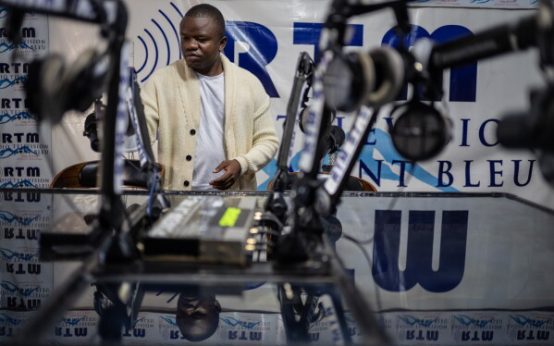 Potential Ebola Outbreak in Central Africa Raises Concerns of Rapid Spread
  Researchers Escorted Out of Diabetes Conference for Criticizing Trump Administration
 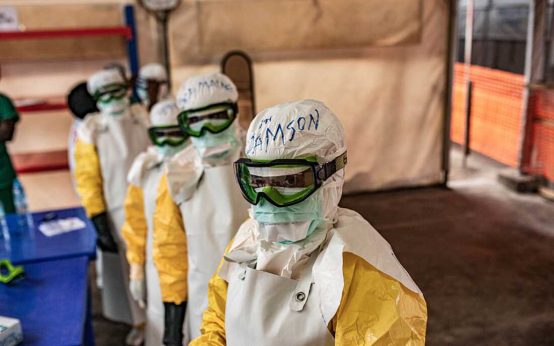 Ebola Outbreak in Africa: A Serious Concern
  Gold and the Ebola Outbreak in Congo’s Mining Towns
  House Passes Bill for Veterans’ Benefit Increase
  Gene Editing in Human Embryos at Columbia University