Governor JB Pritzker plans to sign a new law that sets a regulatory framework for artificial intelligence (AI) developers in Illinois. The legislation has garnered strong bipartisan support and approval from AI companies. It passed with a vote of 110-0 in the House and 52-5 in the Senate. This makes Illinois the first state to mandate independent third-party audits for large AI developers’ safety practices.
The bill is part of a broader initiative from the Democratic-controlled General Assembly aimed at addressing the lack of federal action on AI regulation. Democratic Senator Mary Edly-Allen of Grayslake emphasized the need for safety regulations, comparing the current state of the industry to “the Wild Wild West.” She stressed the necessity for a roadmap to prevent catastrophic risks in AI development.
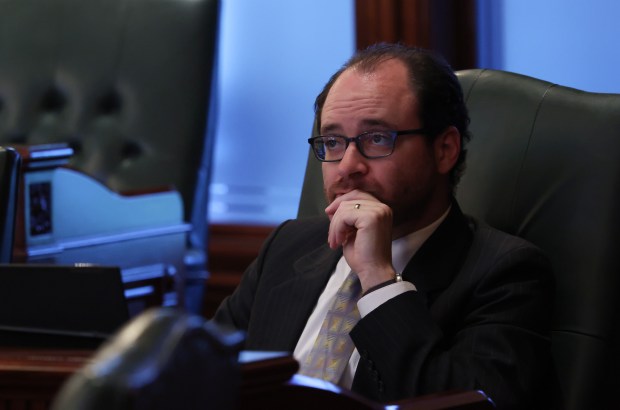
State Representative Daniel Didech, the primary sponsor of the bill in the House, highlighted AI’s significance as a technological advancement with the potential to vastly improve lives globally, contingent on responsible deployment.
The law will require large AI developers, defined as those with over $500 million in annual revenue, to explain potential catastrophic risks of their products and how they plan to mitigate these risks. Companies must disclose how they identify and respond to critical safety incidents and report them within 72 hours of discovery.
An annual independent audit of AI developers’ compliance will be mandatory, conducted by auditors with technical expertise in frontier AI safety. Whistleblower protections are included, prohibiting companies from discouraging employees from reporting public safety hazards to authorities. An anonymous internal reporting process must be maintained for employees who believe company activities pose public health or safety dangers.
Governor Pritzker expressed his intention to sign the bill, stating that Illinois leads the nation in holding Big Tech accountable. As AI affects people’s lives, safeguards are necessary.
AI companies have voiced support for the legislation. Anthropic, an AI developer backing the bill, remarked that the measure formalizes safety practices many leading labs already adopt voluntarily. OpenAI endorsed the bill, noting it sets clear expectations for safety and accountability as AI advances.
Republican Senate leader John Curran, a co-sponsor, described the bill as a fundamental move in regulatory technology policies, which will evolve to promote research and innovation in the burgeoning AI sector.
The legislation follows actions by Republican President Donald Trump’s administration, which hesitated to regulate AI due to concerns over stifling progress. Trump’s administration repealed a 2023 executive order from then-President Joe Biden that prioritized safe and responsible AI development.
Several other AI-related bills are making their way through the legislature with limited time left in the spring session. One bill targets AI-driven rental pricing platforms accused of enabling rent-fixing by prohibiting landlords from using shared software to set prices. It passed the Senate 34-21.
Another bill, passed unanimously in the Senate, would ban the use of bots to purchase event tickets in excess of limits and prevent resellers from falsely claiming affiliation with artists or organizers.
Additionally, a measure passed in the Senate demands AI companies detect signs of suicidal tendencies in users and refer them to crisis services like the 988 Suicide and Crisis Lifeline.
Businesses will be required under other legislation to inform customers at the start of a call that they are speaking to an automated system. This passed 56-1 in the Senate.
A separate bill prohibits companies from selling sensitive consumer data without providing an opt-out option. It passed the Senate 54-3.
For educational institutions, one proposal limits the use of student biometric data to essential instructional purposes. Another prohibits AI in grading student work; both passed without opposition.
 SpaceX Secures $920 Million Monthly Deal with Google
  Meta and YouTube Ordered to Pay Damages in Landmark Social Media Lawsuit
  60 Minutes Correspondents Decide to Stay Amid Crisis
  AI Impact: How AI Search is Transforming Professional Services and IT Budgets
  The Critical Role of Magnets in Modern Drone Warfare
  Rising Energy Demands Drive Innovative Solutions