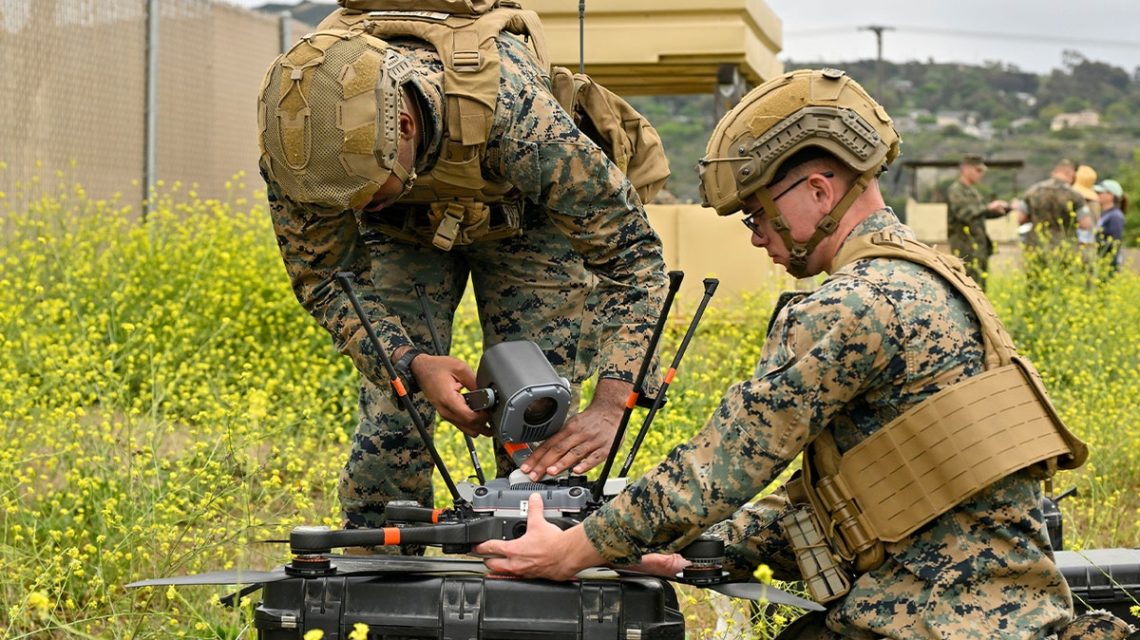
Contemporary conflicts heavily rely on drones, much like 20th-century wars depended on artillery shells. Every day, thousands of drones are deployed. For instance, Ukraine produced 5 million drones last year, while Russia launched 805 drones in a single night targeting Ukrainian cities. Success in this battlefield context favors the country that can sustain large-scale production rather than merely possessing advanced weaponry. This production process frequently starts with a permanent magnet, an essential component found in every drone’s motor. Notably, China produces almost all these magnets.
On June 6, 2025, President Donald Trump issued an executive order pushing all federal agencies toward using American-made platforms. This directive aimed to revamp the industrial base’s focus. Acquisition timelines were reduced from years to mere months. Companies now participate in field evaluations that can swiftly transition to production contracts. The Pentagon’s Drone Dominance Program has allocated $1 billion to procure over 200,000 drones by 2027, with plans to increase to 340,000 systems by 2028.
Building lasting production capability necessitates understanding the supply chain beyond the motors. The U.S. imports nearly all of its 50,000-ton annual demand for permanent magnets from China. These magnets do not carry data or provide surveillance. Instead, they generate the magnetic field crucial for lift and torque. When the supply of these magnets halts, so does production scaling.
T.S. Allen, a leading expert in rapid drone deployment, highlighted at a Brookings Institution forum that achieving production levels required by modern warfare involves understanding the supply chain of batteries and other critical components.
The challenge lies in the fact that most critical mineral processing occurs in China and Malaysia. China’s dominance in rare-earth materials was methodically established through state subsidies and by offering prices that undercut Western rivals. Such strategies not only allow manipulation of prices but also enable export limitations. Rare earth prices can fluctuate significantly within a single year.
Iron and nitrogen, used to create iron nitride permanent magnets, differ. These resources are domestically available, traded globally, and face no governmental export restrictions, ensuring stable scaling costs.
In April 2025, China introduced export licenses for seven rare earth elements and related permanent magnets, impacting defense and industrial supply chains. Within a short period, less than 25% of these licenses were approved. The result saw a 75% drop in Chinese rare-earth magnet shipments by May before some recovery. Europe’s largest drone motor manufacturer, Motor-G, relies entirely on China’s rare earth supply for its 100,000 monthly units. Ukraine faced similar challenges; although it has mineral reserves, it lacks the infrastructure to convert them into mass-produced magnets.
Enhancing Western rare-earth production is one solution, but not the sole one. At a recent forum, Allen estimated that meeting battlefield demands effectively would require producing ten times what current programs deliver. This scaling tests all inputs of the drone supply chain in unprecedented ways. Small fleets might endure magnet shortages. Massive fleets cannot. In wartime, losing access to a single material can halt production for an entire drone class.
Iron nitride’s commercial applications are already diverse. Neither iron nor nitrogen faces export restrictions or embargos. The magnets made from these materials not only perform well at high temperatures but also are lightweight—critical factors in drone motor design. American research and manufacturing are advancing iron nitride technologies to meet increasing demands. By integrating iron nitride into drone motors, a proven technology extends into an ever-important sector.
War production is essentially a contest. The nation that continuously manufactures prevails. Supply chains risk breaking from disruptions, diplomatic issues, and unforeseen export controls. Every crucial input in drone motors must come from reliable sources. Magnets remain one component still lacking such resilience.
 Latin American Deportees in Congo: Return to Home Countries Amid Challenges
  Controversy Surrounds Stabbing Incident of British Student
  Royal Cottages and Controversies: Financial and Legal Revelations
  Oak Lawn Librarian Supports Library Projects in Zimbabwe
  60 Minutes Correspondents Decide to Stay Amid Crisis
  World Cup Anticipation: US Men’s National Team and Norway’s Viking-Themed Campaign