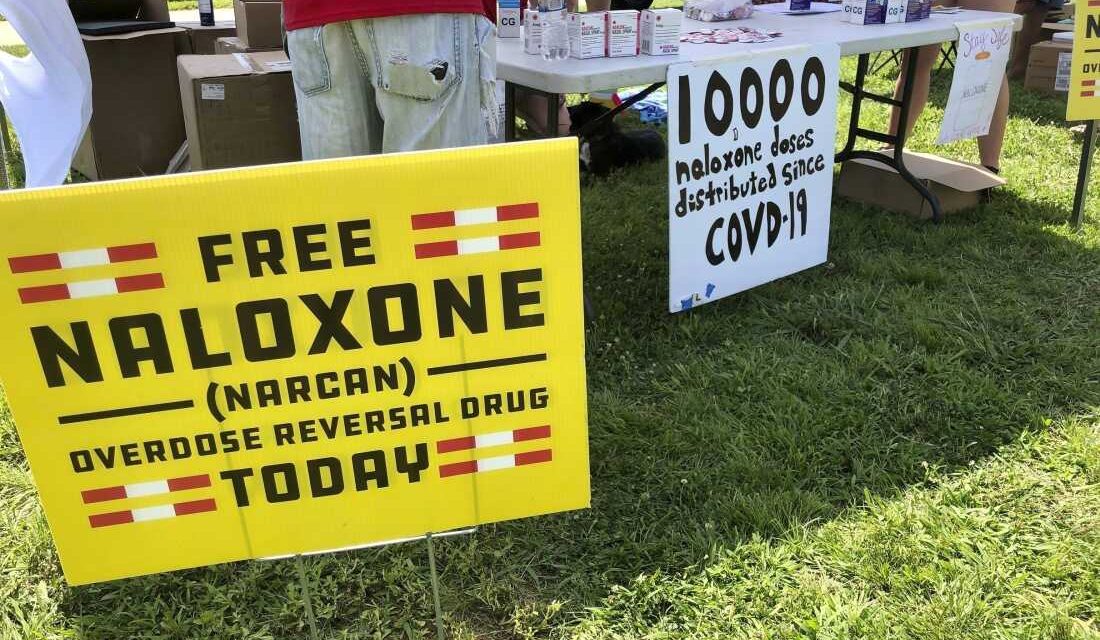
Signs are visible at a health event tent in Charleston, W.Va., highlighting the importance of naloxone, commonly known as Narcan. According to public health officials, its widespread use has greatly reduced overdose deaths in the U.S. While some Western states face an increase in deaths, overall street drug fatalities nationwide dropped approximately 14% in 2025 compared to 2024. The Centers for Disease Control and Prevention reports 69,973 deaths from overdoses last year. This is a decrease of around 11,300 deaths from the previous year.
Dr. Nora Volkow, head of the U.S. National Institute on Drug Abuse (NIDA), noted that while declines began in 2023, their sustainability was uncertain. She describes the 2025 reductions as “very good news.” Public health efforts include enhancing access to medications that decrease opioid cravings and reverse overdoses. Beth Meyerson, a drug policy expert in Arizona, notes that naloxone or Narcan is now as common as first aid in many areas, which has been crucial.
Trends indicate substantial declines in overdose deaths since mid-2023. Factors include less potent fentanyl on the streets and decreased drug use among young people. Dramatic reductions occurred in Alabama, New York, and Virginia, with fatalities dropping 25-30% by December 2025. New York Governor Kathy Hochul announced that opioid-related deaths in her state have halved since 2022.
The year 2025 marked the lowest drug fatality levels in the U.S. since at least 2019. From the summer peak of 112,418 deaths in 2023, the decrease is notable.
Drug deaths in the U.S. remain high compared to historic standards and other countries. Although Scotland ranks second worldwide in overdose rates, they remain much lower per capita than the U.S.
Challenges persist, particularly among older adults and in Black and Native American communities. Synthetic drugs made from industrial chemicals still pose problems on U.S. streets. States like Arizona, New Mexico, and North Dakota saw increases in fatal overdoses in 2025. Meyerson links Arizona’s spike to potent fentanyl and methamphetamines and limited medical access.
Volkow acknowledges the troubling prevalence of methamphetamines in Arizona and New Mexico as “very problematic.” Improvements in Native American communities are essential, given their disproportionately high overdose mortality, especially in rural areas lacking proper healthcare. Both Arizona and New Mexico have significant Native American populations where overdose mortality rates are double the U.S. average.
 Mount Sinai Health System Faces Subpoena on Gender-related Care
  Potential Ebola Outbreak in Central Africa Raises Concerns of Rapid Spread
  Researchers Escorted Out of Diabetes Conference for Criticizing Trump Administration
  Ebola Outbreak in Africa: A Serious Concern
  Gold and the Ebola Outbreak in Congo’s Mining Towns
  House Passes Bill for Veterans’ Benefit Increase