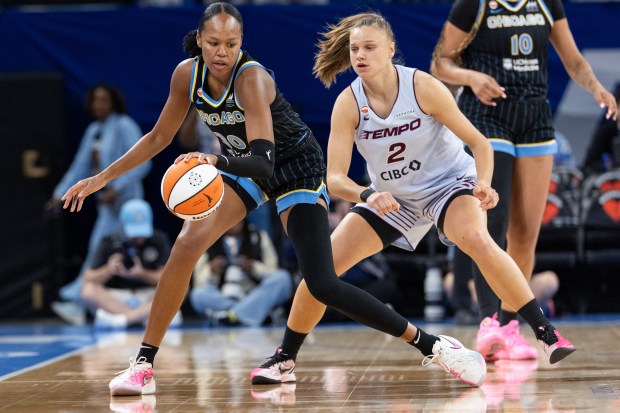
Azurá Stevens faced immense frustration early in the Chicago Sky season. Dealing with a bone bruise post-Unrivaled season kept the veteran forward off the court for months. This inactivity compounded during a challenging free-agency period.
Watching her teammates play increased Stevens’ frustration. She shared her grievances with Courtney Vandersloot, a seasoned teammate since 2020. Stevens was tired of the slow recovery; her knee ached, and each day felt burdensome.
Vandersloot, 37, related to Stevens. Recovering from an ACL tear, she dealt with her first major career injury. Her advice was simple: persist. Completion seemed distant, yet closer than Stevens imagined.
Opening night offered little solace to Stevens. Sitting out during the Sky’s first win only highlighted her rehab tedium. However, stepping onto the court at Wintrust Arena transformed her perspective. The championship banner and cheering fans confirmed Vandersloot’s advice.
“Even though there’s a day-to-day grind and it can be taxing, if you keep stacking days, your goals will be reached,” Stevens told the Tribune. “It’s a blessing.”
Injuries pervade Stevens’ career. From foot surgery in 2019 to a knee injury the following year, repeated setbacks defined her journey. Back-to-back injuries rendered continuous seasons difficult.
Last year, she achieved consistency, playing all regular-season games with the Los Angeles Sparks. Yet, a collision in the Unrivaled season caused a bone bruise.
Bone bruises differ from other injuries. They indicate significant impact but not fragility. Healing requires time, supplements, and specific exercises. Thus, Stevens took time off, resting and vacationing in Jamaica. Still, her longing for the game intensified as the Sky season began.
“It’s frustrating, I can’t lie,” Stevens admitted. “But everything has a purpose. Each injury taught me about myself and fostered growth as a player and person.”
Stevens honed her recovery skills through experience. Chicago’s changes since her last stint improved her rehab process. The team employed Jess Cohen as director of health and human performance alongside eight player performance staffers, enhancing holistic care.
Previously, the Sky struggled to provide recovery resources. This improved framework covered all facets, from inside resources to coordinated external care, managed from the new training location at UIC.
“They’re not winging it,” Stevens affirmed. “The staff’s expertise supported my decision to return to Chicago.”
Stevens’ return came with a restricted playing time, limited to 16 minutes per game. She viewed the constraint as an opportunity to focus on efficiency rather than enduring errors over extended playtime.
“You have to lock into small details and get every minute right,” Stevens remarked.
Despite an optimistic approach, this limit posed challenges for coach Tyler Marsh. It meant navigating periods without Stevens on the court, breaking momentum when she was substituted.
“Place her in positions where she succeeds in limited minutes,” Marsh stated. “Don’t overwork her.”
These restrictions are temporary. Stevens and Marsh understand the gradual shift to a full load of 25-28 minutes per game remains ahead. For the Sky, aligning with their centerpiece star is imminent.
For Stevens, reaching this point involves persistence and dedication. Now, she focuses on the process, recognizing it’s a matter of time.
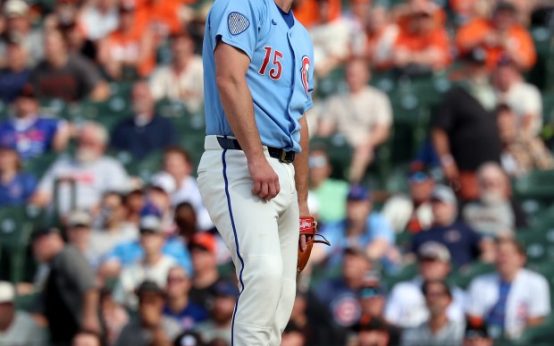 Chicago Cubs Struggle Despite Brief Optimism After Rally
 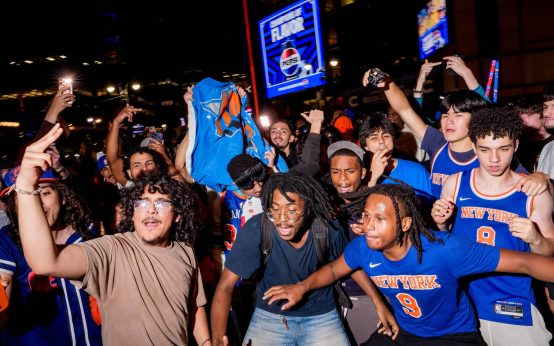 Knicks Fans Rally Across the Nation for NBA Finals Glory
  FIFA World Cup 2026: Enhanced Security Measures for Drone Activity
 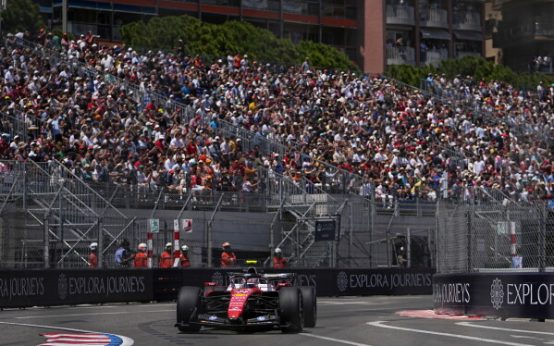 Samantha Busch Expresses Gratitude Following Kyle Busch’s Passing
  Trump’s Attendance at NBA Finals Sparks Mixed Reactions
  Weekend Sports Highlights and NIL Debate