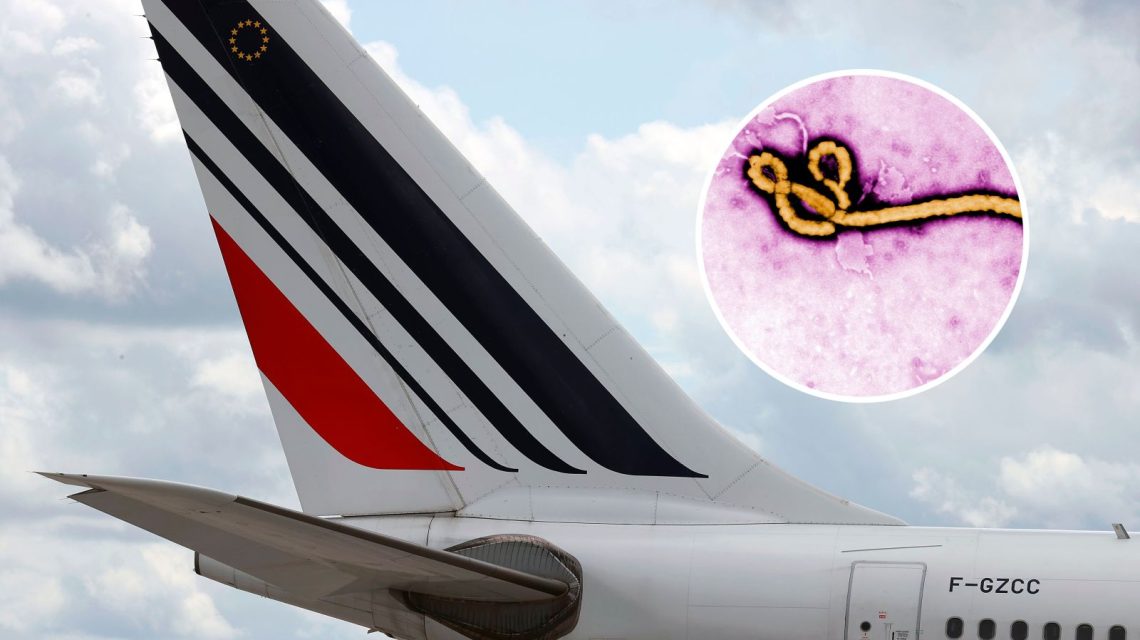
A flight that departed from Charles de Gaulle Airport in Paris, heading to Detroit, was rerouted to Canada due to concerns about Ebola exposure. The passenger in question had traveled from the Democratic Republic of Congo (DRC), which was against current U.S. travel restrictions. The U.S. Customs and Border Protection (CBP) stated that due to these restrictions, the individual should not have been permitted to board the aircraft.
The aircraft was directed to Montreal after the CBP took action to prevent the landing at Detroit Metropolitan Wayne County Airport. This decision aligns with a 30-day travel ban for non-U.S. passport holders from the DRC, South Sudan, and Uganda, effective from May 18. The ban was imposed following an Ebola outbreak linked to the Bundibugyo virus in the northeastern DRC. Uganda has also reported cases imported from the DRC.
Although South Sudan has not reported cases in this outbreak, it remains a high-risk area according to the U.S. Department of Homeland Security (DHS). The DHS, along with other health departments, is executing advanced public health strategies at one primary U.S. airport to manage travelers arriving from affected regions.
A new DHS rule will require flights with passengers who have been in the DRC, South Sudan, or Uganda within the last 21 days to land at Washington-Dulles International Airport. This measure is part of broader efforts to contain the spread of Ebola.
The World Health Organization (WHO) has labeled the outbreak a ‘public health emergency of international concern.’ While President Donald Trump has expressed worry over the situation, there are currently no confirmed U.S. cases.
Dr. Peter Stafford, an American doctor serving in eastern Congo, contracted the Bundibugyo strain of Ebola. He was transported to Germany for treatment as it offered more immediate care options. The DRC and Uganda have collectively reported a combination of confirmed and suspected cases totaling 675 incidents, with 134 suspected deaths.
The Ebola outbreak in this region started when healthcare workers in the Bunia Health Zone fell severely ill. Subsequent tests revealed the presence of the Bundibugyo virus, which impacts around 30 percent of those infected fatally. There is currently no vaccine for this virus, with treatment focusing on supportive care.
Historically, during the West African Ebola outbreak from 2014 to 2016, over 11,000 people succumbed to the disease. The DRC has faced 17 Ebola outbreaks since 1976, with the last one reported in December of the previous year. Early intervention is crucial to prevent international crises stemming from such epidemics, according to the DHS. The unpredictable nature of Ebola and global travel connectivity further emphasizes its potential threat to U.S. health security.
Ebola Overview
Ebola is a severe, often deadly disease, primarily affecting humans and primates. The virus spreads through direct contact with the infected bodily fluids of people or, less commonly, animals. The Bundibugyo virus was identified in 2007, causing significant outbreaks in DRC in 2012 and on the DRC-Uganda border in 2007.
Symptoms manifest as fever, aches, pains, and fatigue, escalating to diarrhea, vomiting, and bleeding. Onset occurs roughly eight to ten days post-exposure. Current U.S. FDA-approved treatments address only one Ebola species. For others, including Bundibugyo, supportive care remains the main treatment approach, involving hydration, symptom management, and infection control.
 U.S. Military Awaits Pentagon’s Clarification on Troop Levels in Europe
  Potential Ebola Outbreak in Central Africa Raises Concerns of Rapid Spread
  U.S. and Allies Condemn Efforts to Overthrow Bolivian Government
  Pamela Hicks: Cousin, Bridesmaid, and Witness to History
  Researchers Escorted Out of Diabetes Conference for Criticizing Trump Administration
  Latin American Deportees in Congo: Return to Home Countries Amid Challenges