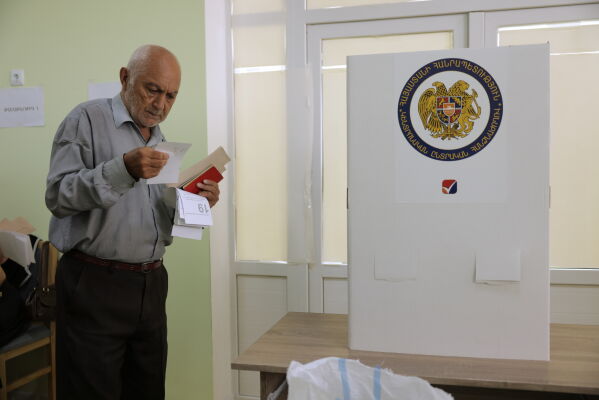
Armenian Prime Minister Nikol Pashinyan declared victory in a recent general election, marking a potential shift in the South Caucasus nation’s geopolitical direction. Early results placed his party ahead, securing over twice the votes of the closest competitor. Pashinyan aims to decrease Armenia’s dependence on Moscow and strengthen ties with Western nations, a move supported by the European Union.
Pashinyan stated, “The European Union is our main partner in democratic reform implementation, and we will continue that path,” after voting on Sunday. European election observers noted the election was both divisive and “well-run,” as concerns were raised about attempts by Russia to influence the outcome.
Pashinyan’s Civil Contract party led with 49.82% of the votes. Billionaire Samvel Karapetyan, his main opponent, garnered 23.28% despite facing legal challenges that he claims are politically driven. Armenian investigators announced arrest warrants for six members of Karapetyan’s party, Strong Armenia, accusing them of vote-buying. The party, favoring close business ties with Moscow, accuses Pashinyan of inciting conflict with Russia. Full election results are set for release after parties lodge any complaints.
“Much of the Russian efforts at interference fell flat and were ineffective,” said Richard Giragosian, head of the Regional Studies Center in Yerevan.
The election posed significant implications for Russia-Armenia relations. Russia warned of economic fallout should Armenia pivot toward the EU. Moscow wields substantial control over Armenia’s energy and infrastructure and recently banned various Armenian imports citing import rule violations, interpreted by the EU as “economic coercion.” President Putin has reminded Armenian leaders of the path Ukraine took, suggesting Armenia risks similar Russian actions.
Armenia’s National Assembly requires at least 101 members, elected for five-year terms. Political parties need at least 4% of the vote for representation, with multi-party blocs requiring 8%. The Hayastan bloc, led by ex-President Robert Kocharyan, and the Prosperous Armenia party both hovered near vote thresholds to secure seats. Voter turnout was reported at 58.94%.
Preliminary tallies suggest Pashinyan’s party could occupy 61 Assembly seats, allowing governance without needing coalition support, short of enabling constitutional amendments without a referendum. Pashinyan underscored intentions to progress peace talks with Azerbaijan.
Opposition disaproval followed efforts to normalize ties with Azerbaijan. Leaders from both nations, alongside former U.S. President Donald Trump, endorsed a framework for peace at the White House. Armenia and Azerbaijan have clashed over Karabakh, a region claimed by ethnic Armenians. Azerbaijan claimed control in a swift 2023 offensive.
Pashinyan plans to “institutionalize” peace talks and initiate a major transit project, naming it after Trump. Observers acknowledged the election offered voters genuine choice, despite reports of election-related criminal cases against opposition figures.
EU officials, preparing an economic aid package for Armenia, congratulated Pashinyan. European Commission President Ursula von der Leyen emphasized EU-Armenia relations. Meanwhile, Russia’s Foreign Ministry referred to the election environment as “polarized” and warned of Western interference, particularly by the EU.
Russia remains open to working with Pashinyan’s government but intends to heighten pressures based on Armenian leadership’s actions.
 Remembering Michael Keating
  Haitian Soccer Team Returns to World Cup Amid National Struggles
  USA Celebrates Historic World Cup Win Over Paraguay
 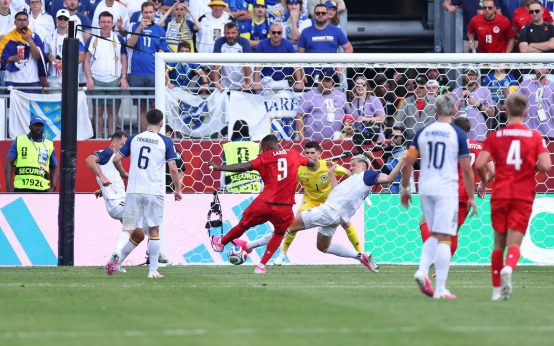 US National Team Shines in World Cup Opener Amid FIFA Ticket Pricing Row
  Gad Saad Shares His Surreal Meeting with Elon Musk
  NATO Considers Defense Alternatives Amid U.S. Military Reduction