
Evacuations and Emergency Measures
A damaged chemical tank in Garden Grove, Southern California, cracked over the weekend. Authorities hoped this would relieve pressure and mitigate the explosion risk. Approximately 50,000 residents have been evacuated from the city, which has a population of about 170,000. Garden Grove is located 40 miles south of downtown Los Angeles.
The incident began when the tank overheated Thursday and started venting vapors, prompting local and state authorities to act quickly to prevent a disaster. Fortunately, no injuries have been reported. Fire officials are working overnight to assess if pressure relief is achieved, thus reducing the worst-case scenario of an explosion, said interim chief TJ McGovern of the Orange County Fire Authority.
Monitoring and Safety Efforts
The Orange County Fire Authority confirmed a single crack in the tank, disputing online rumors of multiple cracks. There is no active leak, and atmospheric tests show no chemicals escaping. Safety teams have been cooling the chemical, methyl methacrylate, used in plastic manufacturing, by spraying water onto the tank. Temperature inside the tank reached 100 degrees Fahrenheit, up from the previous day.
Efforts continue to prevent a catastrophic event. Governor Gavin Newsom declared a state of emergency and sought federal aid from President Donald Trump. The chemical tank, located at GKN Aerospace Transparency Systems, holds between 6,000 and 7,000 gallons of the chemical. Air quality tests around the evacuation zone remain within normal limits, and specialized equipment ensures no gas is released.
Preventing an Environmental Disaster
Drones monitor the tank’s temperature every 10 minutes. Containment barriers are in place to prevent potential spills from contaminating storm drains, creeks, or the ocean. As methyl methacrylate heats, it turns from liquid to gas, increasing pressure inside the tank, according to Purdue University engineering professor Andrew Whelton.
If a crack allows the release of the product or pressure, the explosion risk decreases. Whelton compared this to a soda can left in a hot car. A small hole in the can releases pressure, preventing an explosion.
Firefighters are unlikely to intentionally puncture the tank due to the risk of creating a spark that could ignite the flammable gas. An explosion of this nature would spread chemicals over a wide area, posing a significant safety threat.
Community Impact and Legal Action
Evacuated residents are experiencing disruption. Shelters have opened, with some people sleeping in cars and on school grounds. Nearby Disneyland remains unaffected by evacuation orders, although officials continue to monitor developments.
Methyl methacrylate exposure can lead to respiratory, neurological issues, and irritation to eyes and skin. In case of an explosion, experts urge detailed air monitoring for methyl methacrylate instead of relying solely on generic volatile organic compound tests.
Garden Grove residents have filed a class-action lawsuit against GKN Aerospace Transparency Systems. They claim property values will be affected regardless of the event’s outcome. The company apologized to evacuated residents and businesses, stating efforts are ongoing to mitigate leak risks.
GKN Aerospace settled prior environmental violations with a financial penalty in 2025, related to recordkeeping, permitting, and emissions issues, as reported by the South Coast Air Quality Management District.
 Limited Interest in Arctic National Wildlife Refuge Oil Auction
  Confronting the Truth Behind Sustainability Buzzwords in the Food Industry
  The Aftermath of Santa Rosa Island’s Fire
  Largest Seizure of Illegal Cockroaches in Australia
  Flesh-Eating Fly Returns to the United States Causing Concern
 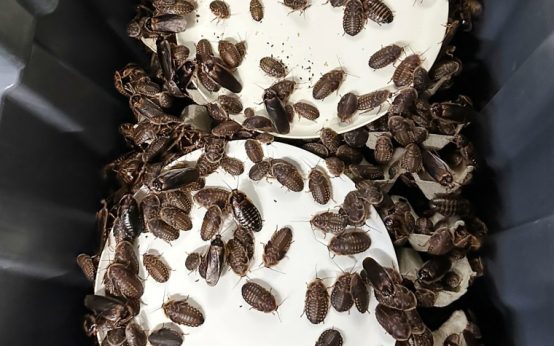 Australia’s Largest Seizure of Exotic Invertebrates: Over 100,000 Cockroaches Confiscated