
A court in Pará, Brazil, has mandated that federal and local authorities take action to restore Fordlandia, a city founded by U.S. industrialist Henry Ford nearly a century ago in the Amazon. This ruling, highlighted by prosecutors on Friday, represents a notable advancement in heritage preservation.
Fordlandia, now a ghost town and part of Aveiro, was created in 1927 by the Ford Motor Co. as a hub for rubber tapping. It aimed to secure a steady rubber supply for tire production. Initially designed as an ideal American suburb, it ranked as the third-largest settlement in the Amazon. However, disease outbreaks in rubber plantations led to its eventual abandonment. By 1945, the Brazilian government took control of the site.
The federal prosecutors in Pará initiated legal action in 2015 against Brazil’s Iphan architectural heritage agency and the city of Aveiro. They accused them of neglecting Fordlandia’s preservation and demanded it be granted protected status. The prosecutors labeled Fordlandia as a “landmark chapter in Brazil’s history and global industry.” They noted that it was an American effort to rival the British rubber monopoly, introducing advanced infrastructure such as a hospital, running water, electricity, and a movie theater to the Amazon in the 1920s.
Despite its commercial project ending, officials stressed that the district holds vital significance in Brazil’s national memory and should be conserved for future generations. A Pará judge recently decreed that both federal and local authorities must undertake Fordlandia’s restoration, following over a decade of litigation.
Though not officially recognized as a heritage site, the court acknowledged its historical, cultural, and architectural importance, citing the Brazilian Constitution’s requirement for its protection. The ruling compels the government and municipality to formulate and execute a recovery plan, with potential financial sanctions for failing to comply.
The Associated Press clarifies that its climate and environmental coverage is funded by several private foundations, yet it retains full editorial control over its content. Details on AP’s guidelines for philanthropic collaborations, its backers, and supported areas can be found on AP.org.
 Confronting the Truth Behind Sustainability Buzzwords in the Food Industry
  The Aftermath of Santa Rosa Island’s Fire
  Largest Seizure of Illegal Cockroaches in Australia
  Flesh-Eating Fly Returns to the United States Causing Concern
 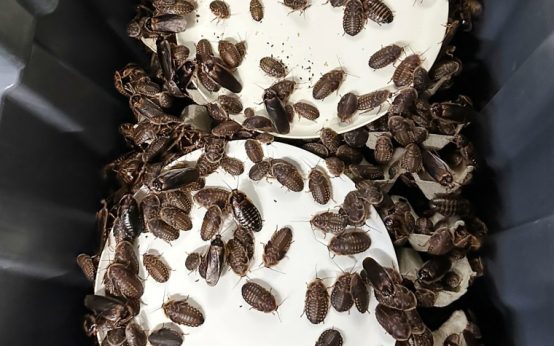 Australia’s Largest Seizure of Exotic Invertebrates: Over 100,000 Cockroaches Confiscated
 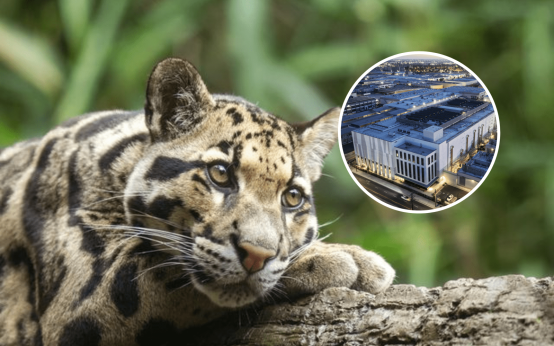 Controversy Surrounds Proposed Nashville Data Center Near Zoo