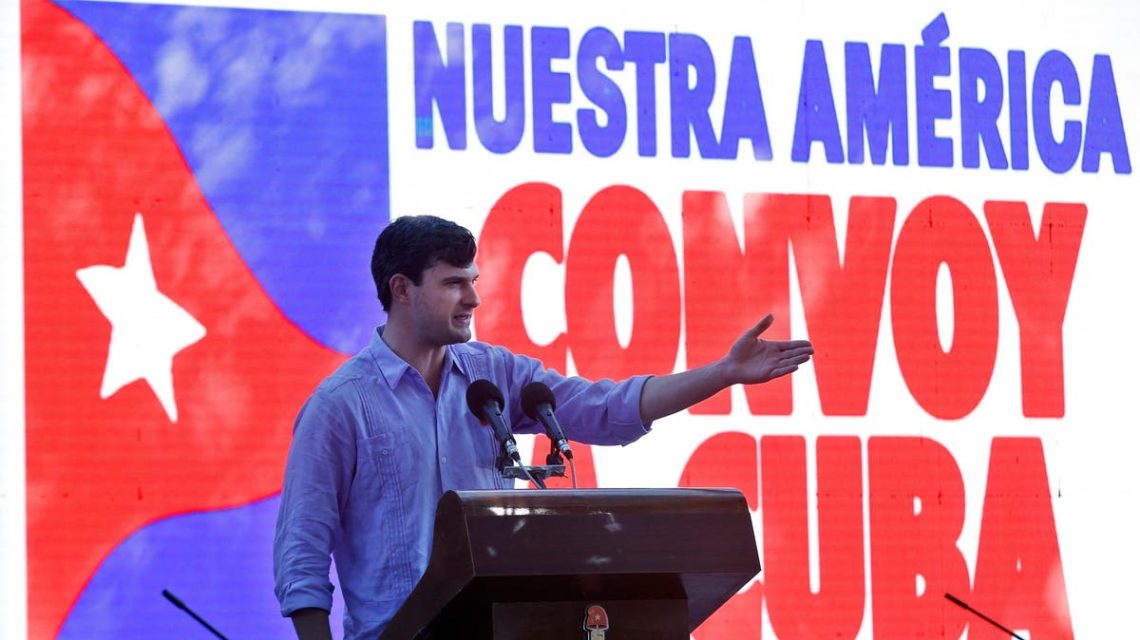
The third part of a Fox News Digital investigative series sheds light on alleged networks built by Cuba’s Communist Party through nonprofits, activist groups, and political delegations. When President Donald Trump increased sanctions on Cuba earlier this year, Twitch streamer Hasan Piker sought advice from his friend, David Adler, to address the situation.
Piker’s account reveals the organization of a transnational convoy, ‘Nuestra América Convoy,’ which united hundreds of activists to deliver substantial supplies to Cuba. This event now draws scrutiny from federal investigators as the Treasury Department’s Office of Foreign Assets Control subpoenas records of Piker, and CodePink co-founder Medea Benjamin, related to their Cuba activities.
The attention on the convoy also highlights Progressive International, led by Adler, as central to the operations. Analysts caution that while Progressive International promotes progressive values, it may inadvertently provide legitimacy to authoritarian regimes. This assertion is supported by Gelet Martinez Fragela, a Cuban American journalist, who argues that Cuba uses solidarity groups for global alliances and influence.
The investigation notes Progressive International’s founding in 2020, linked to Democratic figures like Bernie Sanders and Greek politician Yanis Varoufakis. Despite little public funding information, the group’s mobilization for the Cuba convoy includes activists from 33 countries. Notably, David Adler, Progressive International’s coordinator, has close ties with Cuba’s government.
Cuban President Miguel Díaz-Canel publicly intervened during Adler’s retention by Israeli authorities. Additionally, Mariela Castro Espín, related to Cuba’s leadership, holds a role within the Progressive International advisory council, raising concerns about its influence.
Piker’s involvement in the convoy included consulting prominent figures like Ben Rhodes on U.S.-Cuba relations. His documented journey to Cuba included associations with organizations like Belly of the Beast for a media narrative shaped as humanitarian effort and anti-imperialism.
While similar convoys have historic roots, today they operate through modern networks. The convoy extends beyond humanitarian aid to political advocacy and activism partnerships, as seen with overlap in efforts involving Cuba, Gaza, and sanctions opposition.
Federal investigators focus on the logistical and financial aspects of the convoy’s travel and possible Cuban government involvement. The broader picture extends to various nonprofit networks aimed at supporting Cuba’s ruling party.
 Latin American Deportees in Congo: Return to Home Countries Amid Challenges
  Controversy Surrounds Stabbing Incident of British Student
  Royal Cottages and Controversies: Financial and Legal Revelations
  Oak Lawn Librarian Supports Library Projects in Zimbabwe
  World Cup Anticipation: US Men’s National Team and Norway’s Viking-Themed Campaign
  Family Searches for Missing Auburn Student in Japan After Disagreement Over AI