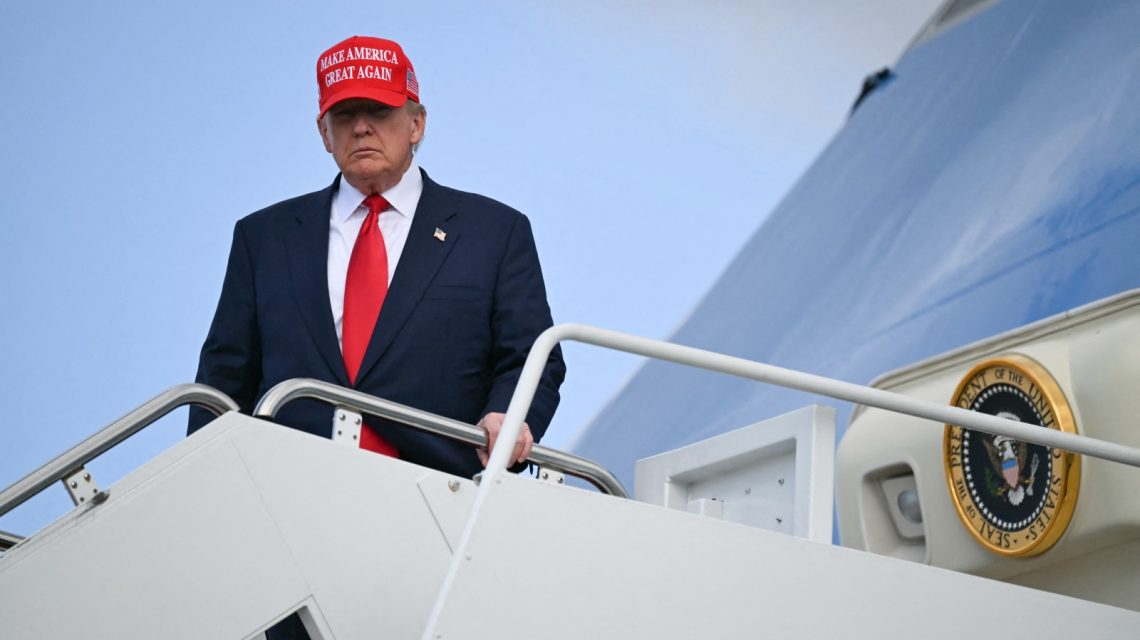
As a staunch supporter of Donald Trump, having voted for him three times, I believed that his coalition could reshape American politics for a generation. Noteworthy was the prospect of a lasting impact, extending beyond his tenure. However, recent developments prompt a critical question: what remains of Trump’s legacy if he is willing to compromise it?
Trump’s election wasn’t solely about victory. Instead, he promised that a diverse, working-class coalition could redefine the Republican Party. This ambition wasn’t unrealistic. Trump emerged as the first significant Republican figure since Ronald Reagan with the potential to redefine party dynamics. Reagan succeeded in reshaping the Republican Party, and his movement endured for a generation. Trump’s promise faces challenges today.
The base’s loyalty hasn’t waned, but the administration has focused inward, favoring conflicts that inspire loyalists without creating sustainable change. Initiatives like renaming the Kennedy Center, imposing a transgender service ban, and engaging in tariff disputes fail to broaden appeal. These efforts resonate with the staunch faithful but do little to engage the broader 77 million Americans who reelected Trump.
Such governance prioritizes symbols over substance, leaving the administration facing legal setbacks. For example, a federal judge ruled that only Congress could rename the Kennedy Center. An appeals court blocked the transgender ban for current service members, judging the policy as arbitrary. Pursuing these contentious actions often ends in symbolic victories turned defeats.
Trump’s decision-making sometimes appears self-defeating. The SAVE Act, a voter ID law, was popular, yet Trump’s approach transformed it into a test of loyalty, knowing the Senate would not support it. This divisive strategy cost John Cornyn his career, despite his support for the bill. Prioritizing loyalty over party interest exemplifies the Cornyn effect. Trump endorsing scandal-ridden Ken Paxton showcases the risk in prioritizing loyalty, making even secure Senate seats vulnerable to Democrats.
Trump needs support from senators for his agenda and nominations. Yet, he risks alienating those whose votes he needs, like Cornyn and Cassidy. A ‘lame-duck’ senator, feeling disregarded, holds no allegiance to the White House, presenting a hurdle Trump has facilitated.
The appointment of Bill Pulte, lacking intelligence experience, to oversee nation’s spy agencies exemplifies prioritizing ideology over qualification. Pulte’s background in homebuilding and nonprofit work in Detroit may suit housing roles, not intelligence community oversight.
This approach risks creating a movement reliant solely on Trump, without a coherent ideology or succession plan. Historical comparisons, like with Pat Buchanan’s ‘America First’ insurgency, show movements need a successor to endure. Reagan understood this, leaving an idea and a strong bench behind, while Trump appears to neglect such foresight.
The energy Trump’s strategy channels focuses on conflict and loyalty over collaboration and results. Effective governance needs more than adoration; it requires strategic succession planning.
Trump has a unique coalition. Proving he can govern effectively, leaving a lasting legacy, remains unresolved. The opportunity lies not in victory alone, but in establishing a legacy resilient beyond Trump’s presence. A legacy is protected not by erasing what’s around it, but through acknowledging successors. So far, Trump has only anointed himself.
Melik Abdul is a D.C.-based public affairs professional and Republican strategist. The views expressed in this article are the writer’s own.
 Federal Judge Blocks Removal of National Park Exhibits
  Judge Temporarily Blocks Trump’s Proposed Compensation Fund
  Concerns Raised Over Proposed Veterans Benefits Package
  Trump’s Name to Be Removed from Kennedy Center After Court Ruling
  Civic Virtue and Political Accountability
  Federal Raids Target Ohio Voter Registration Group