
Recently, a federal judge made a significant ruling regarding immigration enforcement in Minnesota, emphasizing that the state’s geographic and legal status does not exempt it from federal laws. On January 31, Judge Katherine Menendez decided not to impose a preliminary injunction against the federal government’s immigration enforcement operations in Minnesota. This decision underscores that federal immigration laws are equally applicable in Minnesota, much like in neighboring states such as Missouri.
This ruling comes amidst claims by certain Minnesota politicians that the federal government was infringing on the state’s sovereignty through operations like Operation Metro Surge. These officials argued that such efforts were unconstitutional and violated the 10th Amendment of the U.S. Constitution, which reserves powers not delegated to the federal government to the states or people. However, the court’s decision highlighted the supremacy of federal laws, reiterating that immigration enforcement falls under federal authority.
“The powers not delegated to the United States by the Constitution, nor prohibited by it to the States, are reserved to the States respectively, or to the people.” – 10th Amendment
Minnesota’s politicians sought a preliminary injunction to halt Operation Metro Surge, alleging political motives since Minnesota is a sanctuary state. They claimed these actions violated principles of equal sovereignty and anticommandeering. However, Judge Menendez’s ruling pointed out that the Constitution ensures the federal government has supremacy in immigration matters. James Madison, in Federalist No. 44, supported the necessity of federal supremacy to maintain a unified governance system.
The various arguments against Operation Metro Surge were countered by the federal court’s interpretation, which favored the enforcement powers of the federal government. President Donald Trump, who emphasized immigration enforcement as part of his campaign, sought to uphold these laws, stressing the importance of addressing issues like illegal immigration and associated criminal activities.
Minnesota’s legal position that Trump violated the anticommandeering principles of the 10th Amendment was dismissed as having no substance. The Supreme Court has clarified through decisions such as New York v. US that Congress cannot compel states to enforce federal programs, but it is permissible for federal agencies to enforce laws without state cooperation.
Detractors argue that the increased ICE presence in Minnesota diverts state resources. However, cooperating with federal efforts might require fewer resources than opposing them. Critics say that Minnesota’s government provides unwarranted support to individuals evading immigration laws, which ultimately is a path chosen by the state.
Moreover, the equal sovereignty argument lacks weight. The president possesses discretion in enforcement efforts and prioritization, recognized by the Supreme Court in US v. Texas as part of executive powers. The enhanced ICE operations in Minnesota reflect the president’s exercise of this discretion, responding to the state’s specific circumstances.
Overall, the legal challenge led by Minnesota’s Democratic Governor Tim Walz reflects a broader political struggle rather than an argument solely about state sovereignty. This opposition diverts resources from the enforcement of immigration laws, creating tensions between federal objectives and state policies. The underlying issue remains Minnesota’s stance on immigration law enforcement, drawing resources away from law-abiding citizens to support legal disputes and opposing initiatives.
Dr. Sandeep Gopalan, noted professor at the University of Maryland Eastern Shore, sheds light on these matters, while drawing from his extensive academic background and expertise in law.
 Ex-CIA Official Detained Over Possession of Gold Bars Worth $40 Million
  High Tensions Escalate in Texas Teen’s Murder Trial
  Acquitted Woman Sues Massachusetts Police Over Alleged Misconduct
  Autopsy Reports of University of Idaho Victims Unsealed
  Legal Battle Over Ryne Sandberg’s Trust
 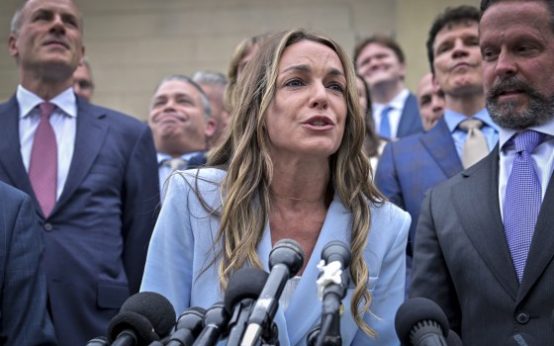 Karen Read Files Lawsuit Against Massachusetts State Police and Canton