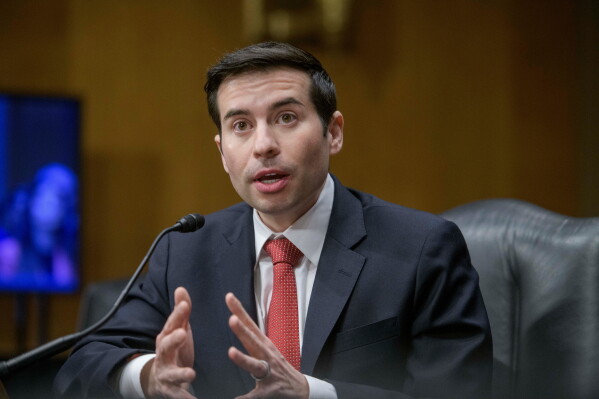
The Federal Reserve chose to maintain its key interest rate on Wednesday. Despite this decision, nearly half of its policymakers hinted at supporting a rate increase later this year. This stance presents an aggressive approach that contrasts with President Trump’s expectations and reflects growing concerns over inflation.
The Fed’s meeting concluded with an unusually concise statement. Previous language suggesting an imminent rate cut was notably absent. This change likely mirrors the influence of new chair Kevin Warsh, appointed by Trump, who has been critical of the Fed’s broad commentary on the economy.
In their recent quarterly projections, nine Fed officials anticipate at least one rate hike this year, with six favoring two or more hikes. This marks a significant shift from March, when there was no support for a hike and the committee predicted a rate cut by 2026.
Inflation currently stands at its highest in three years. Many officials have indicated in recent speeches that failing to curb inflation may necessitate increased rates by year-end. Overall, eight officials support keeping the rate steady, while one suggests a cut.
“It’s essential we remain attentive to the economy’s needs,” Warsh stated.
Notably, Warsh has not submitted a personal forecast on rate changes. The projection chart displayed only 18 dots from 19 policymakers. Warsh has critiqued the projections for limiting policy outlook flexibility. Additionally, he removed forward guidance from the policy statement.
Warsh announced the formation of five task forces to improve Fed operations, focusing on communication methods, data sources, and quarterly projection composition. His goal is to ensure the Fed remains forward-focused and transparent.
Wednesday marked Warsh’s first policy meeting as Fed chair, after Trump’s dissatisfaction with Jerome Powell. Trump’s criticisms backfired, as Powell remained on the governing board, voting to keep rates at about 3.6%.
Warsh faces a challenging decision. While higher rates could control inflation by reducing borrowing and spending, this move might draw criticism from the White House. Such an action could raise costs for mortgages and loans just before midterm elections.
Should the conflict in Iran end, gas prices may drop, helping to reduce inflation. However, several goods and services prices were increasing before the conflict, suggesting lingering inflationary pressures. Inflation has surpassed the Fed’s 2% target for five years.
Warsh faces an economic backdrop different from when he was considered for the Fed chair position. Previously, he advocated for lower rates, aligning with Trump. He believed that advancements in technology, particularly AI, could lower inflation by expanding production capabilities.
However, economic conditions have shifted. Soaring investments in semiconductors and computing equipment have contributed to recent inflation spikes. Since the Iran conflict started on February 28, inflation has escalated to 4.2%, primarily driven by increased gas prices.
While a peace agreement in Iran might conclude the three-month conflict, and flow of oil resumes, it remains uncertain if peace will last. Even if oil prices stabilize, other prices such as groceries and fares might take longer to adjust.
The Fed’s preferred inflation measure has exceeded its 2% target for over five years. Meanwhile, job growth has surged, eliminating a key reason for cutting rates. In a recent report, hiring rose in May, marking a third consecutive month of significant job gains with employers adding 172,000 jobs. This development reduces the likelihood of rate cuts aimed at boosting employment.
Despite repeated calls from Trump to lower rates, inflation trends prompted him to express that ‘Kevin’ should act independently. However, he also recently opposed rate hikes despite rising inflation.
 The New Wave of Democratic Political Strategy
  Trump Delays Clayton’s Confirmation for Director of National Intelligence
  Justice Department Advocates for White House Ballroom After Foiled Attack
  ICE Revises Immigration Detention Policies
  Vice President JD Vance’s Experience on The View
  Gavin Newsom’s Strategic Statement Amid DOJ Investigation