
Millions across Europe suffered from scorching temperatures, with France recording 40 drownings in a week as people tried to cool off. France, dealing with the highest impact so far this early summer, expects continued high temperatures. Meteo France has issued a red alert for 54 departments, covering half the country.
Italy, Spain, and Britain also faced intense heat. Human-induced climate change links to extreme weather patterns. U.N. climate projections suggest that the next five years will likely bring higher temperatures.
Impact on France
Prime Minister Sébastien Lecornu shared that the 40 individuals who drowned were mostly young. Popular sites like the Louvre and the Eiffel Tower adjusted their hours due to the heat. In a country lacking widespread air conditioning, schools, public transport, and sports events faced disruptions. The Eiffel Tower closed earlier to avoid peak heat, and the Louvre reduced its hours to manage the temperature.
Museum officials noted that, while the historic building resists heat naturally, it remains vulnerable and underprepared for such extremities. Heat builds up significantly by day’s end, worsened by large visitor numbers.
The extreme temperatures may continue until the week’s end, with highs above 40°C (104°F) in many areas. Meteo France warned of record-breaking temperatures that might surpass year-round records.
Heat in the UK and Spain
England’s schools saw closures and trains disruptions due to a red heat warning from the Met Office for Wednesday and Thursday. Temperatures might reach 37°C (98.6°F) in southern England and 35°C (95°F) in southeast Wales. The heat wave is expected to ease by Friday.
Multiple train services were canceled for safety, with National Rail advising limited travel. Spain endured heat across the Iberian Peninsula, with Aemet issuing red alerts for Andalusia’s 44°C (111°F) and expected 40°C (104°F) in Cantabria and the Basque Country.
Meteorologist Rubén del Campo warned of hotter conditions as climate change makes heatwaves more regular, lengthy, and occurring outside traditional patterns. Since 1975, half of Spain’s June heatwaves occurred post-2015. The EU’s Copernicus pointed out Europe’s sharp temperature rise, forecasting increased health risks and wildfire vulnerability.
The Associated Press urges support for trustworthy journalism, essential for an informed public and healthy democracy.
 Regulatory Reclassification of Shellfish by U.S. Fish and Wildlife Service
 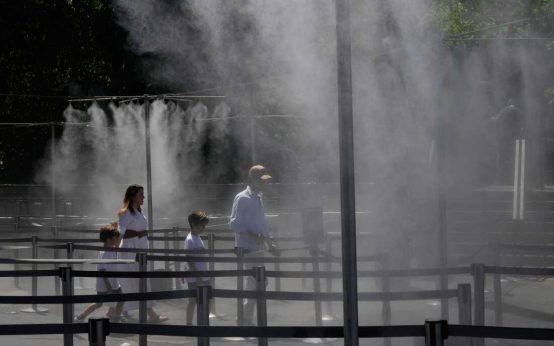 Severe Heat Wave Sweeps Across France
 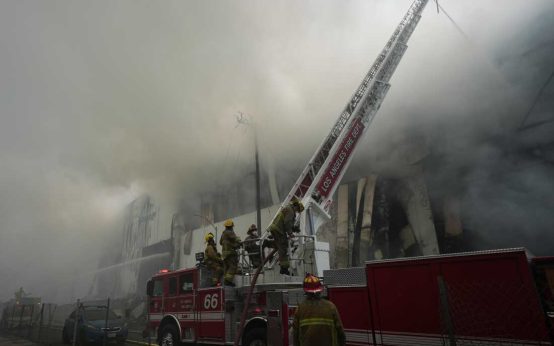 Challenges in Extinguishing Boyle Heights Warehouse Fire
  The Mystery Behind Coho Salmon Deaths: A Tire Chemical Culprit
 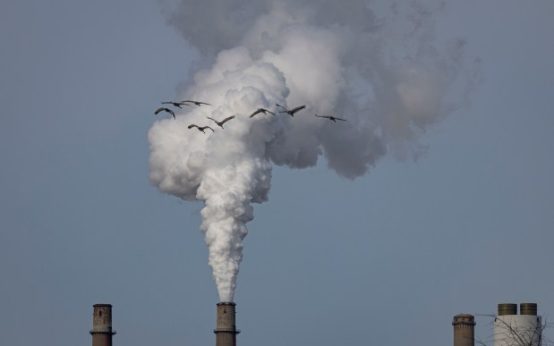 DOE Extends Operation Order for Indiana Power Stations Amid Controversy
 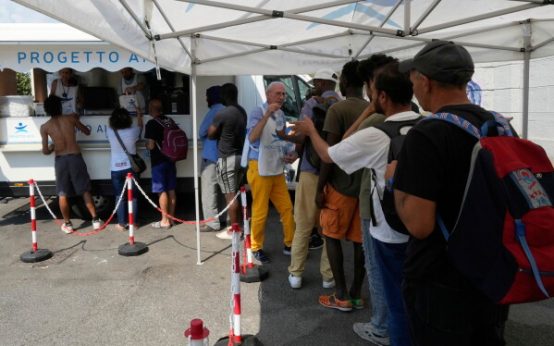 Global Heat Stress Rise: A Growing Concern