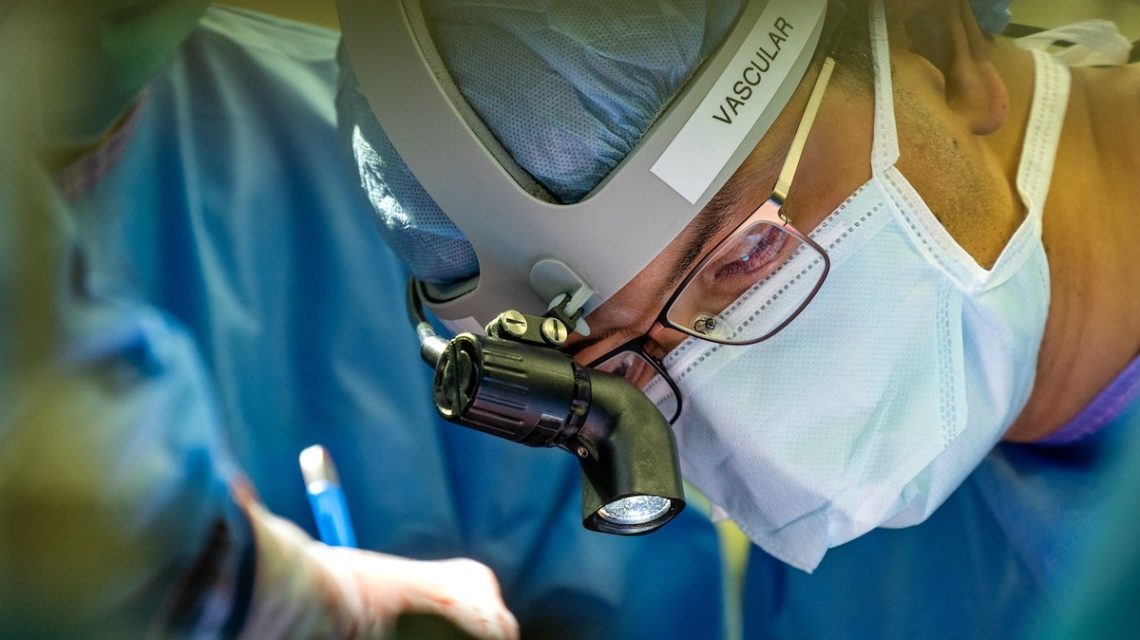
In an unprecedented medical procedure, surgeons at Northwestern Medicine in Chicago managed to keep a critically ill patient alive for 48 hours by removing both of his lungs. This critical intervention was reported by the hospital last week. The patient, a 33-year-old man from Missouri, was initially transported to Northwestern Memorial Hospital due to lung failure caused by a flu infection in early 2023.
The patient’s situation worsened, developing into severe pneumonia and sepsis, which led to cardiac arrest. The medical team had to perform CPR to revive him, as detailed in a recent press release.
A key complication was a lung infection that resisted all forms of antibiotic treatment, causing the lungs to liquefy and further spread throughout his body.
Ankit Bharat, M.D., the chief of thoracic surgery and executive director at the Northwestern Medicine Canning Thoracic Institute, explained the critical nature of the infection and the subsequent spread.
To halt the infection, it was necessary to remove his lungs, though there was significant risk of immediate heart failure. Bharat described how, without the lungs acting as a shock absorber, the heart was vulnerable to high resistance that could prompt instantaneous failure.
Innovative Artificial Lung System Maintains Heart Function
Despite the man being on life support, the healthcare team crafted a “total artificial lung system” (TAL), which managed the gas exchange process and maintained proper blood flow to the heart, enabling the patient’s survival post-lung removal.
This cutting-edge approach maintained the natural physiology of the heart, allowing the heart to control blood flow naturally instead of relying on an external machine.
Following the removal of the diseased lungs, remarkable improvement was observed in his condition, as the infection no longer posed a threat.
Successful Lung Transplant and Recovery
After 48 hours, his condition stabilized, making him a candidate for a successful double-lung transplant. Two years following the procedure, the patient has returned to his usual activities, boasting excellent lung and heart function and full independent functionality.
This case marked the first successful implementation of this specific artificial lung system. The design features a self-regulating shunt that simulates lung physics, protecting the heart and maintaining effective blood flow through dual return tubes.
Surgical Breakthrough and Future Prospects
The groundbreaking procedure and findings were documented in a case study recently published in the Cell Press journal Med. The study provided a molecular analysis of the excised lungs, illustrating extensive damage and scarring, reinforcing that transplantation could be the sole solution in severe cases of acute respiratory distress syndrome.
The TAL system holds promise as a potential strategy for patients in dire need of lung transplantation, particularly those suffering from acute respiratory distress syndrome, necrotizing pneumonia, or septic shock.
Looking ahead, Dr. Bharat and his team envision developing durable, implantable artificial lungs that could provide a long-term solution rather than serving solely as a transitional bridge to transplantation.
 Researchers Escorted Out of Diabetes Conference for Criticizing Trump Administration
  Ebola Outbreak in Africa: A Serious Concern
  Gold and the Ebola Outbreak in Congo’s Mining Towns
  House Passes Bill for Veterans’ Benefit Increase
  Gene Editing in Human Embryos at Columbia University
  Melinda French Gates Commits $215 Million for Global Women’s Health