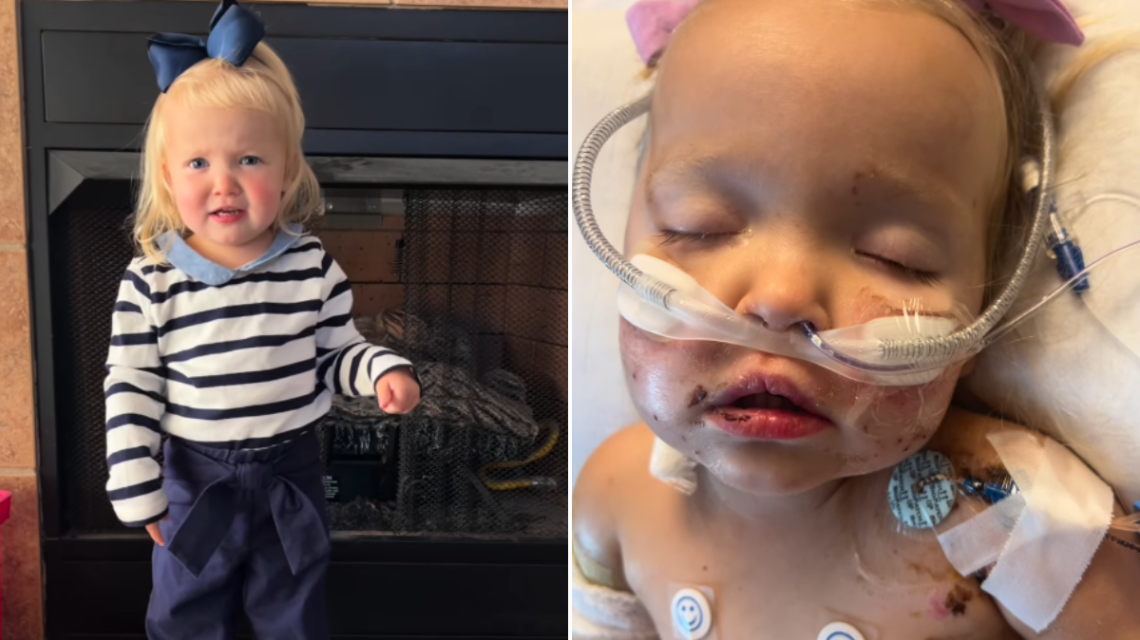
Kory Paige Loden, a mother from Tennessee, experienced a frightening ordeal with her daughter, Mady, over two years ago. Initially appearing to be the flu, Mady’s condition rapidly deteriorated, leading to a life-and-death struggle.
Unexpected Illness
Mady, then 18 months old, went to bed without any apparent issues one October night in 2023. The following morning, she showed signs of illness, including lethargy. Though she continued eating and drinking, her condition worsened throughout the day. Mady’s older brother had been diagnosed with Flu B earlier, so similar symptoms were assumed.
As the day progressed, Mady became more lethargic. She eventually stopped consuming food or fluids. Her situation escalated when she developed a fever, and her lips and feet turned blue. Upon consulting her sister-in-law, a pediatrician, Kory learned about potential instances where feverish babies develop blue feet. Seeking relief, she placed Mady in the shower, but Mady lay on the shower floor, indicating something was profoundly wrong.
Medical Emergency
Recognizing the seriousness of the situation, Kory took Mady to an urgent care facility. There, medical staff quickly assessed Mady and called an ambulance to transport her to a local hospital. During the ambulance ride, Kory was informed of the gravity of Mady’s condition when attempts to start an IV yielded no response.
Mady’s night at the hospital was a blur. She was soon stabilized enough to be airlifted to a children’s hospital located 90 minutes away. On the way, Kory and her husband received a distressing call seeking consent to perform a “code” to restart Mady’s heart if necessary. Upon arrival at the hospital, doctors warned they might need to put Mady on life support.
Critical Condition and Diagnosis
The next 24 to 48 hours were critical for Mady. Her community, including her church and family, provided support, easing some logistical concerns. Mady’s diagnosis of sepsis stemmed from an interrupted inferior vena cava and her congenital lack of a spleen. These complications made her susceptible to infections due to her body’s inability to manage encapsulated bacteria.
Sepsis led to disseminated intravascular coagulation, causing widespread blood clotting problems. As time progressed, the medical team identified the cause as strep pneumonia, leading to complications such as kidney failure and diminished blood circulation in her limbs.
Amputation and Recovery
Mady faced the devastating outcome of the illness, resulting in the loss of her legs. In December, one of her legs was amputated after being hospitalized for almost two months. Despite efforts to save her remaining leg, it was also amputated later due to complications. Mady underwent multiple surgeries during and following her hospital stay.
Now, two-and-a-half years later, Mady thrives as a happy and lively bilateral amputee. Her early age during the illness means she holds no memory of life before. Her agility with and without prostheses is impressive. By sharing Mady’s story, Kory hopes to raise awareness and potentially aid other parents in recognizing and addressing symptoms of sepsis early.
 Researchers Escorted Out of Diabetes Conference for Criticizing Trump Administration
  Ebola Outbreak in Africa: A Serious Concern
  NASCAR Community Mourns the Loss of Kyle Busch
  Persistence in Investigations: Encouragement and Challenges
  Support Pours in for Airport Worker After Viral Video
  Challenges of Reentry After Years in Prison