
As July 4 approaches, nature may surprise you with a radiant nighttime spectacle. Meteorologists have indicated that the northern lights could be visible on Friday.
The Space Weather Prediction Center (SWPC) of NOAA has been monitoring major sunspot groups recently. One sunspot triggered a powerful solar flare, designated as X1 strength. Shawn Dahl, a coordinator with the SWPC, noted this in an update saying, “X” indicates the highest classification for solar flares, while “1” is the weakest level in that tier. “It was a quick, energetic event,” Dahl remarked. Initially, the direction of the coronal mass ejection (CME) from this activity was uncertain.
On Wednesday, SWPC confirmed that the CME will likely affect Earth, leading to “increased geomagnetic activity.” If the conditions align, notably the orientation of the magnetic field, there could be moderate geomagnetic storming. This increase might allow for a view of the northern lights just before Independence Day.
Viewing Opportunities on July 3
If the SWPC’s forecast holds, residents in northern U.S. states may witness the aurora. Moderate geomagnetic storms (G2 level) can bring the northern lights as far south as New York and Idaho. This potential viewing includes regions in Washington, Oregon, Idaho, Montana, North Dakota, South Dakota, Minnesota, Wisconsin, Michigan, Vermont, New Hampshire, New York, and Maine. Alaska also falls into this category, given its frequent aurora sightings.
“Forecasts suggest that those slightly further south in Wyoming, Nebraska, Iowa, Illinois, Indiana, Ohio, Pennsylvania, and Massachusetts might also see the northern lights.”
A crucial factor is timing. If the strongest geomagnetic storming occurs before sunset, the aurora could be overpowered by daylight. Unfortunately, some predictions indicate that part of Friday may experience this. The SWPC expects conditions to start intensifying around 2 a.m. EDT and persist through the day. Nevertheless, by sunset, the northern lights might still appear for a few hours.
To keep track, visit the SWPC website for updated forecasts. Should the aurora materialize, your best chance to view it is by looking towards the northern horizon. If visibility is poor, consider using your smartphone. Modern digital cameras can better capture the vibrant colors compared to the human eye.
© 2026 Nexstar Media Inc. All rights reserved. This material cannot be published, broadcast, rewritten, or redistributed.
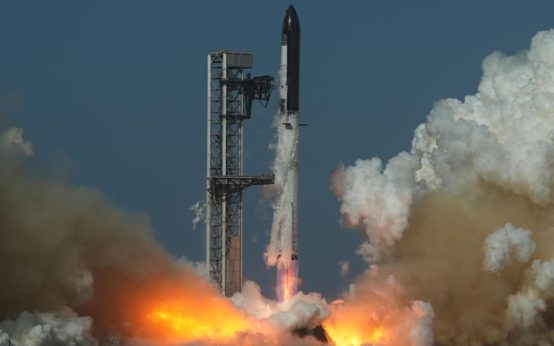 SpaceX’s 13th Super Heavy-Starship Launch Achieves Milestones Despite Challenges
 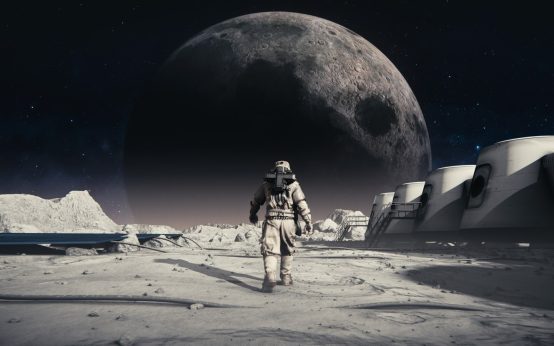 Building Lunar Cities: NASA’s Vision for Moon Habitation
  SpaceX Aborts Starship Launch Due to Engine Issues
 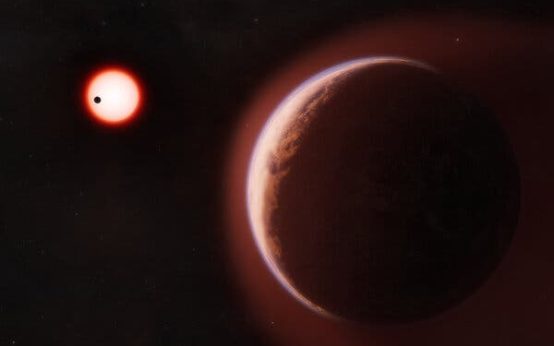 Potentially Habitable Exoplanet LHS 1140b Discovered with Atmosphere
 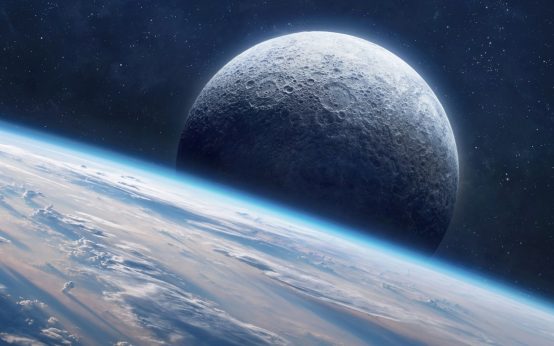 Psychological Challenges of Long-Term Lunar Living
  Reflecting on NASA’s Role in SpaceX’s Success