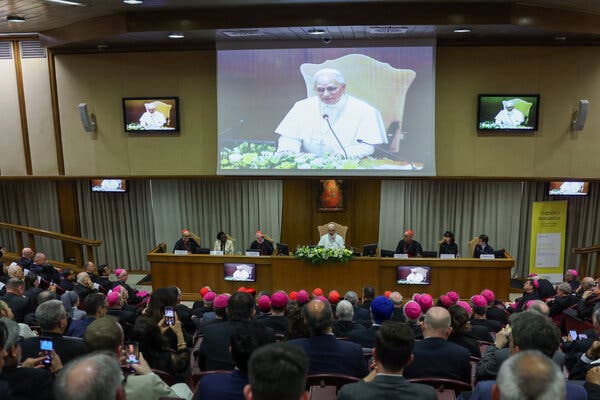
Pope Leo XIV has issued a significant teaching document focused on protecting humanity in the era of artificial intelligence (AI). The encyclical, titled “Magnifica Humanitas” or “Magnificent Humanity”, marks his first major statement as an American pontiff. This document arrives at a time when technology is poised to profoundly shape human life.
Pope Leo signed the encyclical on the 135th anniversary of “Rerum Novarum”, known as “Rights and Duties of Capital and Labor”. This past encyclical addressed labor issues during the Industrial Revolution, crafted by Pope Leo XIII. Pope Leo XIV’s adoption of this name reflects his commitment to addressing urgent contemporary challenges, akin to those his predecessor faced.
The encyclical covers numerous themes across 42,300 words, aimed at the world’s 1.4 billion Catholics. Key among these themes is the need to recognize AI’s limitations compared to human intelligence. Pope Leo XIV warns against confusing AI with human cognitive abilities. Though AI systems can mimic human intelligence functions, they do so without experience or emotional understanding. AI excels in computational speed and data processing but lacks the human capacity for emotions, maturity, and relational growth.
Throughout the text, Pope Leo XIV acknowledges AI’s rapid advancement and its potential as a valuable tool. However, he underscores that, fundamentally, AI remains non-human and merely mimics certain aspects of the human mind and soul.
 Latin American Deportees in Congo: Return to Home Countries Amid Challenges
  Controversy Surrounds Stabbing Incident of British Student
  Royal Cottages and Controversies: Financial and Legal Revelations
  Oak Lawn Librarian Supports Library Projects in Zimbabwe
  60 Minutes Correspondents Decide to Stay Amid Crisis
  World Cup Anticipation: US Men’s National Team and Norway’s Viking-Themed Campaign