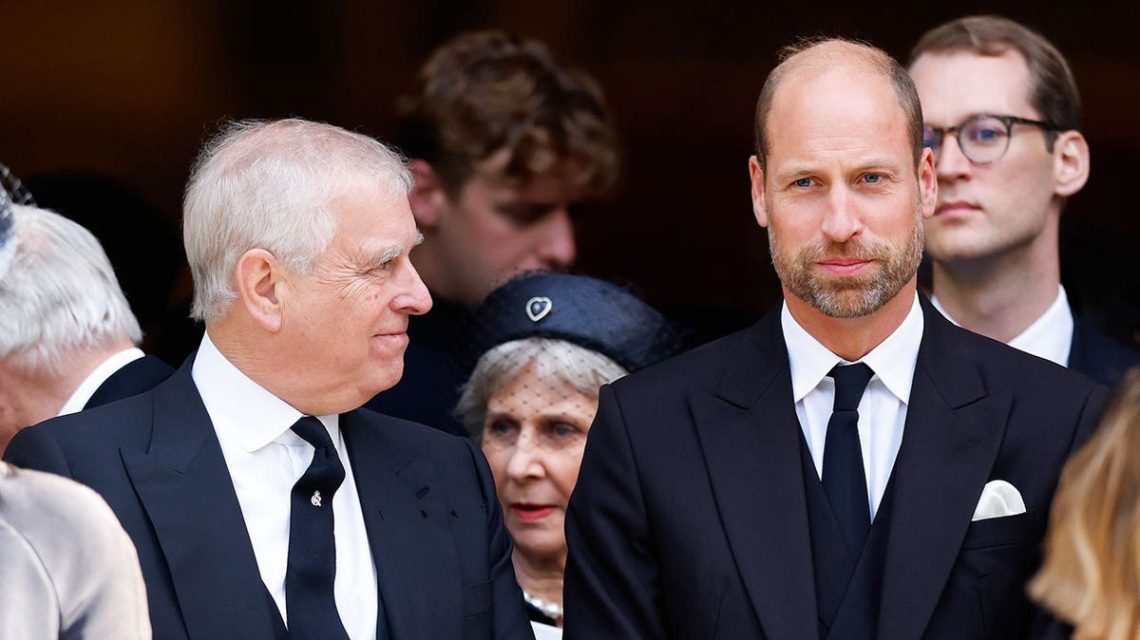
Prince William has taken a firm stand by declining to defend his uncle, Prince Andrew Mountbatten-Windsor, in the ongoing controversy linked to Jeffrey Epstein. Instead, William, alongside Princess Catherine, has voiced support for Epstein’s victims, marking a shift from the royal family’s ‘never complain, never explain’ tradition.
“Prince William, significantly influenced by Princess Catherine, is working towards modernizing the monarchy by showing alignment with the victims,” said British royalty expert Hilary Fordwich to Fox News Digital. “His actions demonstrate a strong moral leadership, which includes distancing from his ‘despicable’ uncle.”
Prince William and Princess Catherine have been vocal about their concerns regarding the recent revelations concerning Prince Andrew’s connections to the late sex offender Jeffrey Epstein. A statement from Kensington Palace on February 9, 2026, underlined their unease, noting their focus on the victims.
The couple expressed that they remain ‘deeply concerned’ by the new revelations, a sentiment echoed in a concise yet pointed statement that notably refrained from mentioning Andrew by name.
Fordwich explained that Prince William views silence in the face of such scandals as potentially more damaging to the monarchy. “Despite speaking out before their trip to Saudi Arabia, Prince William still faced heckling,” she noted, emphasizing William’s commitment to transparency over safeguarding family reputation.
This stance aligns with an emerging “zero-tolerance monarchy” approach, as William and Catherine reportedly aim to distance themselves from individuals whose actions contradict royal values. Royal experts have highlighted that this includes limiting Andrew’s public presence and roles within the monarchy.
The release of over three million records by the Department of Justice related to Epstein has intensified scrutiny on Prince Andrew, who had long claimed to have terminated all interactions with Epstein in 2010. However, documents suggest their association extended beyond that point.
Despite these damaging revelations, neither Prince William nor Princess Catherine have direct authority over Prince Andrew due to constitutional and hierarchical constraints, but they are clearly setting distinct boundaries to reflect the values they believe the monarchy should represent.
Further cementing this sentiment, King Charles III made it clear that the institution would cooperate with any law enforcement investigations related to Andrew if required, signaling the directive was coming from the top of the royal hierarchy. The King’s actions underscore a willingness to address and cooperate with allegations involving Prince Andrew. The move demonstrates a notable departure from previous practices by the royal institution, aiming to ensure transparency in dealing with such critical issues.
Moreover, the situation stresses the importance of rebuilding public trust in the monarchy by acting decisively against any behavior that may tarnish its reputation. The concerted effort led by William and Kate marks a generational shift in maintaining the integrity of the monarchy in an age of increased accountability and public scrutiny.
 U.S. Military Awaits Pentagon’s Clarification on Troop Levels in Europe
  Potential Ebola Outbreak in Central Africa Raises Concerns of Rapid Spread
  U.S. and Allies Condemn Efforts to Overthrow Bolivian Government
  Pamela Hicks: Cousin, Bridesmaid, and Witness to History
  Latin American Deportees in Congo: Return to Home Countries Amid Challenges
  Controversy Surrounds Stabbing Incident of British Student