
Lori Walsh was laid off and her public affairs show canceled after a loss of federal funding. However, she’s back at South Dakota Public Broadcasting (SDPB) as a podcaster due to financial support from listeners. A year ago, President Trump’s initiative led Congress to strip public radio and television stations of nearly all federal funding. This ended almost six decades of bipartisan backing. Over 500 public media staffers lost their jobs according to SemiPublic.
Despite the funding cuts, station officials across the U.S. have reacted with urgency, hope, and anxiety. The urgency stems from the need to adapt; hope comes from the support of listeners and philanthropists. Paula Kerger, CEO of PBS, highlighted this support. Meanwhile, anxiety lingers as the longevity of this support remains uncertain.
Financial Struggles and Community Support
NPR relied on less than 2% of its annual revenue from federal funding, while public radio stations received 8 to 10% on average. PBS and public television stations depended even more on government funds. Rural stations faced the greatest challenges. SDPB was notably affected overnight.
For years, Lori Walsh hosted ‘In the Moment’ on SDPB, engaging South Dakotans in conversations with local figures. When the station canceled the show, it laid off seven journalists, including Walsh. Ryan Howlett, CEO of the private foundation supporting SDPB, noted the emotional impact of losing qualified staff.
However, listeners reacted with what Howlett termed ‘white-hot rage-giving.’ This resulted in a record $8 million being raised. SDPB rehired Walsh to host a daily podcast and segment on ‘Morning Edition’ maintaining the show’s spirit. Listeners’ contributions allowed the station to endure.
Innovation in Response to Challenges
Other stations also embraced innovation. KSUT, a public radio station in Colorado, faced existential threats when federal funds were eliminated. Together with NPR, KSUT sued President Trump, claiming the executive order against public media funds was unconstitutional.
Transparency with listeners proved effective. KSUT raised substantial funds, installed solar panels saving $43,000 annually, and established its first endowment with $100,000. Although they initially faced significant concerns, community support helped overcome challenges.
Continued Challenges in Different States
Tim Black, WNIN chief executive in Evansville, Indiana, grappled with losing state and federal funding. This loss amounted to roughly half of his budget, resulting in staff layoffs and canceled shows. Yet, community contributions and support from the Public Media Bridge Fund have allowed WNIN to achieve a surplus this year.
In some conservative states, the debate over continuing public media funding persists. WNIN’s success in fund-raising offers a model for survival, yet uncertainty prevails regarding long-term funding and public media’s future role.
Reflections on Future Sustainability
Despite initial concerns, few stations have dropped NPR and PBS programs. NPR reports a slight decrease in member stations, while some PBS stations merged. In Alabama and Mississippi, state-subsidized networks have not withdrawn as previously threatened.
NPR has reduced station fees and received substantial donations supporting its digital transformation and financial relief endeavors. Public Media Infrastructure offers further support with audience research and marketing.
Jennifer Ferro, president of KCRW in Los Angeles, notes that federal funding contributed 5% of her station’s budget. Despite cutting 10% of staff, KCRW is diversifying with podcasts, newsletters, and events. The goal is to remain a trusted cultural guide in Los Angeles.
As public media adapts post-funding cuts, uncertainty remains. Stations remain buoyant but must innovate continually to sustain growth and resilience.
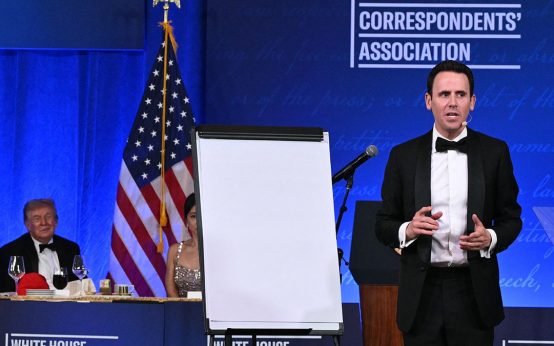 Trump Criticizes Media at WHCA Dinner Featuring Mentalist
  Kaitlan Collins Responds to Trump’s Remarks After White House Correspondents’ Dinner
  Van Jones Commends Trump’s Gesture at WHCA Dinner
  Conservative Groups Defend ABC in FCC Battle
  Cecilia Vega Criticizes CBS News Management Post-Firing
  Ryan Clark’s Emotional Farewell After ESPN Layoff