
The Tenth Amendment of the U.S. Constitution is concise, capturing the essence of federalism in 28 words: The powers not delegated to the United States by the Constitution, nor prohibited by it to the States, are reserved to the States respectively, or to the people.
This principle defines the American federal system. After the New Deal, courts largely ignored this amendment, viewing it as ceremonial. This perception has shifted over the past three decades, although changes haven’t fully rectified past disruptions. The structural imbalance from the Commerce Clause era remains partly unresolved.
James Madison, in The Federalist No. 45, stated: The powers delegated by the proposed Constitution to the federal government are few and defined. Those which are to remain in the State governments are numerous and indefinite.
The founders designed a government with specified powers to prevent overreach driven by ambition. The Tenth Amendment clarifies this, halting federal authority where constitutional allocations cease.
The New Deal era dismantled this concept, as evidenced in the case of Wickard v. Filburn (1942). The Supreme Court allowed federal regulation of wheat cultivated for personal use, classifying it under interstate commerce due to its aggregate economic impact. Consequently, the Tenth Amendment seemed subsumed by the Commerce Clause, and the federal expansion went relatively unchecked.
Judicial shifts began with U.S. v. Lopez (1995), where the court limited the Commerce Clause’s reach. The ruling stated that the Gun-Free School Zones Act overstepped congressional power since firearm possession near schools was not a significant economic activity affecting interstate commerce. The same logic applied in U.S. v. Morrison (2000) regarding the Violence Against Women Act.
Further cases like NFIB v. Sebelius (2012) rejected the commerce rationale in the Affordable Care Act’s insurance mandate. West Virginia v. EPA (2022) introduced the major questions doctrine, requiring clear congressional authorization for major regulatory actions. Loper Bright Enterprises v. Raimondo (2024) ended Chevron deference, empowering courts to independently interpret agency authorization.
These decisions signify progress but fall short of reversing decades-long expansions. A crucial Tenth Amendment doctrine, anti-commandeering, is evident outside the Commerce Clause cases. In Printz v. United States (1997), Justice Scalia argued the federal government cannot compel state officers to execute federal tasks. The Constitution ensures federal action via federal officers, not through commandeering state officials.
Murphy v. NCAA (2018) broadened this to legislative commandeering, asserting Congress cannot dictate state legislation. This principle is crucial in issues like sanctuary city policies, where local law enforcement is not mandated to enforce federal immigration laws.
The doctrine upholds states’ rights against becoming unwilling federal enforcers. It does not absolve state officials of accountability to their constituents. For instance, when a sheriff refuses an ICE detainer, it is a policy decision. The focus should be on the accountability of that decision to the state’s residents.
Operating in California for over thirty years has revealed a pattern of stringent regulations where federal standards are lax, alongside state claims of autonomy when convenient. California demonstrates this in immigration and environmental policies.
The Tenth Amendment’s safeguarding of state power must not be seen as inherently conservative. Both state and federal entities can misuse their granted authorities. The amendment ensures that the government closest to the people retains decision-making power, keeping them directly accountable. Overriding state policies on various matters by the federal government removes the accountability mechanism, shifting correction from voters to federal courts.
Madison’s words intended to prevent such scenarios, recognizing political dynamics that encourage governmental expansion. Although recent court decisions reflect progress, the broader challenge of realigning federal power within its constitutional limits continues.
Jay Rogers is a seasoned financial expert, specializing in private equity, private credit, hedge funds, and wealth management, with over three decades of experience.
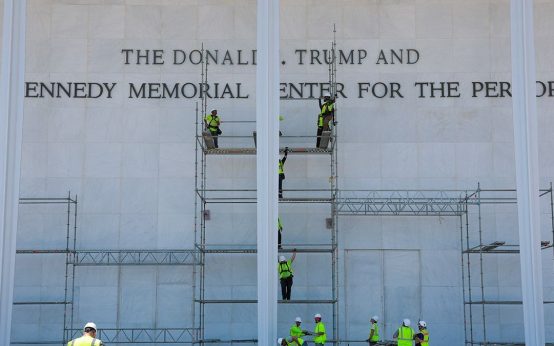 Trump’s Name Removed from Kennedy Center After Court Ruling
 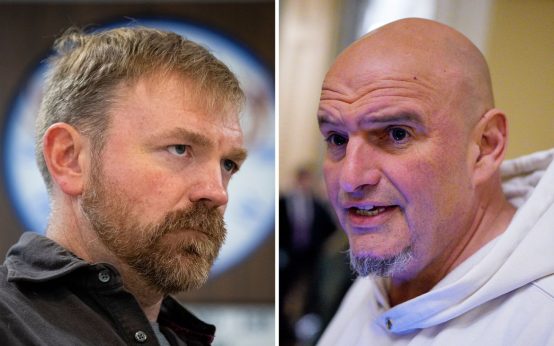 Democratic Tensions Flare as Fetterman and Platner Clash
  New Legislation Targets 3D Printing of Firearms
 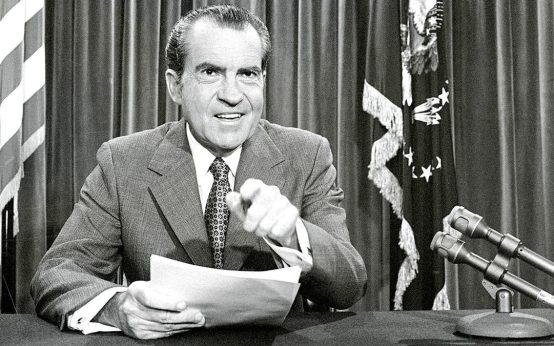 Former General Likens Trump’s Iran Strategy to Nixon’s Vietnam Bombing Campaign
  Removal of Trump’s Name from Kennedy Center Marks Judicial Enforcement
  Federal Judge Blocks Trump Administration’s National Park Changes