The global lending landscape has tightened, impacting how much the U.S. government can borrow, causing interest rates to rise. This rise in rates affects affordability, slows economic growth, and poses risks for Republicans in the upcoming midterm elections.
Energy prices have surged due to conflict with Iran, influencing the price of bonds that finance the Trump administration. The interest rates on the U.S. 10-year Treasury bonds have risen to over 4.44%, up from 3.95% before the conflict began in late February. Mortgage rates have hit a nine-month high, while car sales have plummeted.
This challenge is not isolated to the U.S. Countries worldwide face higher interest rates as they adapt to inflation, uncertainty around public debt sustainability, and increased investment in artificial intelligence. Trump has attempted to reassure Americans with promises to cut the roughly $1.8 trillion annual budget deficit. Previously, he pointed to tariff revenue, foreign visa fees, government efficiency cuts, and economic growth as solutions. He recently declared that the fraud task force led by Vice President JD Vance is key to achieving savings.
“If it performs well, we’ll have a balanced budget without much effort,”
said Trump.
Economists argue these plans are unrealistic. The cost of national debt servicing has tripled since 2021, now exceeding $1 trillion annually. Jessica Riedl, a budget and tax researcher at the Brookings Institution, explained that tax cuts under Trump could add $5 trillion to the deficit over a decade, with tariffs covering only a small fraction. Current policies may push annual budget deficits over $4 trillion within ten years.
Deficits are expected to grow as Social Security and Medicare costs surpass tax revenues. The 10-year Treasury rate rose to 4.67% in mid-May, then moderated amid ceasefire talks with Iran, similar to rate patterns seen with Trump’s tariffs in 2025. Kent Smetters, director of Penn Wharton Budget Model, estimated that 60% of the increase in 30-year Treasury bond yields results from expected U.S. borrowing, while the rest stems from inflation tied to the Iran conflict and tariffs.
Glenn Hubbard, former head of the Council of Economic Advisers in the George W. Bush administration, warns the U.S. lacks former borrowing capacity to tackle economic crises like the 2008 crash or the COVID-19 pandemic.
“We lack the margin we had in 2008 or 2020,”
said Hubbard, now at Columbia Business School. “Washington lacks solutions.”
Democratic candidates highlight high interest rates in campaigns. In Colorado’s 5th district, Democrat Jessica Killin emphasizes that persistent deficits and rising rates complicate housing purchases, car purchases, and credit card debt management.
“Things are already expensive,”
commented Killin, an Army veteran and former senior adviser to Doug Emhoff. “Borrowing costs worsen the situation.”
Fellow Army veteran and Democratic candidate Joe Reagan stressed fiscal responsibility, arguing every dollar spent on interest detracts from investment in infrastructure, education, veterans’ services, or economic growth. Both candidates are challenging Republican Jeff Crank in a district Republicans see as a potential gain. Killin remarked that the deficit illustrates “Trump saying one thing and doing another.”
During a March 2025 Congressional address, Trump expressed plans to balance the federal budget for the first time in 24 years.
The current administration claims it will steadily reduce budget deficits. Last year’s deficit, as a proportion of the economy, was lower than in 2024, partly due to tariff revenue later deemed illegal by the Supreme Court.
Treasury Secretary Scott Bessent cited fraudulent spending cuts as potential deficit reducers, referencing a Government Accountability Office report estimating annual fraudulent spending between $233 billion and $521 billion. These figures included pandemic-era borrowing data. The administration did not clarify Bessent’s claim source.
Bessent indicated the administration inherited a poor fiscal situation from former president Joe Biden, citing the largest peacetime, non-recession deficit in history.
Bessent aims to reduce the deficit to 3% of the United States’ GDP, currently twice that figure, but did not provide a timeline for this goal.
Investors continue to buy U.S. company stocks, boosting the stock market as a sign of confidence in the nation’s potential. However, rising interest rates indicate investors view national debt as a U.S. vulnerability. Financial markets’ interest rates could pressure leaders to address systemic imbalances. Economists expect markets to drive deficit focus before voters do.
Hubbard stressed that the bond market relies on confidence in debt repayment. He noted that the term ‘credit’ shares roots with the Latin word for a belief system.
“Debts rest on trust: I believe you’ll repay me,”
Hubbard said. “This works until it doesn’t.”
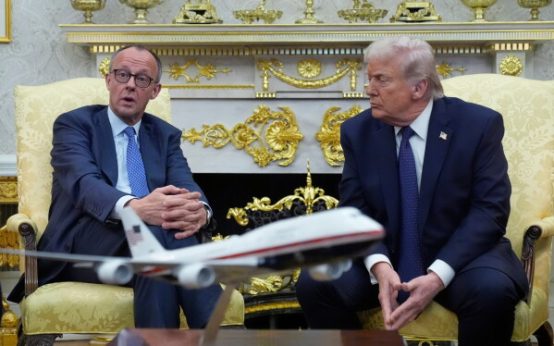 Clarity Sought on U.S. Troop Levels in Europe Amid Policy Changes
  Xavier Becerra Advances in California Governor Race
  Pentagon Reduces Recognized Religious Affiliations
 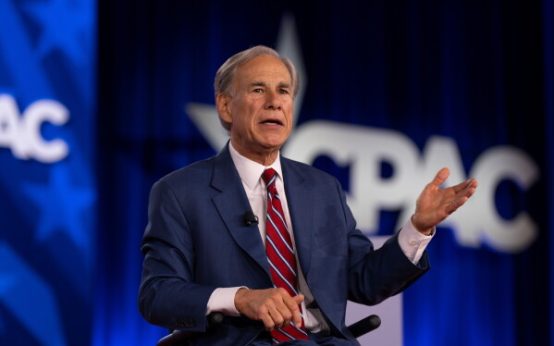 U.S. Military Awaits Pentagon’s Clarification on Troop Levels in Europe
  Xavier Becerra Advances in California Governor Race
  Graham Platner’s Campaign Amid Controversy