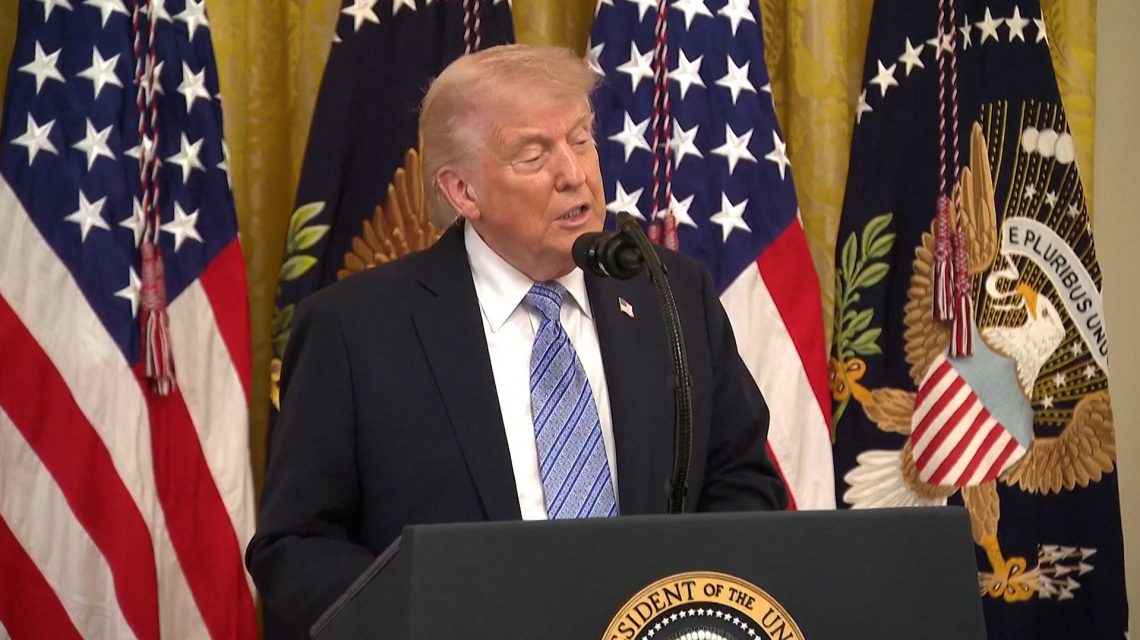
President Donald Trump stated that current fuel prices are “not very high, relatively speaking,” despite the ongoing Iran war causing gas costs to rise. Some Americans are dissatisfied with the administration’s approach to the conflict. His remarks were made to reporters earlier this week.
A recent Reuters/Ipsos poll reveals that 60% of Americans disapprove of U.S. military actions against Iran. Many also expect gas prices to keep climbing. As of June 10, the average price per gallon of regular gasoline was $4.15, a decrease from $4.26 the previous week, and down from $4.52 the month before, according to AAA. The price was $3.12 at the same time last year.
Blockades in the Strait of Hormuz have restricted the global oil supply, causing regular gasoline prices to increase by nearly 40%. Reports from the Labor Department show gas prices rose by 7% in May, 5.4% in April, and 21.2% in March, reflecting the cost increase since the conflict began.
The numbers were great,” Trump stated when responding to the Consumer Price Index report showing annual inflation at 4.2% in May. “I love the inflation. You know why?”
Trump mentioned that the U.S. has been “taking out millions of barrels of oil” from Iran to help reduce fuel prices. Last month, he called financial problems faced by Americans “peanuts” compared to Iran potentially acquiring nuclear weapons, asking the public for patience, as higher prices wouldn’t last “much longer.”
Despite this, 59% of the 4,531 Americans surveyed believe gas prices will worsen over the next year due to the conflict. This includes 83% of Democrats, 61% of Independents, and 34% of Republicans, according to the Reuters/Ipsos poll.
The impact of rising fuel costs has negatively affected Americans’ perception of the economy in 2026. The University of Michigan’s consumer sentiment index dropped to its lowest point in May since its inception over 70 years ago. Joanne Hsu, Director of Surveys of Consumers, reported that 57% of respondents said high prices were “eroding their personal finances.”
Fuel prices have recently decreased since last month, with hopes for a reduction in Middle East tensions and reports of tankers leaving the Gulf. Trump noted, “A lot of oil is coming out of the Hormuz strait,” commenting that, relative to the Biden administration, prices are lower and highlight efforts to prevent Iran from developing nuclear capabilities.
In April, a barrel of crude oil reached $117.60, a month after the conflict began, while it stood at $90.30 as of June 10. Although the price remains high, it is below the record of $130.50 per barrel in March 2022, which occurred after Russia’s invasion of Ukraine and similarly impacted the global oil supply.
Contact Rachel Barber at [email protected], follow her on X @rachelbarber_, and subscribe to her “Making More of Your Money” newsletter for more updates.
 Internal Challenges Threaten Keir Starmer’s Leadership
  Ukraine-Poland Award Dispute and Historical Tensions
  Kamala Harris Defines Hope in Podcast with Don Lemon
 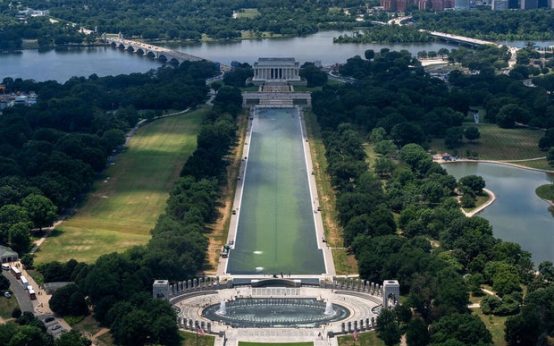 Arrests Made for Vandalism at Lincoln Memorial Reflecting Pool
 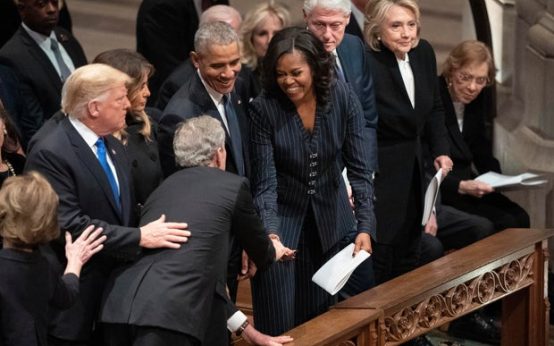 A Unique Friendship: George W. Bush and Michelle Obama
 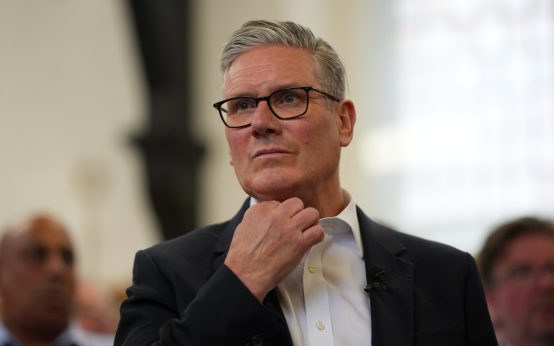 Potential Resignation of British Prime Minister Keir Starmer