
The U.S. military has halted its airstrikes on Iran after nearly two weeks of intensified bombing. Diplomatic efforts aim to prevent a return to full-scale conflict. As the situation approaches its five-month mark, there is uncertainty if this is a pivotal moment in the ongoing tensions between the U.S. and Iran.
President Donald Trump has both threatened further action and emphasized ongoing negotiations. He downplays concerns over rising gas prices potentially affecting the Republican party in the upcoming midterm elections. Adding complexity is Israeli Prime Minister Benjamin Netanyahu’s planned visit to Washington. Israel began the war alongside the U.S., but has been absent from recent actions due to Iran’s effective blockade of the Strait of Hormuz, critical for global oil transport.
“The Iranians understand that perhaps it could get worse because Israel could come into the conflict,” said Michael Singh, managing director at the Washington Institute for Near East Policy.
Singh suggests that Israel’s current absence might signal a desire to limit the conflict. Previously a senior Middle East director on the National Security Council, Singh advises caution in interpreting the pause. Whether it is operational or diplomatic remains uncertain.
Mediators continue their diplomatic efforts. A regional official involved in these efforts noted a positive sign: a pause in U.S. and Iranian strikes on countries hosting American forces. The U.S. and Iran desire a return to a ceasefire deal centered on fewer restrictions for ship transit through the Strait of Hormuz.
Iran initially restricted the vital Persian Gulf waterway by attacking tankers and freighters, causing oil prices to soar. This conflict could politically affect some Republican lawmakers in November. The interim ceasefire deal reached in June failed, reigniting skirmishes over the strait. Iran required vessels to use a coastal route and threatened fees. U.S. oversight led ships to choose a southern path, prompting Iranian attacks. The U.S. responded by targeting Iran’s coastal defenses and infrastructure to reduce its offensive capabilities.
Singh believes these strikes aim to drive Iran back to the negotiation table. The uncertainty lies in potential diplomatic messages from Tehran. Iran’s leadership struggles, with factions vying for power, complicate the situation.
Both nations require the reopening of the strait for economic reasons. However, they disagree on the conditions and control. Singh asserts a stable agreement is necessary for lasting peace. Negotiations through both dialogue and force will continue until resolved.
Trump’s Stance on Military and Diplomacy
Despite reduced military actions, regional tensions remain. Iran-backed Houthi rebels launched attacks on Saudi Arabia, impacting another key maritime passage. The U.S. enforced a naval blockade on Iranian ports, taking action against a Mozambique-flagged ship violating the blockade.
President Trump maintains a dual approach of threats and diplomacy. Asked about his exit strategy, he noted, “You can just keep doing exactly what we’re doing and take them apart piece by piece. Or we can negotiate with them, which we’re also doing right now.” Although skeptical of Iran’s readiness to deal, he believes they are becoming more serious.
Trump met with top national security aides to deliberate the course of action regarding Iran. A decision on maintaining or escalating military actions is pending. No strikes occurred overnight after 13 continuous nights of bombardment.
Trump dismisses election pressures, stating, “Despite what everyone says about the election, I’m not in a hurry. We have to do it right. Elections take care of themselves.”
Reporting contributed by Magdy from Cairo. Associated Press writer Matthew Lee also provided information.
 Netanyahu and Trump Discuss Iran and Regional Issues
  Vandalism at Medjugorje Shrine Sparks Investigation
  Strong Earthquake Shakes Kumamoto
 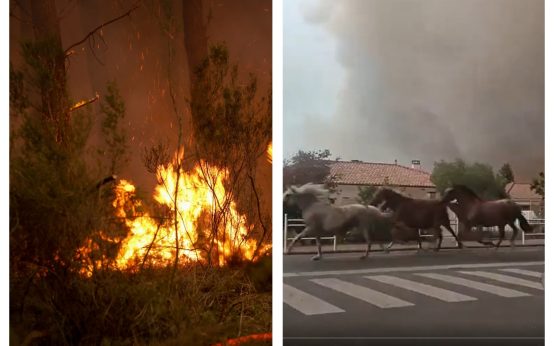 Wildfires Force Evacuation and Destruction in France and Spain
 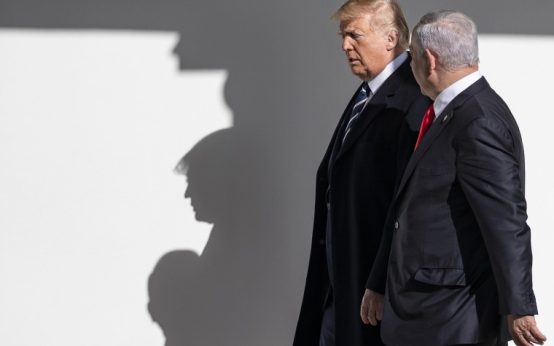 Trump and Netanyahu Meet Amid Iran War Tensions; Japan Earthquake Rocks Southern Region
 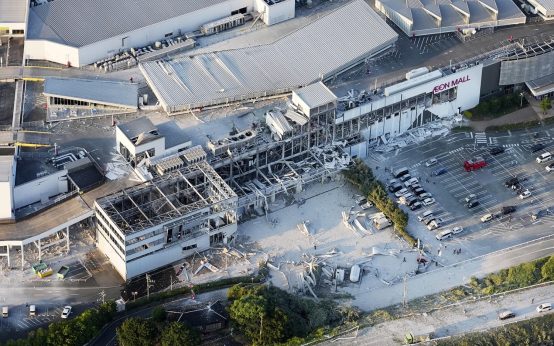 Japan Grapples with Major Earthquake