SEATTLE — The University of Washington ranks among the top public universities for receiving federal research funding. However, uncertainty looms as President Trump has canceled or suspended funding for a significant portion of the National Science Foundation and the National Institutes for Health. This has created tension at the University of Washington’s Seattle campus, especially in departments that historically were not heavily influenced by political changes, such as the School of Environmental and Forest Sciences.
The proposed funding cuts by the U.S. Forest Service, along with a larger agency reorganization, pose immediate threats, particularly as the West braces for a severe wildfire season. Ernesto Alvarado, a fire ecologist and associate professor, emphasizes the gravity of the situation, stating, “We have a wildfire crisis in the West and in the United States.”
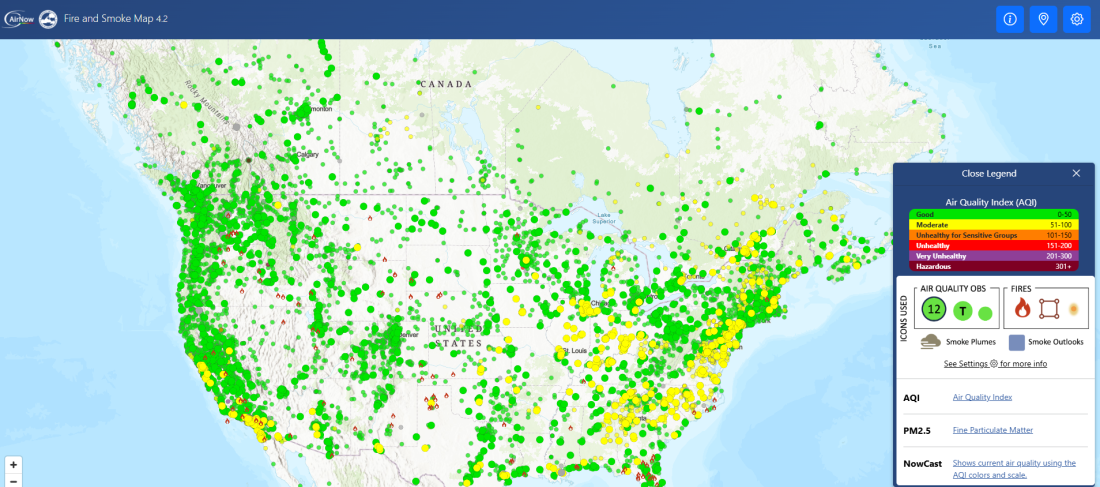
Wildfire and smoke maps developed through research funded by the U.S. Forest Service have become crucial tools for predicting and monitoring smoke patterns.
Alvarado, who works with a team that includes students and tech staff at the University of Washington, demonstrates how they track wildfire smoke using a comprehensive map. This map shows the current and forecasted locations of smoke, along with information on harmful particulates. Real-time updates make the technology important for governments, elite firefighting teams, and commercial apps that monitor air quality.
Despite the advancements, the Seattle smoke lab is one of the 56 research stations identified for potential closure. This decision is part of the Trump administration’s reorganization plan for the Forest Service, which includes moving its headquarters from Washington, D.C., to Utah and consolidating regional offices. Former Seattle smoke lab scientist, Morgan Varner, criticizes these changes, expressing concern over the chaos it introduces to scientific work. He doubts that many staff members will agree to relocate or transfer within the agency. Seattle was chosen for its tech hub status and proximity to a major research university, highlighting the strategic importance of its location.
The U.S. Forest Service Chief, Tom Schultz, defends the reorganization, noting that it aims to address a $3 billion maintenance backlog by closing or consolidating certain research facilities. He insists that research remains a priority and points to employee involvement in discussions. Yet, President Trump’s budget proposal removes funding for Forest Service research and development. During recent hearings, bipartisan opposition emerged against the President’s plan.
If Congress approves the proposed budget, the U.S. Forest Service would face significant reductions at a critical time when wildfires are becoming more frequent and intense due to climate change. The agency has already faced substantial staff losses due to layoffs, buyouts, and early retirements.
State officials in the West express concerns over the lack of transparency from the Forest Service. In Washington state, Public Lands Commissioner Dave Upthegrove voices anxiety about the changes potentially impacting wildfire response and public safety. Initial hopes for improved collaboration following reorganization have waned as communication from the Forest Service has dwindled, leading to heightened apprehension.
As the fire season approaches, regions like the Pacific Northwest, which were previously thought to be less vulnerable to wildfires, face the risk of being engulfed in smoke.
 Patagonia vs Pattie Gonia: The Trademark Dispute Explained
  Tornado Destruction in Illinois and Indiana: Efforts and Responses
  Intense Weather Patterns Sweep Across the U.S.
  Battle Against Screwworm to Protect U.S. Cattle Industry
  NOAA Announces the Onset of El Niño: Global Impact and Risks
  Heatwave Intensifies Fire Risk in San Francisco Bay Area