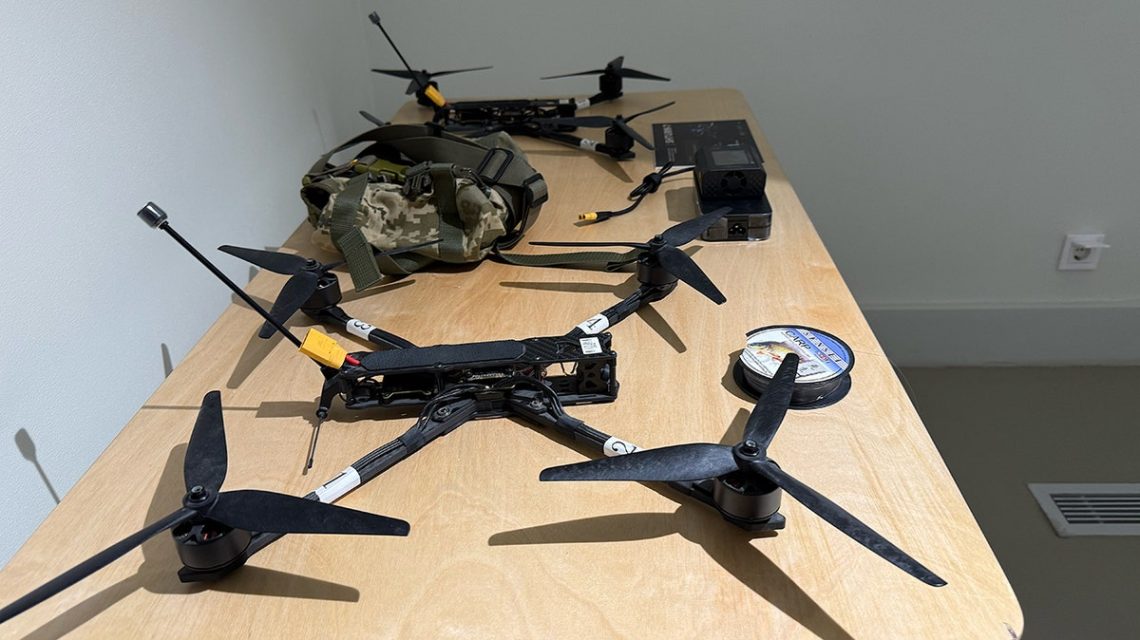
In the city of Lviv, Ukraine, Iranian-designed Shahed drones frequently attack, but they are now countered by weapons constructed nearby. Factories hidden away in this region are where former students and office workers work around the clock to create kamikaze drones and interceptor systems.
This initiative, initially a stopgap wartime measure, evolved into a rapidly growing military drone industry. A Ukrainian official mentioned that Kyiv now leads NATO in battlefield innovation. The U.S. and Israel could learn from Ukraine’s experiences with Iranian drone technology, which they also face in the Gulf.
Drone Technology on the Frontline
According to Lviv Mayor Andriy Sadovyi, drone technology has transformed the battlefield. There are ambitions to develop systems capable of deploying 1,000 drones simultaneously soon. Cooperation with the United States, Israel, and Europe could accelerate this development.
In a discussion with Fox News Digital, Dmytro, CEO of a drone manufacturing company in Ukraine that produces approximately 1,000 drones weekly, declared that Ukraine is ahead of other countries. Drones now enable small military units to target tanks, armored vehicles, and air defense systems at a lower cost than traditional methods.
Impacts on Civil Life and Warfare
In western Ukraine, the defense technology sector has expanded with secret workshops and testing sites across the region. In a workshop, employees rapidly assemble drones using components like propellers and fiber optic cables. Vitaliy, a technician, stated he constructs hundreds of drone components daily for frontline use.
Ukraine’s domestic drone production aims to reach over seven million units in 2026, according to Deputy Defense Minister Serhiy Boyev. Innovations include AI-assisted battlefield systems and drones resistant to Russian electronic interference, revealing weaknesses in conventional Western military strategies.
Defense Technology Hubs
At a military technology hub in Lviv, rows of interceptor drones and other devices showcase Ukraine’s growing battlefield capabilities. Some drones are meant for reconnaissance, while others handle evacuation or direct attacks. A heavy-lift drone known as “Baba Yaga” is among the models adapted for nighttime missions.
Another unique design is an interceptor drone that targets Iranian-made Shahed drones, which Russia employs against Ukrainian cities. These Ukrainian-made drones achieve speeds up to 300 kilometers per hour and are effective against these threats.
International Interest and Regional Concerns
Numerous foreign experts and officials, including Americans and Europeans, visit Ukraine to gather frontline data and feedback. The ongoing drone conflicts have repercussions beyond Ukraine and Russia, affecting NATO territories. Incursions into the airspace of Latvia, Lithuania, and Estonia have led to political fallout and emphasized the importance of air defenses.
Modern Warfare Redefined
Ukrainian officials blame Russian electronic warfare techniques for drone misdirection, alleging that Moscow employs these tactics not only defensively but to create political tension within NATO countries. The use of Iranian-designed Shahed drones continues to reshape modern warfare beyond the battlefield.
 Latin American Deportees in Congo: Return to Home Countries Amid Challenges
  Controversy Surrounds Stabbing Incident of British Student
  Royal Cottages and Controversies: Financial and Legal Revelations
  Oak Lawn Librarian Supports Library Projects in Zimbabwe
  60 Minutes Correspondents Decide to Stay Amid Crisis
  World Cup Anticipation: US Men’s National Team and Norway’s Viking-Themed Campaign