
President Donald Trump highlighted the significance of the “Abraham Accords” during his visit to the Middle East. These agreements, established in 2020, aim to increase the diplomatic relationships between Israel and several Arab states. The term bears cultural and religious significance, referring to Abraham, a patriarch celebrated in Judaism, Christianity, and Islam. Abraham, known as Ibrahim in Islam, serves as a common link among these religions, but his legacy can also foster division when different groups claim exclusive rights to his heritage. Bruce Feiler, author of Abraham: A Journey to the Heart of Three Faiths, notes this tendency for groups to assert, “This is my story.” However, he emphasizes, “the story belongs to all of us.”
The Abraham Accords: A Framework for Diplomacy
In 2020, the Abraham Accords facilitated diplomatic and commercial agreements between Israel and the United Arab Emirates, Bahrain, Sudan, and Morocco. These accords represent an attempt to foster peace and may potentially lead to further negotiations with other Muslim-majority nations. The historical figure Abraham first appears in Genesis as a man promised to become the progenitor of a great nation. His journey led to the region now known as Israel and the Palestinian territories.
According to biblical accounts, Abraham fathered Ishmael with Hagar and Isaac with his wife Sarah. Ishmael and Hagar were banished, but Ishmael returned for Abraham’s burial. The Jewish tradition recounts an event where God tests Abraham’s faith by instructing him to sacrifice Isaac, but an angel intervenes, stopping the act. While Isaac is viewed as an ancestor of the Jews, Islamic tradition regards Ismail as a prophet and ancestor of Muhammad, emphasizing a different version of the sacrifice story.
Abraham: A Figure of Division and Unity
Throughout history, Christianity, Judaism, and Islam have each claimed Abraham’s legacy, sometimes leading to conflicts like crusades or terror attacks. Despite these divisions, Abraham’s shared significance across these faiths permits diplomatic initiatives such as the Abraham Accords, involving the primarily Christian U.S., Israel, and Muslim-majority Arab states.
“We see in Islam a religion that traces its origins back to God’s call on Abraham,” noted former President George W. Bush.
The Abrahamic Family House in UAE—a mosque, church, and synagogue in one complex—demonstrates efforts to promote interfaith dialogue. Such initiatives aim to inclusively unite communities, as the term “Abrahamic faiths” signals a broader approach than the term “Judeo-Christian.”
Political and Religious Contexts Matter
During a speech in Israel, Trump acknowledged Abraham’s Jewish legacy by referencing the “God of Abraham, Isaac and Jacob.” He commended the diplomatic agreements using “Avraham Accords,” aligning with Hebrew pronunciation. While collaborating with Arab and Muslim leaders involved in these accords, Trump’s past policies might seem inconsistent, such as his 2015 proposal to restrict Muslim entry to the U.S. However, Feiler advises considering the historical tensions in Abraham’s story.
Ultimately, Abraham’s narrative, involving his sons and their mothers, is a tale of “tension,” emphasizing the challenges of coexistence. Feiler concludes that it’s about living alongside the other, a timeless theme explored across relations and rivalries.
 Netanyahu and Trump Discuss Iran and Regional Issues
  Vandalism at Medjugorje Shrine Sparks Investigation
  Strong Earthquake Shakes Kumamoto
  Wildfires Force Evacuation and Destruction in France and Spain
 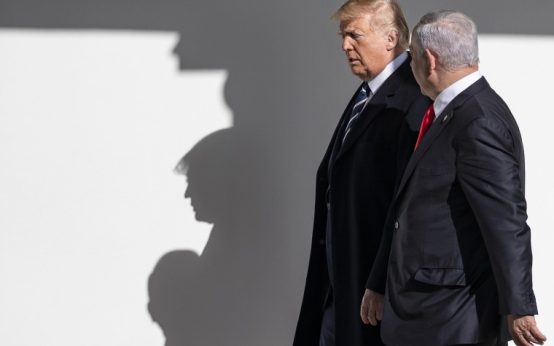 Trump and Netanyahu Meet Amid Iran War Tensions; Japan Earthquake Rocks Southern Region
  Japan Grapples with Major Earthquake