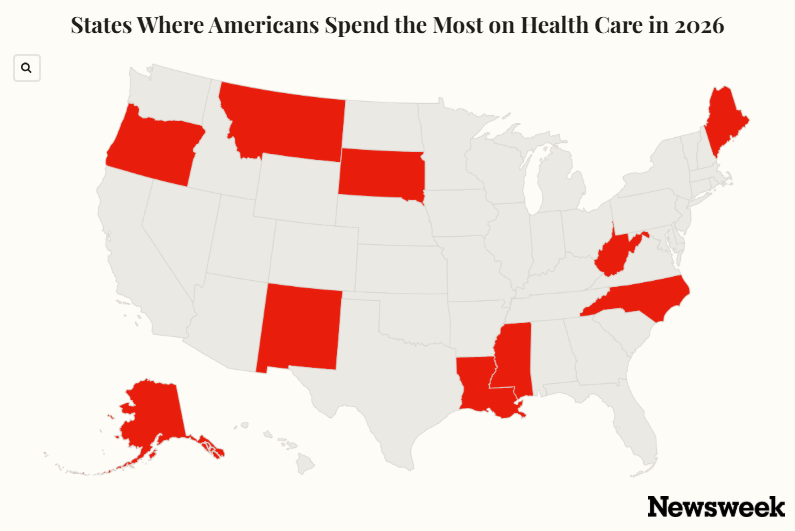
Americans are increasingly spending more of their income on health care as costs have surged over the past two decades. A recent WalletHub report highlights significant disparities in health care spending across states. Some states see residents spending over 10 percent of their income on medical services, while others report considerably lower spending levels.
Average annual out-of-pocket health care expenses have increased from $811 to $1,514 over two decades, surpassing inflation and straining household finances. Rising health care costs impact financial choices for millions, leading some to postpone or skip necessary care. Even in areas with lower health care prices, incomes often fail to mitigate financial burdens, especially given widespread inflation affecting housing and food costs.
Key Insights from the WalletHub Report
The WalletHub report ranks all 50 states based on the proportion of median household income spent on essential medical services and medications. The states with the highest health care spending include:
- Alaska: 10.08 percent
- Oregon: 9.32 percent
- Maine: 9.30 percent
- Mississippi: 9.18 percent
- West Virginia: 9.14 percent
- New Mexico: 9.07 percent
- North Carolina: 8.78 percent
- Montana: 8.62 percent
- South Dakota: 8.60 percent
- Louisiana: 8.13 percent
Conversely, states with the lowest health care expenditure are:
- Utah: 5.11 percent
- Virginia: 5.62 percent
- California: 5.64 percent
- New Jersey: 5.81 percent
- Nevada: 5.87 percent
New York ranks in the middle, with residents spending about 7.98 percent of their income on health care.
Understanding the Variations
Higher health care spending is not solely linked to lower incomes. It often reflects elevated medical costs. WalletHub analyst Chip Lupo notes that rising health care expenses can hinder access to essential services. Even in states with lower-than-average costs, income levels may not suffice to cover expenses fully, particularly with inflation impacting all budget areas.
Alaska: Alaska leads with residents dedicating 10.1 percent of their median income to health care, driven by high costs for doctors and medications. Despite a high median income, the elevated costs result in greater spending.
Oregon: In Oregon, high service costs, including doctor visits and optometry care, result in about 9.3 percent of income directed to health care. The issue stems more from service costs than low wages.
Maine: Maine experiences high medical costs and lower-than-average earnings, leading residents to allocate a large income share to health care. It’s the 13th most expensive state for dental visits, with a median household income of $74,733.
Research and Methodology
The WalletHub study analyzed five key aspects of medical expenditure across states: doctor visits, dentist visits, optometrist visits, ibuprofen prescriptions, and insulin glargine prescriptions. Researchers compared these costs to each state’s median household income to evaluate the financial burden. Data was collected from the Council for Community and Economic Research and the U.S. Census Bureau as of April 30.
These figures represent averages and may not reflect individual circumstances. Some families spend much larger portions of their income on health care.
Steps to Mitigate Health Care Costs
While geographic factors heavily influence health care costs, individuals can take steps to manage expenses. Maintaining insurance coverage and utilizing preventive care services can reduce long-term costs. Financial experts recommend establishing an emergency fund and using tax-advantaged health savings accounts when possible.
According to Alex Beene, a financial literacy instructor, declining health care facilities in some states result in reduced competition and longer travel distances for residents. Insurance coverage alone doesn’t account for all health care costs; various factors should be considered when planning for medical expenses.
Future Considerations
Widening regional disparities in health care affordability could become a significant policy concern as costs rise. Without addressing pricing, insurance, or income growth, residents in high-cost states may continue facing increased financial burdens from essential medical care.
Kevin Thompson, CEO of 9i Capital Group, suggests that ongoing industry consolidation means limited competition and little sign of price reductions soon. Health care inflation isn’t confined to insurance premiums; it permeates the system, impacting consumers.
 Mount Sinai Health System Faces Subpoena on Gender-related Care
  Potential Ebola Outbreak in Central Africa Raises Concerns of Rapid Spread
  Researchers Escorted Out of Diabetes Conference for Criticizing Trump Administration
  Ebola Outbreak in Africa: A Serious Concern
  Gold and the Ebola Outbreak in Congo’s Mining Towns
  House Passes Bill for Veterans’ Benefit Increase