The U.S. military awaits definitive guidance from the Pentagon amid President Donald Trump’s fluctuating decisions on troop presence in Europe. These changes affect military personnel and may cost taxpayers substantial amounts, according to two U.S. defense officials.
NATO Allies Confused Over Troop Relocation Plans
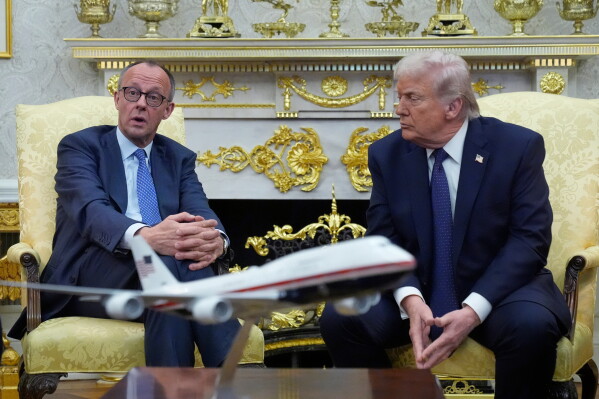
In May, NATO allies expressed confusion when Trump announced the deployment of 5,000 U.S. troops to Poland, shortly after ordering a similar withdrawal from Europe. This decision followed disagreements with Germany’s Chancellor Friedrich Merz over the Iran conflict. While the Trump administration states these troop adjustments have been planned with allies, the timing has left European nations uncertain. President Trump met with Chancellor Merz in the Oval Office on March 3, 2026, in Washington, adding to the ongoing discussions.
Conflicting Orders Affect Troop Deployment
Trump’s announcement contradicts a Pentagon order to cancel a troop rotation to Poland, as a defense official noted. The unit’s equipment was already en route, costing the U.S. military $32 million, according to U.S. Transportation Command. These abrupt changes require the military to adapt rapidly to new directives.
Consequences for European Allies and U.S. Troops
This uncertainty concerns European allies regarding the message to Russia and risks impacting the morale of American troops. Some troops had their rotations canceled on short notice, further straining the Army’s budget.
Cost Implications of Deployment Changes
The rotational deployment to Poland of 4,000 troops from the Army’s 2nd Armored Brigade Combat Team was canceled at short notice, leaving some troops in limbo. Adjusting to Trump’s order involves using units already stationed in Europe, according to a defense official. The U.S. Transportation Command had already chartered a ship for equipment transport. The cancellation brought additional costs due to unscheduled personnel and equipment returns.
Joe Costa, a former Pentagon official, explained that such unscheduled moves are not included in the Pentagon budget. Total costs are hard to quantify, but typically involve returning equipment and troops. Contracts with private transport companies often include fees for deployment cancellations, noted John Deni, an Atlantic Council fellow.
Future of U.S. Troops in Europe
The Defense Department maintains that reducing troop levels is part of a comprehensive strategy to have Europe handle more of its own defense. This has resulted in canceled deployments, such as a long-range missile battalion to Germany. Removing troops from Germany could be significantly costly, noted Costa, due to the lack of infrastructure in the U.S. to accommodate personnel and families.
The disruption affects military families, who plan deployments years in advance, increasing stress and uncertainty. Options for troop reassignment include shifting units from Germany to Poland, although this would entail long-term expenses.
Army Faces Budgetary Constraints
These developments occur amidst a U.S. Army budget shortfall, which General Christopher LaNeve discussed in Congress. The shortfall ranges from $2 billion to $6 billion, impacting training courses nationwide. The Army has been involved in various missions, including National Guard deployment in Washington and efforts at the U.S.-Mexico border, stretching its budget further.
While the Department of Homeland Security has committed to reimbursing border mission costs, payments have yet to materialize. The Army prioritizes critical training and readiness despite financial constraints.
Military operations in Europe are now focusing on mission-critical functions, scaling back support for non-combat activities.
 FBI Analysts Dismissed Over Controversial Memo
  California Elections: The Ongoing Vote Count and Controversies
  California’s Primary Election: Highlights and Insights
  President Trump’s Attendance at NBA Finals Game Sparks Reactions
  Investigations Launched Amid California Election Fraud Claims
  Khanna Urges Apology from Maine Senate Candidate Over Misconduct Allegations