
A California lawmaker is working to ensure that reparations payments to Black residents remain untaxed if such efforts are realized. Assemblymember Tina McKinnor, a Democrat representing Inglewood, introduced Assembly Bill 2186. The bill aims to protect future reparations payments or benefits from state personal income taxes, should federal, state, or local reparations programs be approved.
“For generations, descendants of formerly enslaved people have been denied both justice and economic opportunity,” McKinnor stated. “Reparations are meant to repair harm, not be partially taken back through taxation.”
According to the bill, from January 1, 2027 to January 1, 2032, gross income will not include any reparations benefit or payment received by taxpayers. The bill defines “reparations benefit or payment” as any monetary payment, grant, trust distribution, debt forgiveness, or other financial compensation.
McKinnor did not respond to Fox News Digital’s request for comment. The measure has been sent to the California Senate for review. If approved, it will be considered by Governor Gavin Newsom. “California is actively preparing for the implementation of reparations programs,” McKinnor emphasized. “We must ensure that recipients receive the full benefit of these efforts.”
Black residents in Evanston, Illinois, received $25,000 payments for housing expenses. Progressive Rep. Shri Thanedar, D-Mich, has also revived federal reparations efforts, proposing a bill to establish a commission to “study and distribute land reparations” for descendants of slaves in the U.S.
Other cities and states are also considering reparations measures, which include direct cash payments or other forms of compensation to address historical injustices and discrimination. California was the first state to establish a reparations commission to study history and issue recommendations on compensating Black Americans for slavery.
The future of reparations in California is uncertain. Governor Newsom has rejected several bills to avoid legal issues, and no potential successor in the gubernatorial race appears to champion reparations. Lisa Holder, a civil rights attorney and former member of the state’s Reparations Task Force, noted that the process will be lengthy. “You can’t legislate yourself out of 400 years of inequality and injustice,” Holder said, “You have to do an entire body of laws to change the systems that have been disparately affecting Black folks for decades.”
 President Trump’s Sports Engagement and Salary Cap Views
  Criticism Mounts Over Senate Candidate’s Tattoo Controversy
 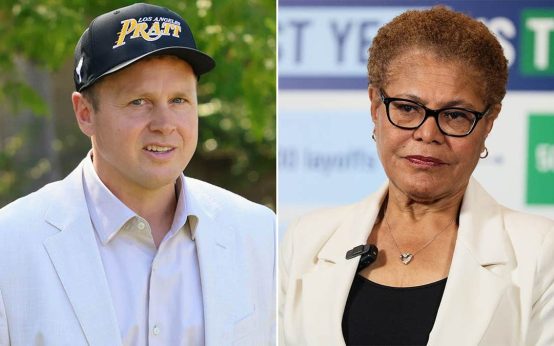 LA Mayoral Race: Bass and Pratt Set for Runoff Amidst Voter Discontent
  Federal Investigation into California Election Amid Fraud Claims
  Protests Erupt Outside New Jersey Detention Center Amid Immigration Crackdown
  Amir Odom’s Perspectives on Challenges Facing Black Americans