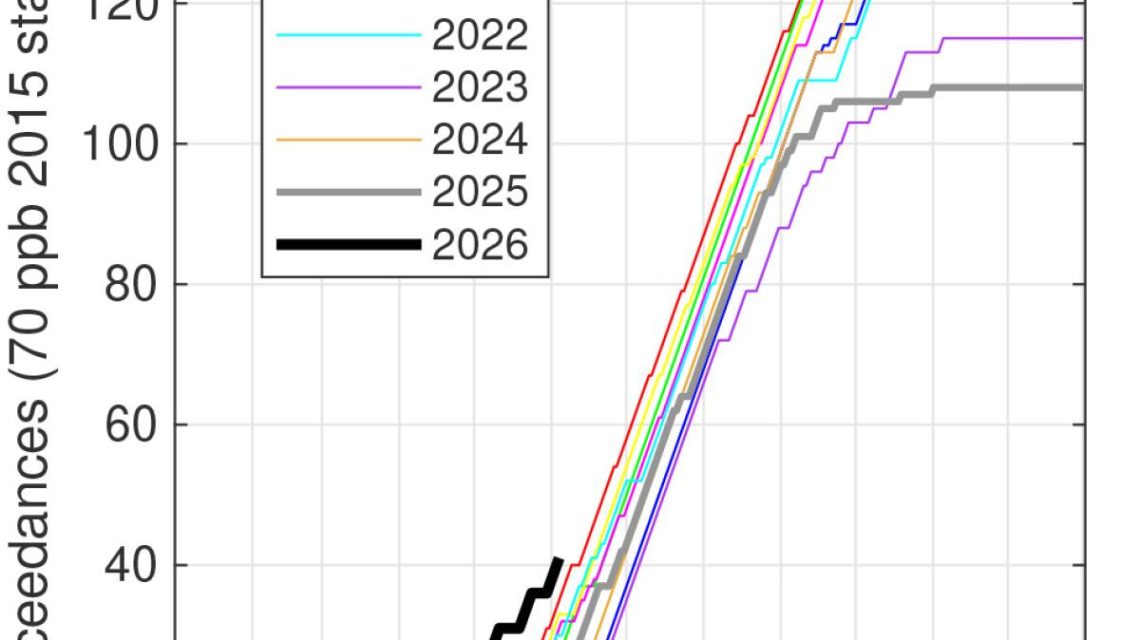
The first five months of 2026 have seen Southern California experience its smoggiest period in over a decade. With the highest number of unhealthful air days, the South Coast air basin, including Los Angeles, Orange, Riverside, and San Bernardino counties, recorded 39 days with lung-irritating ozone levels exceeding federal standards, according to preliminary state air quality data.
This surpasses the 36 unhealthful air days by June 4 in 2017, which ultimately saw 145 such days. Over 18 million residents in the area face unhealthful ozone levels, a corrosive gas known for triggering asthma and various respiratory illnesses. The surprise lies in the smog, which usually intensifies in summer when heat and sunlight convert pollution into ozone.
“If we have this many violations by this time, this could be a really awful year for air quality,” said Adrian Martinez, director of Earthjustice’s Right to Zero campaign.
This year could be one of the worst for smog pollution in one of the worst affected areas of the country. In April, Reseda in the San Fernando Valley recorded the decade’s second-highest spike in hourly ozone levels. The South Coast Air Quality Management District attributes high ozone levels to early heat waves. They noted no increase in the pollutants forming ozone, mostly from exhaust emissions.
Average temperatures have exceeded normal, reaching the mid-80s to high 90s from January to April, breaking several high-temperature records per the National Weather Service. March was the warmest on record, with Riverside experiencing 13 days over 90 degrees.
“It was really that heat wave — conditions we typically see in July or August, we saw them in March,” said Sarah Rees, deputy executive officer of the air district.
Residents are urged to monitor pollution levels via the agency’s online platforms and limit outdoor activities when smog is high. Scott Epstein from the air district emphasized that, unlike wildfire smoke, ozone is not noticeable, making cautionary measures crucial. Southern California’s mountainous geography and abundant vehicle emissions foster smog formation.
Over decades, emission-reducing rules like tailpipe emission standards and catalytic converters have been enacted. These efforts drastically lowered smog-forming pollution, although federal ozone standards remain unmet.
At a recent meeting, the South Coast Air Quality Management District remembered William Burke, a key figure in reducing regional smog. Residents from the smog-prone Inland Empire praised the district’s work while advocating continued improvement. Erik Morden, a longtime resident, acknowledged advancements but highlighted persistent issues, with undetectable particulates and chemicals still affecting air quality.
“We’ve got a lot of heat, we’ve got a lot of pollution,” said Martinez. “Our contention is, this agency can’t control the weather. But the one thing it can control is the pollution.”
The early smog incidents indicate the need for improved regulatory involvement and increased incentives for adopting zero-emission technologies.
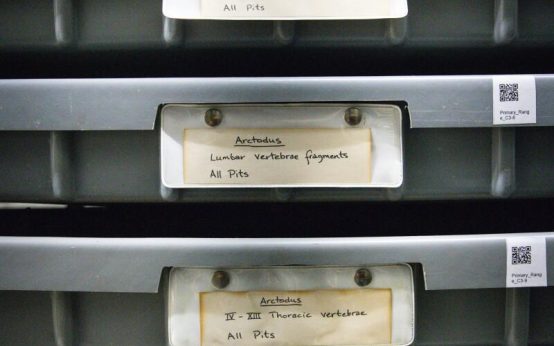 La Brea Tar Pits Begin Major Renovation to Enhance Ice Age Research
 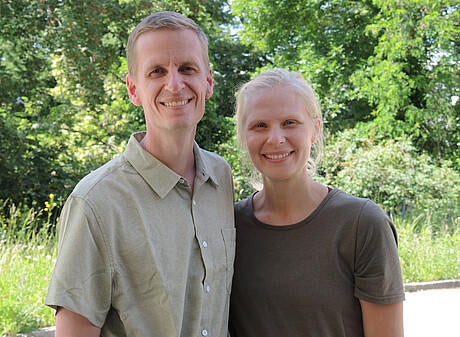 U.S. Doctor Recovers from Ebola in Germany
  Tips for Choosing Over-the-Counter Medication for Common Ailments
  Mount Sinai Health System Faces Subpoena on Gender-related Care
  Researchers Escorted Out of Diabetes Conference for Criticizing Trump Administration
  Limited Interest in Arctic National Wildlife Refuge Oil Auction