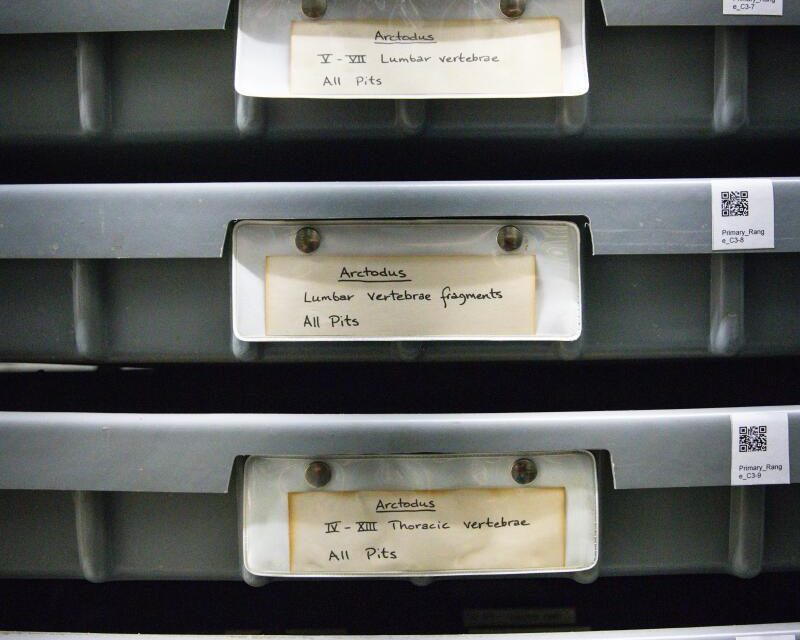
The La Brea Tar Pits are currently a bustling site of activity. Packing crates, tagged with descriptions like “bison skulls” and “camel hip,” fill the rooms. Each bone, such as sloth jaws or sabertooth fangs, is methodically wrapped in custom foam shells. Over the next two years, every piece will be cataloged and crated.
The museum will close on July 6 for extensive renovations. It will reopen in summer 2028 as part of the Samuel Oschin Global Center for Ice Age Research. This remodeled facility will serve as a focal point for studies on an era of natural history better documented here than anywhere else on Earth.
The new design will largely align with the current layout. However, it will better highlight the museum’s collection, showcasing the ecosystem preserved in the pits and its insights into present-day environmental shifts.
“No city anywhere has anything that’s comparable,” said Regan Dunn, a paleobotanist and curator at the site.
The task ahead is daunting: approximately 3.5 million fossils need relocating, each fragile and irreplaceable. The Tar Pits offer an unparalleled glimpse into the late Pleistocene epoch, capturing everything from grains of pollen to ancient camels and Columbian mammoths over millennia.
Dunn and fellow curator Emily Lindsey have leveraged this vast collection for research on biodiversity collapse coinciding with early human activity and associated fires.
According to Lori Bettison-Varga, president of the Natural History Museums of Los Angeles County, the story the Tar Pits tell is crucial to understanding environmental changes both past and present.
Currently, visitors struggle to grasp this narrative fully due to outdated exhibits. For instance, misconceptions about how the tar pits operated persist. The iconic sculpture depicting a mammoth sinking into the tar wrongly suggests it behaved like quicksand, when a few inches sufficed to trap animals until they succumbed to exposure or predators.
Community input has influenced renovation plans. Locals insisted on retaining the grassy hills where children play and the interactive tar pulls exhibit. Outdoor mammoth sculptures will remain, though with scientific updates.
The museum’s new interior will provide more space for exhibits, storage, research, and educational programs. The leafy courtyard will host period-appropriate plants like cypress and toyon. Returning exhibits include mounted Ice Age mammal skeletons and will introduce new displays such as a baby bison and Zed, a complete Columbian mammoth, displayed as found: engaged in combat.
Volunteers and staff are busy packing and moving collections to other Natural History Museum (NHM) locations during the museum’s closure process. On one visit, volunteers were observed preparing various fossils for relocation. In the Fish Bowl, the glass-walled lab, staff meticulously cleaned fossils, engaging visitors with their work and answering questions.
Excavations and fossil conservation will continue despite the facility’s closure. Mobile programming is being developed for the vast number of schoolchildren who annually visit, often fascinated by the real-time work seen through the lab’s windows. Although this work will move temporarily, an expanded lab experience will feature in the newly-designed space.
“It’s going to be weird cleaning fossils without anybody watching,” remarked Laura Tewksbury, Senior Preparator. The move marks a significant era for the scientists engaged in these groundbreaking tasks.
 Southern California Faces Severe Smog in Early 2026
  Researcher Claims Evidence of Noah’s Ark with New Soil Data
  Limited Interest in Arctic National Wildlife Refuge Oil Auction
  Confronting the Truth Behind Sustainability Buzzwords in the Food Industry
  The Aftermath of Santa Rosa Island’s Fire
  Largest Seizure of Illegal Cockroaches in Australia