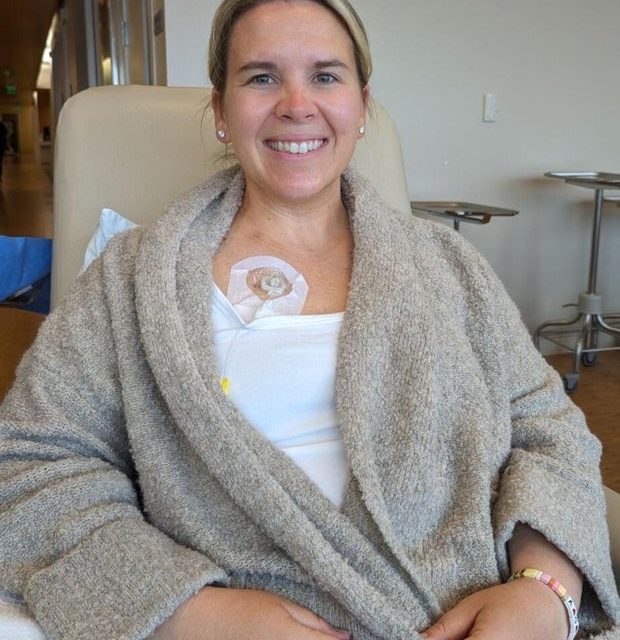
Amy Piccoli, a mother from Los Angeles, faced a shocking medical journey that began in May 2024. It started when her son brought home a common stomach bug. Used to seasonal illnesses, Piccoli fell sick, but soon found herself severely dehydrated, leading to an emergency room visit. A CT scan revealed unexpected results: spots on her liver and a mass in her colon. After further tests, doctors delivered the news: Stage IV colon cancer, despite her having no symptoms or family history.
Dr. Robin Mendelsohn, a gastroenterologist, noted that cases of late-stage colorectal cancer without symptoms are uncommon. Typically, this type of cancer presents signs such as gastrointestinal discomfort, blood in the stool, and unexplained weight loss. Piccoli’s case was indeed unusual.
Following her diagnosis, Piccoli began treatment in June 2024. Genetic testing revealed that immunotherapy could be beneficial, leading to a significant reduction in her tumors. This allowed for the removal of her colon tumor. However, the tumors in her liver remained inoperable, prompting Piccoli to explore other options.
A New Treatment Approach
Dr. Zachary Dietch, a transplant surgeon, highlighted a promising treatment reported in Europe. Patients who undergo liver transplants after removing the cancerous part of the colon can experience improved survival rates. Dr. Satish Nadig from Northwestern Medicine emphasized the strict criteria for this procedure, noting that only a minority of patients are eligible. For those who qualify, the treatment can significantly prolong life.
With this information, Piccoli consulted her oncologist and was referred to Northwestern’s program. In September 2025, an evaluation confirmed she was eligible for a liver transplant from a living donor. A family friend, Lauren Prior, matched as her donor. The transplant took place in December 2025.
Life After Transplant
The surgeries for both Prior and Piccoli proceeded without complications. Post-transplant, Piccoli stayed in Chicago to adjust to medications and undergo regular scans. Her primary goal was to ensure her disease did not return. Though the time away from her family was difficult, Piccoli focused on the long-term outcome.
By the end of March, she returned home. Piccoli’s continued medical monitoring ensures early detection and treatment of any potential cancer recurrence. Dr. Nadig noted that the risk of recurrence is low, offering hope and a chance at a long future.
As summer approaches, Piccoli looks forward to spending time with her children, now aged four, seven, and eight. The experience has given her a renewed perspective on life. Piccoli expressed her excitement about spending quality time with her family and enjoying a summer free from intensive medical treatments.
 Routine Surgery Unveils Unexpected Pregnancy for UK Woman
  Veteran News Anchor Bill Ritter Diagnosed with Alzheimer’s Disease
  Hantavirus Outbreak on Cruise Ship Raises Concerns: A Closer Look
  Students Use Glucose Monitors to Understand Their Health
  Efforts to Develop Treatments for Bundibugyo Virus
  Ebola Outbreak in DRC: Challenges in Testing and Response