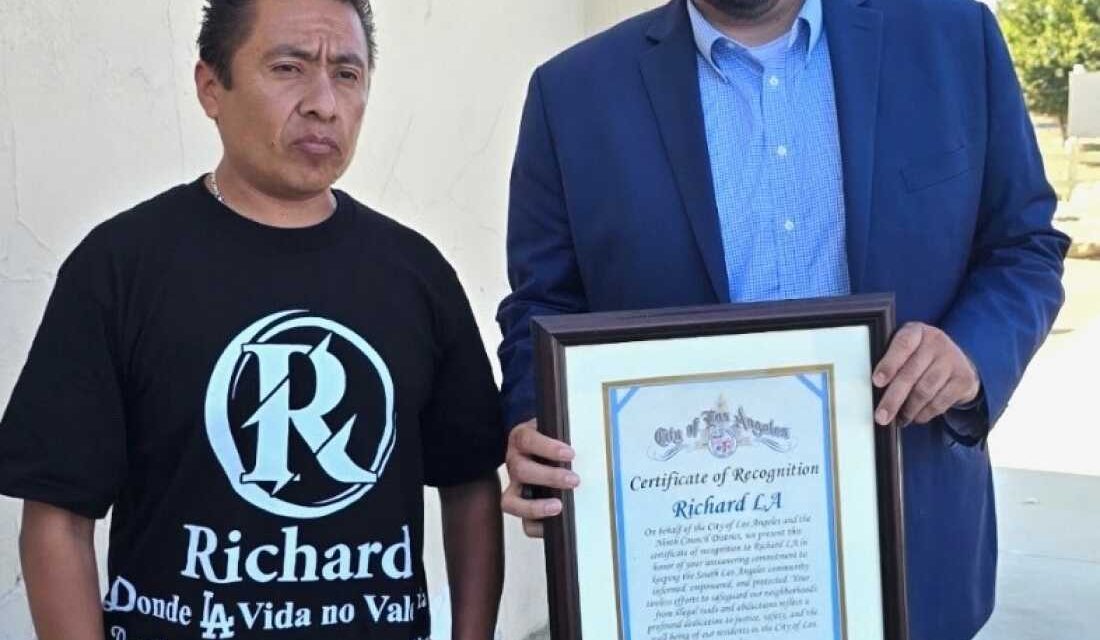
In August 2025, Carlitos Ricardo Parias received a recognition certificate from Jose Ugarte, chief of staff for Los Angeles City Council member Curren Price. This took place in Los Angeles, showcasing the community ties Parias maintained despite ongoing struggles.
Every Saturday, Ulises Parias travels two hours to visit his father at the Adelanto Detention Center in California. Their conversations cover family updates and his college classes, highlighting the strains on family life due to detention. Health issues such as pain in his left arm, headaches, fevers, and blurry vision are common topics, reflecting concerns over inadequate medical care following a shooting incident involving federal agents during an immigration arrest in Los Angeles.
Attorneys argue that Parias lacks proper medical attention post-incident, including pain relief and necessary therapy. The shooting, which occurred more than eight months ago, left him with lasting injuries near his elbow. Attorney Margaret Hellerstein emphasizes the broader impact of these challenges on detainees in a strained system lacking resources and options for those with unblemished records.
With increased scrutiny on federal law enforcement and detention conditions, Parias’ case highlights systemic oversight issues and limited judicial resources. The shooting incident underscores the need for internal reviews, as federal policies continue to affect individuals like Parias who entered the U.S. illegally in 2002 and later became involved in activism through social media.
His social media presence brought attention to enforcement activities, catching ICE’s attention amidst heightened enforcement. His father’s arrest resulted in serious consequences, raising issues about the balance between activism and legality.
Body camera footage shows the encounter with ICE, where officers blocked Parias’ car using vehicles. Federal agents surrounded him, issuing loud instructions, and threatening force, eventually leading to the shooting. Parias was then charged with assault on a federal officer, despite having no prior criminal history.
Medical records from November to May show persistent pain and mobility issues affecting his daily function. Inadequate pain management and therapy have been ongoing problems, with attempts made by DHS to address his health through medication and recommended evaluations. Still, pain persists, necessitating further medical attention.
Legal matters extend to the federal level, underpinned by the Laken Riley Act, which broadly empowers ICE to detain non-citizens charged with certain offenses. Following hospitalization, Parias’ transfer to ICE custody exemplifies procedural implications that stem from bipartisan-supported legislation, enforcing detention for those meeting specific criteria.
Federal Judge Fernando Olgin dismissed charges against Parias, citing inadequate legal representation. Yet, the government is appealing, maintaining a waiver over legal access claims made by the defendant. Attorneys submitted a habeas petition to seek release, challenging the spectator nature of bond hearings impacted by mandatory detention policies instituted under Trump.
Requests for release continue, languishing as court decisions remain pending. Intervention from political figures, such as Rep. Sydney Kamlager-Dove, demonstrate outreach attempts but yield limited action due to restraints on agency powers and oversight capabilities.
Recent legislative actions approved significant funding for immigration enforcement, yet oversight mechanisms remain inadequately funded. Democratic lawmakers face limited recourse in their efforts to address detention center conditions without majority congressional support.
Family members, like Ulises, navigate challenges daily while noting political implications affecting immigrant communities. With upcoming elections, there are hopes for improved legislative tools to provide relief and support for affected families.
Ulises repairs the bullet-ridden car amidst taking on family responsibilities, translating legal consultations, and balancing academic commitments. Detention pressures mount, acting as a civil deterrent rather than punitive measure, as outlined by legal experts.
For now, Parias’ son focuses on maintaining educational progress with aspirations toward a mechanical engineering degree. The absence of shared family experiences, such as watching the World Cup, marks a poignant representation of many families affected by ongoing immigration policies and enforcement measures.