The recent Democratic primaries for the House of Representatives saw Zohran Mamdani, the mayor of New York City, endorse three progressive candidates against those supported by the party apparatus. Their victories over two incumbents practically ensure that two self-proclaimed democratic socialists will be elected in their solidly Democratic districts. Mamdani stated this effort was about choosing ‘better Democrats’ who prioritize working people in politics. This approach has caused concern among some Democratic leaders, highlighting the growing influence of Mamdani.
Mamdani’s Political Influence
On Tuesday night, Mamdani appeared in Brooklyn to chants of ‘DSA,’ referring to the Democratic Socialists of America. This demonstrated a political movement gaining strength, with two candidates backed by Mamdani being democratic socialists. In the race for the seat of retiring Democratic Representative Nydia Velázquez, state assemblywoman Claire Valdez defeated Brooklyn Borough President Antonio Reynoso. Mamdani supported Valdez, while Velázquez backed Reynoso. Democratic Representative Adriano Espaillat lost his reelection bid to Darializa Avila Chevalier, another democratic socialist endorsed by Mamdani. Avila Chevalier has previously organized pro-Palestinian protests at Columbia University. A third Mamdani-backed candidate, former city comptroller Brad Lander, defeated Representative Dan Goldman. Their contest partially focused on the Gaza war, with Lander criticizing Goldman’s stance on Israel. These triumphs likely mean three Mamdani allies will join Congress in January.
Lasher Vs. AI Regulation
In a crowded Democratic primary in Manhattan, the race evolved into an indirect battle between two powerful factions of the artificial intelligence industry over candidate Alex Bores. Bores, a former Palantir employee, expressed ethical concerns that led him to leave the company. He advocated for one of the nation’s broadest regulations, facing sector resistance. His entry into the contest for retiring Democratic Representative Jerry Nadler’s seat led a political group funded by OpenAI investors to spend over $7 million on ads against Bores. In response, a rival group linked to Anthropic spent more than $10 million supporting him. However, Bores fell short, and assemblyman Micah Lasher, supported by Democratic leaders, won. Lasher criticized Bores, suggesting he would owe allegiance to tech factions backing him.
Lasher stated Tuesday night, ‘I have news for the two big AI companies unusually interested in who wins this seat in Congress. I won’t be beholden to either when it comes to protecting our children, jobs, and environment.’
Trump’s Political Moves
President Donald Trump prides himself on picking winners in Republican primaries, but faced setbacks in gubernatorial contests earlier this month. Initially, Representative Randy Feenstra lost to businessman Zach Lahn in Iowa, followed by Lieutenant Governor Burt Jones falling short to billionaire Rick Jackson in Georgia. Determined not to let this recur, Trump endorsed both candidates in South Carolina. Initially supporting Lieutenant Governor Pamela Evette before the primary, Trump also backed state Attorney General Alan Wilson in the runoff. Evette and Wilson were vying for the governorship.
Trump shared an image on social media, stating, ‘I can’t hurt one by only endorsing the other, so I’ll endorse both Pam Evette and Alan Wilson for South Carolina governor. It’s a wealth of riches; with either one, you can’t go wrong.’ This decision seemed prescient as Wilson led the runoff, later accepting victory and praising Trump’s endorsement.
McAdams Wins in Utah
Democratic primaries in Utah don’t usually draw much attention, given the state’s strong Republican leaning. However, redistricting last year created a Democratic stronghold in Salt Lake City. Former Representative Ben McAdams, who won on Tuesday, had to adjust his stance. When previously running in 2018, defeating a Republican, McAdams opposed abortion rights and presented himself as moderate. In this left-leaning district, he committed to supporting women’s rights and labeled himself ‘moderate only in tone.’ Among his progressive challengers was state Senator Nate Blouin, who claimed the electorate was ready for Democrats not just being ‘nice’ with Republicans. Senator Bernie Sanders supported Blouin.
Republican Strategies in Maryland
Republican Larry Hogan led Maryland as governor for eight years, leveraging a moderate conservative platform in the Democratic-leaning state. After Hogan’s term ended, Democratic Governor Wes Moore took office in 2023 and won his party’s primary for a second term. Widely seen as a potential presidential candidate in 2028, Moore’s primary win underscores his political trajectory. Meanwhile, Democrats in Maryland selected Dan Cox as their gubernatorial candidate. Cox, leaning further right among the nine candidates, featured a photo with Trump on his law firm’s website and advocated for tax cuts and housing programs.
 Trump Administration Achieves Major Immigration Enforcement Milestone
  Congressional Housing Legislation Faces Presidential Delay
  Congress Faces Challenge with $87.6 Billion Request for Iran War Funding
 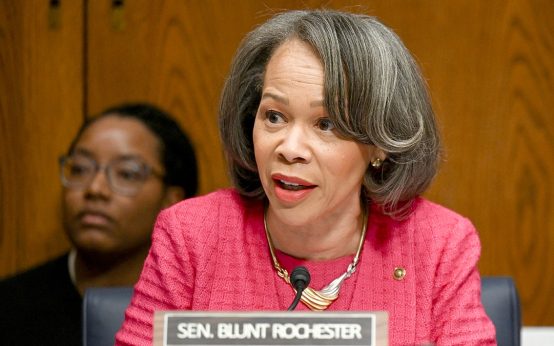 Senator Lisa Blunt Rochester Discusses New York Socialist Wins
  D.C. Council Utilizes Reserves and Plans Tax Increase
  Protesters Face Extended Sentences in Federal Courts